
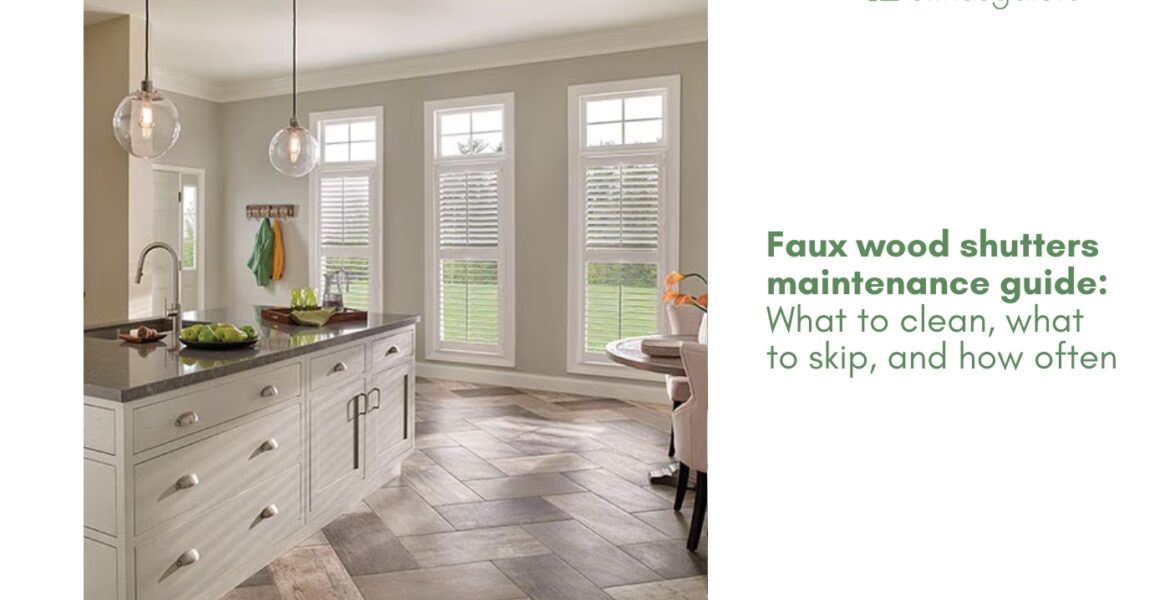
Faux wood shutters are one of the lowest-maintenance window treatments you can own. Made from PVC or composite material, they resist moisture, won’t warp in humid rooms, and clean up in minutes. The catch? Most people either over-clean them with products that cause damage or under-clean them until grime becomes a bigger job than necessary.
Here’s exactly what to do, what to avoid, and how often each step actually matters.
Why Faux Wood Shutters Are Easier to Maintain Than Real Wood
The material makes all the difference when choosing a cleaning method.
Real wood shutters are sensitive to moisture. Too much water causes warping, swelling, and permanent staining. You’re limited to dry dusting, furniture polish, and very careful spot cleaning.
Faux wood shutters don’t have that problem. The PVC and composite construction resists water, humidity, and temperature changes. You can wipe them with a damp cloth without worrying about damage. That’s what makes them a practical choice for bathrooms, kitchens, and any room where steam or splashes are part of daily life. For a deeper comparison of shutter types and their place in modern homes, see Are Plantation Shutters Still in Style?.
The Blindsgalore Faux Wood Shutters are built from moisture-resistant material that won’t crack, peel, or yellow under normal conditions. Available in 2½” louvers, 3½” louvers, and 4½” louvers, they hold up across every room in the house.
How to Clean Faux Wood Shutters: The Weekly Routine
A two-minute dusting once a week prevents the kind of buildup that eventually requires scrubbing. Here’s the routine our team recommends.
Step 1: Open the louvers fully
Tilt the louvers to a flat, fully open position so you can reach the top and bottom of each slat.
Step 2: Dust from top to bottom
Use a dry microfiber cloth, a feather duster, or a soft sock slipped over your hand. Start at the top louver and work your way down. Dust falls, so working downward keeps you from redepositing what you’ve already removed.
Step 3: Close, flip, and repeat
Close the louvers so they angle upward, then dust again. Flip them downward and do one final pass. Three angles cover every surface.
Step 4: Wipe the frame and tilt rod
Run your cloth along the shutter frame and the tilt rod. Dust collects in these spots and often gets overlooked.
Step 5: Finish with a dryer sheet (optional)
A used dryer sheet rubbed across the louvers reduces static cling and helps repel dust between cleanings. A small step that genuinely extends how long your shutters stay clean.
How to Deep Clean Faux Wood Shutters
A deeper wipe-down every one to three months keeps grime, fingerprints, and kitchen residue from settling in. The American Cleaning Institute recommends cleaning window treatments regularly to reduce indoor allergens and dust buildup, a habit that pays off especially for households with allergies or pets.
Step 1: Dust first
Always start with a dry dusting pass before introducing any moisture. Wiping a damp cloth over dusty shutters just pushes the dust around and creates streaks.
Step 2: Mix a mild cleaning solution
A few drops of dish soap in a bowl of warm water is all you need. A 50/50 solution of white vinegar and water also works well for stubborn spots or kitchen grease. No specialty products required.
Step 3: Wipe each louver individually
Dip a microfiber cloth in the solution and wring it until just damp, not dripping. Wipe each louver from one end to the other, working top to bottom. For tighter corners and edges, a soft toothbrush gets into the gaps where cloth can’t reach.
Step 4: Dry with a clean cloth
Follow up with a dry microfiber cloth to prevent water spots. Faux wood handles moisture well, but drying the surface right away keeps the finish looking clean.
For more cleaning methods across all window treatment types, the guide on easy cleaning hacks for window blinds covers faux wood, fabric, and everything in between.
What to Skip: Products and Methods That Damage Faux Wood Shutters
Knowing what not to do is just as important as the cleaning itself. Faux wood is durable, but certain products and habits cause problems over time.
- Abrasive cleaners and scouring pads scratch the surface finish and dull the sheen.
- Ammonia-based sprays and bleach can discolor or strip the coating on composite material.
- Furniture polish with silicone leaves a sticky residue that attracts more dust.
- Steam cleaners expose the material to excessive heat and moisture that can cause warping.
- Never submerge shutters in water. Not faux wood, not real wood, not any window treatment. Water can damage internal components and void warranty coverage.
When in doubt, stick to mild dish soap and water. Fancy products rarely outperform the basics.
Room-by-Room Maintenance Tips
Different rooms create different cleaning challenges. Adjusting your routine slightly based on location saves effort over time.
Kitchen shutters
Cooking grease travels further than most people realize. Wipe kitchen shutters with a damp cloth every two weeks, not monthly. A vinegar and water solution cuts grease without damaging the surface. For more on choosing the right window treatments for kitchens, our guide on easy-to-clean window treatments walks through the best options.
Bathroom shutters
Faux wood handles humidity well, which is why we recommend it over real wood for bathrooms. Wipe down shutters after steamy showers to prevent water spots. A quick pass with a dry cloth once or twice a week keeps them spotless.
Living room and bedroom shutters
Standard rooms need only the weekly dusting routine. A monthly damp wipe handles fingerprints and general buildup. Households with pets should bump dusting to twice a week, since pet hair settles on horizontal surfaces fast.
How to Operate Shutters Without Causing Wear
Cleaning keeps shutters looking good. Proper operation keeps them working smoothly. Always use the tilt rod or center louver to open and close the louvers. Grabbing the end of a slat puts stress on the pins and loosens them over time. Check the hinges once or twice a year. If a panel feels stiff or loose, a quick turn of the tension screw at the top usually fixes the problem.
Shutters That Stay Beautiful, Rooms That Feel Like Home
Faux wood shutters are a long-term investment, one that pays off quietly every time you glance at a clean, well-lit window. A few minutes of care each week is all they ask. If you’ve been putting off that first deep clean, today’s a great day to start. Grab a microfiber cloth, a bowl of warm soapy water, and give your shutters the attention they deserve. Love your view.
FAQs
Once a week is ideal for most rooms. Kitchens and homes with pets may benefit from dusting twice a week to prevent buildup.
Yes. Faux wood shutters are moisture-resistant and can handle a damp cloth with no issues. Wring the cloth well so the surface is damp, not wet, and dry afterward to avoid water spots.
Avoid bleach, ammonia-based sprays, abrasive scrubbers, and furniture polish containing silicone. All of these can scratch, discolor, or leave residue on the finish.
High-quality faux wood shutters resist yellowing. Yellowing is more common with lower-grade vinyl exposed to prolonged direct sunlight. Regular cleaning and UV-resistant materials help prevent discoloration.
Mix equal parts white vinegar and water, then wipe each louver with a damp microfiber cloth. The vinegar cuts through kitchen grease without damaging the faux wood surface.
Yes. Faux wood shutters can be cleaned with water and mild soap, while real wood shutters should only be dry-dusted or treated with furniture polish to prevent moisture damage.