
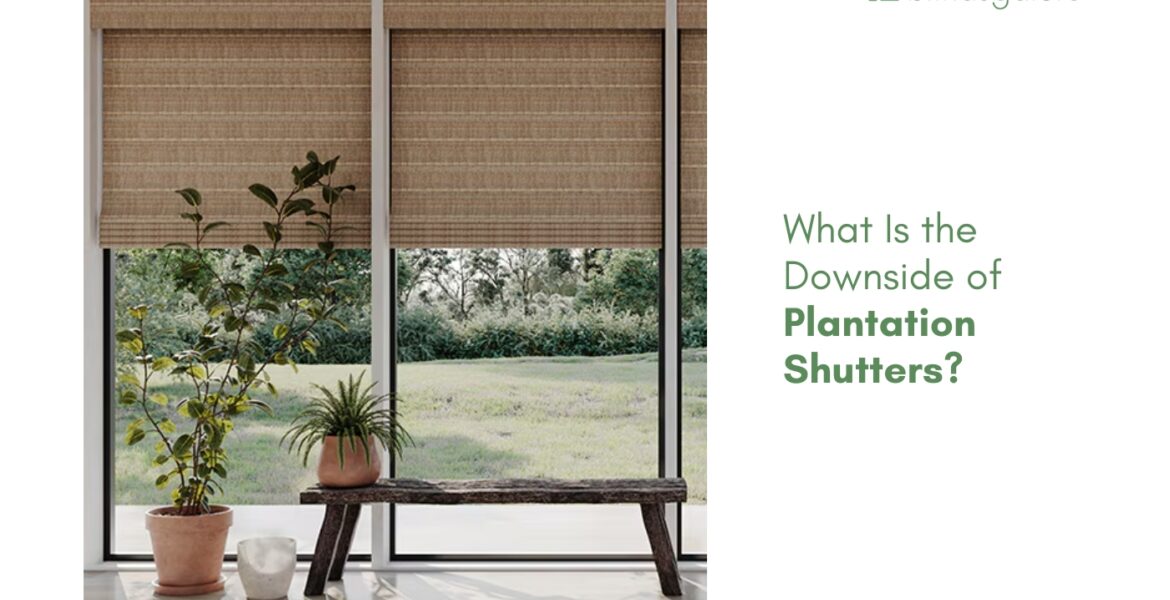
Plantation shutters carry six honest downsides: a higher upfront cost, near-permanence once installed, light gaps between the louvers, lost depth in tight rooms, a tricky fit on non-standard windows, and warping risk when solid wood meets a humid room. None of these makes shutters a bad choice. Each simply matters more in some homes than others.
Shutters remain one of the most durable, valuable window treatments a home can carry. Naming the drawbacks plainly is how to match the right room to the right product, and to flag where a different treatment, or a different shutter material, serves the window better.
Shop Custom Plantation Shutters
The main downsides of plantation shutters
Every window treatment trades something away. For plantation shutters, the trade-offs cluster around cost, permanence, and fit. Here are the six that come up most.
1. Higher upfront cost than most treatments
Plantation shutters sit at the higher end of window treatment investment. The solid construction, the custom sizing, and the hardware all add up to more than a comparable blind or shade.
The counterweight is lifespan. Quality shutters last for decades and add resale appeal, so the cost spreads thin over the years. For a forever home, the math favors shutters. For a short-term space or a quick refresh, a faux wood blind delivers a similar clean, slatted look for far less commitment.
2. Near-permanence once installed
Shutters mount directly to the window frame and are built to stay closer to a cabinet than a curtain. Anyone who likes to refresh a room seasonally will feel the constraint, since changing the color or finish later is a labor-intensive job, not a quick re-order. For windows where flexibility matters more than permanence, a Roman shade or drapery panel changes the whole mood without touching the hardware.
3. Light gaps between the louvers
Shutters control light well but do not black a room out. Even closed, thin lines of light slip between the louvers and around the frame. For a living room or office, that soft leak is rarely a problem. For a nursery or media room that needs true darkness, it falls short. The honest fix is to pair shutters with a separate blackout layer, or choose a dedicated blackout shade for the rooms where sleep depends on darkness.
4. Lost depth and clearance in tight rooms
Plantation shutters need physical space. The frame sits in or around the opening, and the louvers need room to swing open, which can feel tight in a small room or near furniture.
A flush-mounted shade reclaims that space. Where depth is scarce, a cellular shade tucks into the window with almost no projection and still delivers strong light control and insulation.
5. A tricky fit on non-standard windows
Shutters demand a precise fit to operate cleanly and seal out light. Tilt-in windows, crank-operated casements, and unusual shapes all complicate the install, and a fit that is off by a fraction leaves gaps that defeat the purpose.
Arched windows are a specific case worth flagging. Blindsgalore currently covers perfect arches only, so a true half-round window can take a shutter, while an irregular or eyebrow arch cannot. For oddly shaped or oversized openings, the measuring guide and the in-house experts are the fastest way to confirm what will actually work before ordering.
6. Warping risk when solid wood meets humidity
Solid wood shutters can warp, crack, or discolor in a humid room. Bathrooms, kitchens, and laundry rooms put real moisture stress on natural wood, and untreated wood is the most vulnerable material in the category.
Of the six downsides, this one is the most solvable. Faux wood and composite shutters resist moisture, hold their shape, and carry the same plantation look without the warping risk. The faux wood sliding shutters and standard faux wood shutter lines are built for exactly the rooms where solid wood struggles.
Who are plantation shutters still right for
The downsides are real, but so is the case for shutters, which earn their reputation in the right setting.
Shutters suit long-term homeowners who want a permanent, high-value upgrade rather than a treatment they will swap in a few years. The product shines on standard-shaped windows in living rooms, dining rooms, bedrooms, and street-facing spaces where light control and privacy matter, and total blackout does not. And in faux wood or composite, they handle humid rooms that would punish solid wood. For a home that fits that profile, the shutter collection is one of the most durable choices on the market.
How to sidestep the downsides
Most of the drawbacks have a clean workaround. The trick is matching the concern to the fix.
- Worried about cost or commitment: choose faux wood blinds for the slatted look at a lower investment.
- Want to redecorate often: choose Roman shades or drapery for easy seasonal change.
- Need true darkness: add a blackout shade or layer one behind the shutter.
- Short on depth: choose a flush-mounted cellular shade.
- Have a humid room: choose faux wood or composite shutters, never solid wood.
- Have an unusual window: confirm the fit with an expert before ordering, and remember only perfect arches are currently covered.
Find the right fit for your windows
Plantation shutters are a beautiful, lasting choice in the rooms that suit them, and an easy treatment to talk yourself into for rooms that do not. Ordering up to 10 free swatches makes the material and finish real against the wall before any commitment, and the in-house experts at (877) 702-5463 can help weigh shutters against the alternatives for each specific window.
All Blindsgalore brand products carry a 3-year limited warranty, upgradeable to five years, against defects in materials and workmanship when properly installed.
Love your view, with the treatment that truly fits.
Frequently Asked Questions
The biggest disadvantage is the higher upfront cost compared to blinds, shades, or curtains. The trade-off is durability and resale value, since quality shutters last for decades. Faux wood blinds offer a similar slatted look at a lower investment.
No. Plantation shutters control light well but leave thin gaps between the louvers and around the frame, so they do not fully darken a room. For true darkness in a bedroom or media room, pair shutters with a blackout shade or choose a dedicated blackout treatment.
Solid wood plantation shutters can warp, crack, or discolor in humid rooms like bathrooms and kitchens. Faux wood and composite shutters resist moisture and hold their shape, making them the right choice for any high-humidity space.
Plantation shutters mount in or around the window frame and need clearance for the louvers to open, which can feel tight in small rooms or near furniture. A flush-mounted cellular shade reclaims that depth while still controlling light.
Plantation shutters need a precise fit and can be tricky on tilt-in windows, crank casements, and unusual shapes. Blindsgalore currently covers perfect arches only, so an irregular arch cannot take a shutter. Confirming the fit with an expert before ordering avoids gaps.
Blindsgalore brand shutters carry a 3-year limited warranty with a free upgrade to a 5-year warranty, covering defects in materials and workmanship when the product is properly installed and operated. Boutique products include a free 5-year extended warranty. Fading is not covered.