
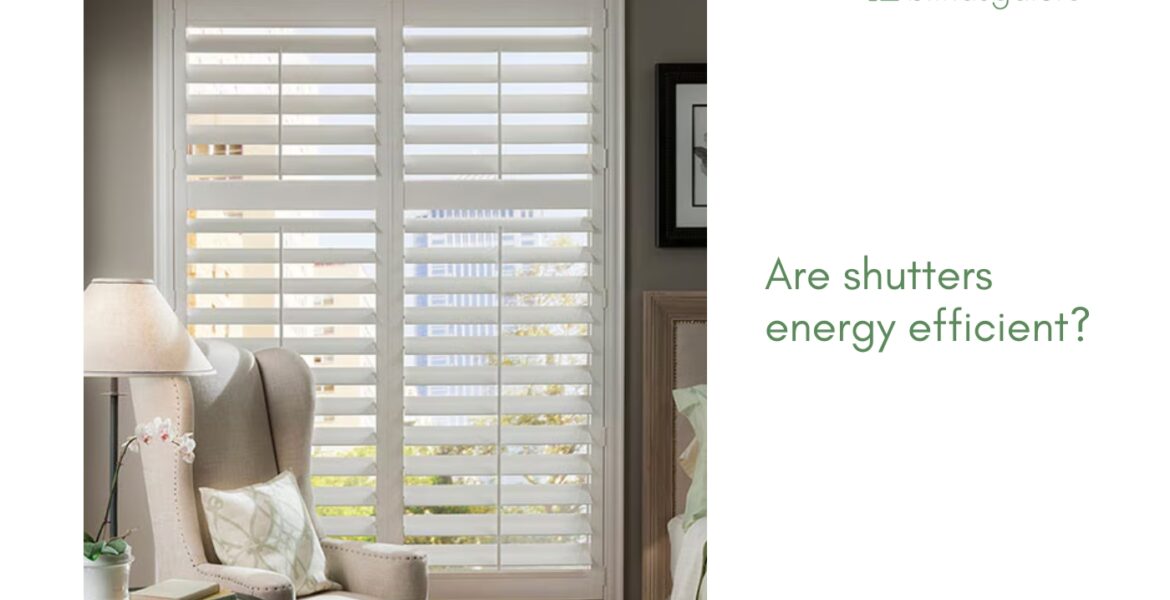
Shutters genuinely insulate windows, especially plantation-style interior shutters with tight-fitting frames and closed louvers. Whether they’re the right energy upgrade for your home depends on what you’re comparing against and what else you want the treatment to do.
Are shutters actually energy efficient?
Yes. Interior plantation shutters create a sealed air barrier between the louvers and the window glass when fully closed, which slows both conductive heat loss in winter and solar heat gain in summer. According to the US Department of Energy, roughly 30% of a home’s heating energy is lost through windows, so any treatment that slows that transfer has a real impact on utility bills.
The size of that impact depends on three things: how well the shutter fits the window, what it’s made of, and how often you actually close it. A poorly fitted shutter, or one with consistently open louvers, gives most of the energy benefit away.
How do shutters insulate a window?
Two mechanisms. First, the shutter material has thermal resistance, called R-value. A higher R-value means more insulation. Second, when the shutter is closed against the frame, it creates a dead air pocket between the louvers and the glass. That trapped air is the main insulator, similar to how a storm window works.
Plantation shutters with full-height frames and weatherstripped edges seal the dead air pocket more effectively than louvered or cafe-style shutters that cover only part of the window. Closed-louver position matters too. Tilted-open louvers allow air to circulate, defeating the insulating effect. To get the full benefit, the shutter has to be closed, and louvers turned toward the glass at night and during peak summer heat.
Which type of shutter is the most energy efficient?
Three main shutter materials are available: real wood, faux wood (PVC, vinyl, or composite), and engineered hybrids.
- Faux wood and engineered composite shutters typically have the highest R-value because their hollow or layered cores trap air inside the panel. Faux wood also handles humidity better than real wood, which means a tighter long-term fit and no warping that creates air leaks.
- Real wood shutters insulate well, too, with warmth and grain variation that faux wood approximates but doesn’t fully match. The trade-off is that wood expands and contracts with humidity, which compromises the seal in moisture-heavy rooms. For maximum efficiency in bathrooms, kitchens, and laundry rooms, faux wood is the better pick.
- Solid-panel shutters (no louvers) insulate more than louvered shutters because there are no slat gaps for air to move through. The trade-off is no daylight control. Most homeowners pick louvered shutters for the balance of insulation, privacy, and adjustability.
How do shutters compare to cellular shades for energy efficiency?
On pure R-value per square inch, cellular shades typically beat shutters. The honeycomb structure of a cellular shade traps air inside the shade itself, with single-cell and double-cell options layering even more insulating pockets. Double-cell blackout cellular shades are the most insulating common window treatment on the market, which is why they’re the default recommendation for bedrooms in cold climates. Our How to Clean Honeycomb Blinds walkthrough covers maintenance.
Shutters still have advantages that cellular shades don’t. The hard panel provides a more decisive light and privacy barrier. The look is architectural rather than soft, suiting formal rooms. Shutters last 15 to 25 years with no fabric degradation. For pure energy savings on the smallest budget, cellular shades win. For energy savings combined with the look and longevity of shutters, the trade-off swings the other way. Our How Long Do Custom Blinds Last covers lifespan expectations.
A third option: layering. Shutters paired with custom drapery or a cellular shade behind the shutter combine multiple barriers, effective on north-facing or single-pane windows. For sun-facing openings where heat gain is the main problem, solar shades inside the shutter add a UV-blocking layer. Our Hello, Sunshine, Goodbye, Glare guide explains solar heat gain in more detail.
Are shutters worth the investment for energy savings alone?
For most homes, the honest answer is no, not on energy savings alone. Cellular shades deliver more insulation per dollar, especially in the early years. Shutters become the better-value choice when you factor in their other benefits: a permanent built-in look that adds resale value, durability that outlasts most fabric treatments, and the combination of privacy and adjustable light that no shade fully matches.
Where shutters earn their place on efficiency alone is in homes with single-pane windows, drafty older construction, or cold climates where you’ll close them every winter night. In those situations, the cumulative seasonal savings are meaningful. In double-pane, well-sealed modern homes, the marginal benefit is smaller, and the case for shutters becomes more about aesthetics and longevity than utility bills.
How do you choose energy-efficient shutters for your home?
Pick faux wood for the highest R-value and the most consistent long-term seal. Pick real wood for the look in formal, dry rooms. Choose plantation-style shutters with full-height frames, weatherstripped edges, and the closest possible fit. For patio doors and very wide openings, sliding door shutters deliver the same insulating benefits while handling the scale standard shutters cannot.
Order up to 10 free samples to compare materials in your own light. Our in-house experts at (877) 702-5463 can talk through which configuration delivers the most efficiency for your window and climate. Blindsgalore shutters carry a 3-year limited warranty (with a free upgrade to 5 years), a 30-day exchange guarantee, and free shipping across the contiguous United States and Canada. Most ship within 5 to 7 business days. Our Ultimate Guide to Window Treatments covers broader options.
Frequently Asked Questions
Yes, when closed against the window with louvers in the down position. The insulating effect depends on shutter fit, material, and how often you close them at night and during peak summer heat. Single-pane windows benefit most.
Both reduce energy use, but differently. Exterior shutters block solar heat before it reaches the window, useful in hot, sunny climates. Interior shutters create an insulating air pocket between the panel and the glass, useful for retaining heat in winter. Most US homes use interior plantation shutters because they double as decor.
Published R-values vary by manufacturer, material, and how the rating is measured. Hollow-core faux wood and engineered composite panels typically rate higher than solid wood. Cellular shades generally rate higher than shutters on pure R-value, which is worth knowing if energy efficiency is your only priority.
Yes. Closed shutters block solar heat gain in summer, the same way they trap warm air inside in winter. White or light-colored shutters reflect more sunlight away from the window, which helps further in west- and south-facing rooms.
Not entirely. Storm windows add a sealed glass barrier outside the existing window and address air infiltration directly. Shutters reduce heat transfer through the window but don’t seal the frame itself. For an older home with significant draft, both treatments together outperform either alone.
Generally yes. Hollow-core faux wood and composite shutter panels trap additional air inside the panel itself, and the material doesn’t expand or contract with humidity, which keeps the seal tight over time. For maximum efficiency, faux wood is the practical pick.