
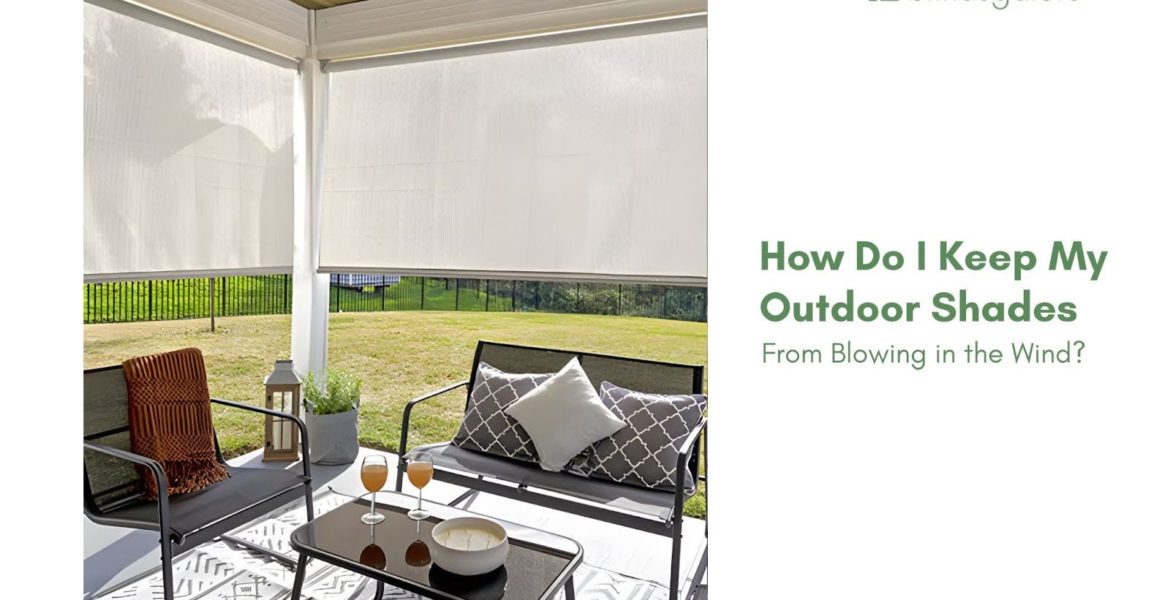
Outdoor shades make patios enjoyable, but wind turns them into flapping problems. Wind creates real pressure on your shades, roughly 20 to 30 pounds of force on a standard six-foot shade. This stress damages brackets, tears fabric, and creates noise.
For complete peace of mind, there are proven methods to keep your shades secure even on blustery days.
Tips: Rolling up the shades during a storm is the easiest/safest way to protect your shades from blowing in the wind.
Why Wind Causes Problems for Outdoor Shades
Standard outdoor shades hang from a top rail with fabric cascading down freely. When the wind catches that loose fabric, it acts like a sail. Gusts push underneath and create lift that pulls at mounting brackets and sends material billowing outward.
Several factors make this worse: large shade spans with more surface area, lightweight fabrics that catch air easily, coastal or exposed locations, and uncovered patios without windbreaks.
The good news: simple accessories and smart installation choices solve nearly every wind problem.
Solution 1: Bungee Tie-Downs
The most recommended fix is bungee tie-down accessories. Bungee cords attach to the bottom hem bar of your shade and secure it to hooks or anchors mounted at ground level or on nearby structures.
Bungee cord loops thread through rings at each end of the bottom rail. You then stretch the cord down and hook it into a receiver mounted on your deck, patio floor, or wall. Tension keeps the shade flat and prevents wind from catching the fabric.
Installation steps:
- Mount the bungee receivers at the floor or wall level, directly below your shade
- Lower your shade completely
- Hook the bungee cord ends into the receivers
- Adjust tension so the shade stays flat without straining
You can add this as an option when customizing outdoor shades.
Solution 2: Weighted Bottom Hem Bars
Many outdoor shades come with weighted bottom rails built in. A heavier hem bar adds downward pull that counteracts wind lift. When shopping, look for products mentioning weighted or reinforced bottom rails.
If your existing shades feel too light, some homeowners add weight by sliding a metal rod into the hem pocket or attaching small weights to the bottom corners. However, adding too much weight strains mounting brackets and makes operation difficult. Bungee tie-downs often work better without these downsides.
Solution 3: Side Tracks and Channel Systems
Side track systems guide shade fabric along channels mounted on each side of the opening. Fabric edges slide into these tracks, preventing lateral movement.
Side tracks also improve energy efficiency by eliminating edge gaps where air infiltrates.
Solution 4: Mesh Fabrics for Air Flow
Not all shade materials perform equally in wind. Mesh and breathable fabrics allow air to pass through, reducing pressure that causes billowing. Solid fabrics block more light but catch more wind.
For breezy locations, choose:
- Solar screen mesh with an open weave, letting air flow through
- High-tensile-strength materials like acrylic or polyester blends
- PVC-coated fabrics resisting stretching and tearing
Outdoor solar shades come in mesh densities ranging from open weaves, maximizing airflow, to tighter weaves prioritizing light blocking. Mesh fabrics typically block 80 to 95 percent of sunlight, depending on density, providing meaningful sun protection without turning your patio into a wind trap.
For more information on comparing options, Shades vs. Blinds: What’s the Difference? covers material choices clearly.
Solution 5: Strategic Placement and Windbreaks
Sometimes the best solution involves rethinking where and how you use your shades. Position shades on the leeward side of your home when possible. Walls, fences, and landscaping create natural windbreaks that calm air before it reaches your shades. Planting hedges or installing lattice panels upwind makes a noticeable difference.
For patios surrounded by open space, consider partial deployment. Lower your shades only halfway on windy days to reduce the surface area exposed to gusts. You still get sun protection while minimizing stress on fabric and hardware.
Solution 6: Motorized Shades With Wind Sensors
Motorized systems make wind management easy. With a button press, you raise shades instead of fighting the wind manually. Some advanced motorized setups include wind sensors that automatically retract shades when gusts exceed a preset threshold.
Motorized outdoor shades eliminate manual operation. Even better, when storms roll in or sustained high winds develop, retracting shades protects them from damage. Making a habit of checking weather forecasts and rolling up shades before windy afternoons prevents wear and extends lifespan.
Maintenance for Wind-Prone Areas
Regular maintenance keeps wind-resistant features working. Check bungee cords for signs of wear or stretching, and replace them before they snap. Inspect side tracks for debris, preventing smooth operation.
After particularly windy periods, examine mounting brackets for loosening. Vibration from flapping can work screws loose over time. Tightening hardware periodically prevents bigger problems.
FAQs
Bungee tie-downs work with most roller-style outdoor shades that have a bottom hem bar with attachment points. Check your shade specifications or call (877) 702-5463 to confirm compatibility with your specific product.
Adding side tracks to shades not originally designed for them is challenging. Fabric width and mounting configuration must align precisely with track channels. For best results, order shades with integrated side tracks.
Standard outdoor shades without anchoring handle light breezes up to about 15 MPH. Beyond that, you notice flapping and potential bracket strain. Secured shades with bungee tie-downs handle significantly higher wind speeds.
Mesh fabrics block significant UV rays and heat while allowing airflow. Open-weave solar screen materials typically block 80 to 95 percent of sunlight, depending on density. You get meaningful sun protection without creating a wind trap.
Coastal homes benefit from combining multiple strategies. Use mesh fabrics allowing air through, install bungee tie-downs or side tracks, and consider motorized shades with wind sensors. Request up to 15 free samples to compare fabric options before ordering.