
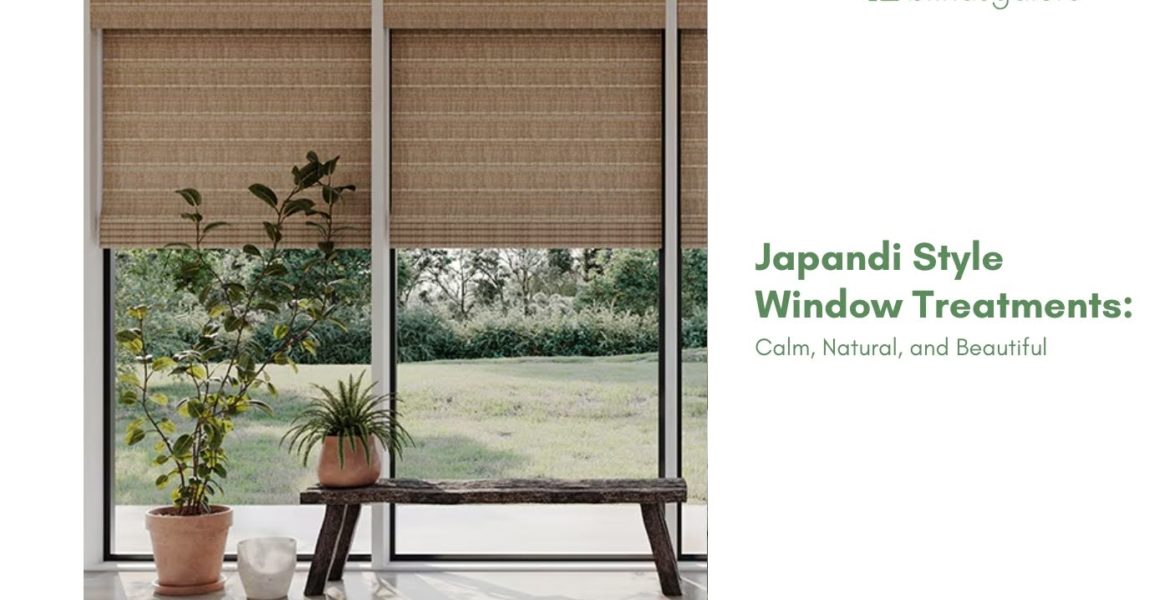
Woven wood shades, bamboo shades, and light-filtering roller shades in natural fabrics are top choices. Muted, earthy tones and natural materials like bamboo, jute, and linen weaves define the aesthetic.
Japandi palettes are moving toward warmer, deeper tones. Warm greige, soft charcoal, muted sage, and earthy taupe are trending alongside classic warm whites and natural beiges.
A woven wood shade paired with a sheer linen panel is a classic Japandi layering combination. The shade handles daytime privacy and texture, while the sheer adds softness and diffuses light. Keep both in the same warm neutral family for a cohesive look. For layering tips, see How To Layer Roman Shades With Curtains.
Warm wood tones. Soft filtered light. A room that feels like a slow exhale. That is the promise of Japandi, and in 2026, the aesthetic is only getting richer.
Japandi blends Japanese wabi-sabi (the art of finding beauty in imperfection) with Scandinavian hygge (the feeling of cozy contentment). The result is a design philosophy built on natural materials, muted palettes, and intentional calm. For 2026, designers are pushing Japandi into warmer, moodier territory: walnut over light oak, charcoal over crisp white, and layered texture over bare minimalism.
Windows are the perfect place to start.
What Makes a Window Treatment Japandi
A Japandi window treatment does two things at once: it connects the room to nature and manages light with quiet elegance. No fussy patterns, no bold hardware, no visual noise.
The right window covering in a Japandi space should feel like it belongs there. Natural fibers, soft neutrals, and visible texture are the hallmarks. Shoji-screen-inspired diffused light is the goal: soft, warm, and even across the room.
Qualities to look for include natural or nature-inspired materials like bamboo, grasscloth, jute, and linen weaves. A muted color palette works best: warm whites, tawny beiges, soft grays, earthy greens, and deep charcoals. Clean, simple lines with no ornate hardware keep the look grounded. Light-filtering fabric (not blackout) handles daytime use, while layered options cover both. Cordless or motorized lift systems eliminate visible cords and maintain a minimal aesthetic.
Woven Wood Shades: The Japandi Essential
Nothing says Japandi quite like woven wood shades. Handwoven from bamboo, jute, reeds, and grasses, these shades bring organic texture and warmth to any window. Each shade has its own natural variation, which is exactly the kind of wabi-sabi imperfection that makes a Japandi room feel alive rather than staged.
The Blindsgalore Classic Natural Woven Shades offer eco-friendly materials with optional light-filtering or blackout liners, plus cordless or motorized lift. A matching valance comes standard for a polished finish. Pair a woven wood shade with a linen drape panel for a layered look that handles both privacy and light control beautifully. For room-by-room ideas, see The Ultimate Guide to Choosing Bamboo Shades for Every Room.
Bamboo Shades: Casual Japandi Warmth
For a lighter, more casual take on the Japandi look, bamboo shades deliver natural warmth with a tighter, more streamlined weave. The Blindsgalore Cordless Bamboo Shades bring that organic texture with cordless convenience built in. No dangling cords means a cleaner look and a safer option for homes with children and pets.
Bamboo works especially well in sunrooms, covered porches, and casual living areas where a relaxed, nature-forward aesthetic is the goal.
Roller Shades: Minimal Japandi Simplicity
Minimalism is a core Japandi value, and few window treatments are more minimal than a roller shade. A single piece of fabric rolls up onto a tube, delivering clean lines with no visual weight. The Blindsgalore Essential Light Filtering Roller Shades are custom-made in your choice of cord loop, cordless, or motorized lift. The 100% polyester fabric softly diffuses light, adds privacy, and protects against UV rays. Available in warm neutral tones that complement natural wood furniture and matte finishes.
For a Japandi space with large windows, a light-filtering roller shade in a warm greige or soft oat tone creates that signature diffused glow without competing with the architecture. For more on roller shade fabric options, see Roller Shades vs. Vinyl.
Roman Shades and Sheer Shades
Clean folds, flat profiles, natural fabrics. Roman shades are a natural fit for Japandi when kept in a flat or hobbled style. A linen-look fabric in a warm neutral adds quiet structure without overwhelming the space. For style guidance, see Are Roman Shades Still in Style?.
Sheer shades work beautifully in Japandi rooms that prioritize soft, diffused light. The translucent fabric adds a visual layer without weight or bulk, and warm white, sand, or oat tones keep the palette cohesive.
Color and Texture for 2026
In 2026, Japandi is getting warmer and more textured. The clean-white phase is giving way to deeper, earthier palettes. For window treatments, that means warm greige and taupe tones instead of stark white. Deep charcoal or soft black suit, moody rooms with natural wood floors. Muted sage and eucalyptus greens complement nature-forward spaces. Textured wovens are preferred over flat, synthetic fabrics. Visible natural variation beats uniform machine-made finishes every time.
Cordless and Motorized for Clean Lines
Japandi is all about removing visual clutter. Cords and chains break that calm, minimal look. At Blindsgalore, cordless and motorized options keep windows looking clean and rooms feeling serene. Motorized shades adjust light with a tap, and compatible smart hubs like the Connector Smart Hub or Levolor InMotion support Amazon Alexa, Google Home, Samsung SmartThings, Siri Shortcuts, Control4, and IFTTT.
Our Guarantee
At Blindsgalore, every purchase is backed by our 30-day guarantee, with free exchanges on up to four windows per household. Custom shades ship in as little as 5 to 7 business days, and shipping is free across the continental U.S. Call (877) 702-5463 with questions.