
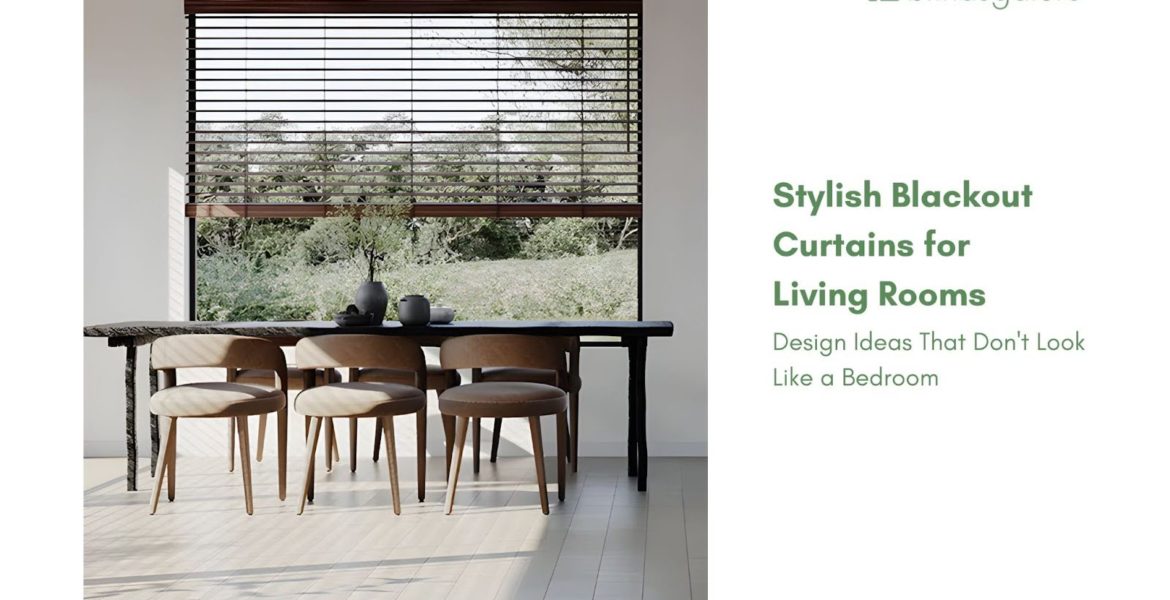
You Want Control. Not a Hotel Room.
January brings shorter days and longer nights, and a common dilemma: your living room needs darkness for movies, TV glare, and afternoon rest. But those thick, plasticky blackout curtains? They scream “temporary hotel room,” not “I designed this intentionally.”
The good news is that modern blackout options look nothing like what people picture. You can have full light control and genuine style at the same time. The U.S. Department of Energy confirms that quality window treatments create an insulating layer that reduces heating and cooling costs, but beyond the energy benefit, the real win is a living room that actually functions the way you want it to.
What You Actually Need: Darkness Levels Explained
Before choosing a style, understand what darkness level suits your needs. This determines which products work best.
- Room darkening blocks about 70-80% of light. The room gets noticeably darker, but not pitch-black. You still see shapes and shadows. Best for: watching TV comfortably, reducing sun exposure, and lowering the temperature without total blackout.
- Blackout blocks 95-100% of light. Nearly complete darkness, like a bedroom. Best for: afternoon naps on the couch, shift workers sleeping during the day, and complete privacy.
For most living rooms, room darkening is the sweet spot. It gives you control without the heavy, cave-like feel that makes a space feel non-functional during the day.
Three Main Approaches: Choose Your Style
Option 1: Layered Curtains with Sheers (Most Elegant)
This is the designer trick that actually works: pair a sheer curtain with a darkening panel. You get two independent layers that you can operate separately.
How it looks:
- Day: Sheers stay open, filtering light softly. Blackout panels stay stacked at the top, completely invisible.
- Movie night: Draw the blackout panels closed. The sheer layer sits in front, adding texture and softness instead of looking like heavy hotel drapes.
- Evening: Open both layers for brightness.
Why this works for living rooms:
- The sheer fabric adds visual interest and elegance instead of a single heavy panel.
- You can use a lighter, more sophisticated color on the blackout panel because the sheer floats in front.
- Natural light is still an option during the day; you’re not committed to darkness.
Installation: Requires a double curtain rod (one in front, one behind) or a special rod with two positions. More to install, but the result looks expensive and intentional.
Product option: Pair our Designer Custom Drapery with a room-darkening liner and add sheer shade panels as the top layer for a fully customizable layered effect.
Option 2: Cellular Shades (Cleanest Modern Look)
If traditional curtains feel too heavy or formal for your space, cellular shades offer a streamlined alternative. Their honeycomb structure provides insulation while blocking light cleanly.
Why this works for living rooms:
- Sleek profile doesn’t overwhelm the window. Looks intentional, not decorative.
- Works well in rooms with multiple windows; they don’t fight for visual attention.
- Available in light filtering or blackout options without changing the look significantly.
- Can be motorized for a truly modern feel (lower shade from the top for privacy, leave bottom open for light, very current design trend).
Color and texture options: Cellular shades come in dozens of colors and subtle textures. Choose a tone that matches your walls for a seamless, modern look. Lighter shades (white, soft gray) look especially clean and contemporary.
Installation: Inside or outside the window frame. Outside mounts make windows appear larger and create a more polished look.
Product option: Our cellular shades come in light-filtering or blackout options. Choose cordless or motorized for the cleanest visual result.
Option 3: Roman Shades (Soft and Tailored)
Roman shades bring fabric softness without the volume of full curtains. When lowered, they create horizontal folds. When raised, they stack neatly at the top, creating a clean, tailored look.
Why this works for living rooms:
- Sits right on the window, doesn’t extend into the room like curtains.
- Creates a polished, intentional look, whether open or closed.
- Smaller visual footprint than curtains, especially in rooms with large windows.
- Works with blackout lining underneath the outer fabric, which adds personality; the lining does the work.
Best for: Living rooms with good wall space around windows, or spaces where you want the window treatment to be noticed as a design element rather than occupy a lot of visual real estate.
Installation: Can be inside or outside the window frame. The top-down/bottom-up option lets you lower from the top for privacy while keeping the bottom open for light, very flexible.
Product option: Our roman shades can be customized with blackout lining, and you can choose from hundreds of fabric options for the outer layer.
How to Style Each Option So It Doesn’t Look Like a Bedroom
The difference between “bedroom blackout” and “living room chic” is fabric choice, color, and installation approach. Here’s what actually matters:
Fabric Type Changes Everything
- Linen-look fabrics (even blended) read as casual and airy. Pair with a room-darkening liner, and they still block light, but the aesthetic is relaxed and inviting.
- Velvet or heavy textured fabrics (navy, forest green, charcoal) feel luxurious and intentional. Deep jewel tones in living rooms signal “designer choice,” not “I need to sleep here.”
- Subtle patterns (geometric prints, botanical, soft stripes) keep the eye moving and prevent the flat, heavy look of solid dark fabric covering entire walls.
- What to avoid: Plastic-backed blackout fabrics, flat black or pure black, and single-color panels on all four window walls unless you’re intentionally creating a home theater room.
Color Strategy
- For light, airy rooms: Use the blackout lining with a white, cream, or soft gray outer fabric. The lining does the darkening work. The fabric color stays light and bright.
- For spaces with good natural light: Deep jewel tones (emerald, sapphire, burgundy, charcoal) add richness without feeling like a sleeping space. Pair with metallic hardware (brass or gold) for intentional polish.
- For pattern lovers: Geometric or botanical prints add visual interest. Let the pattern do the visual work instead of relying on solid color darkness.
- Balance: If you use darker treatments on multiple windows, keep walls and furnishings lighter. A charcoal blackout curtain in a room with charcoal walls and dark furniture creates a cave effect. The same curtain in a white or neutral room feels sophisticated.
Installation Approach Matters
- Wider mount: Mount rods and shades wider than the window frame itself. This makes the window (and room) appear larger and the treatment feel intentional rather than reactive.
- Higher mount: Mount above the window trim, not at the trim line. Extra height makes the ceiling appear higher, and the room feel more designed.
- Double rods: If layering, ensure rods are properly spaced so sheers sit slightly in front of blackout panels. This creates intentional visual depth.
- Motorized operation: Nothing says “this is designed” like raising and lowering with a button. Eliminates cords (better for living rooms with kids and pets) and looks incredibly current.
The Practical Decision: Which Option Is Right for Your Space?
Choose layered curtains if:
- You want a traditional, elegant look
- You have windows that are a focal point (fireplace walls, accent walls)
- You’re willing to install a double rod
- You want maximum flexibility (full light to full dark, with aesthetics in between)
Choose cellular shades if:
- Your living room is modern or minimalist
- You have multiple windows that need visual consistency
- You want a clean look that doesn’t overwhelm the space
- You like the idea of motorized operation
Choose Roman shades if:
- You want a tailored, polished look
- Your windows are large, and you want to minimize the visual footprint
- You prefer a fabric element without full-curtain volume
- You want the treatment to be a subtle design element, not the focal point
FAQs
Yes. The key is fabric choice and color. A charcoal velvet or patterned fabric with blackout lining looks intentional. Solid black plastic-backed blackout fabric looks institutional. Choose sophisticated fabrics in jewel tones or interesting textures, and mount them intentionally (wider and higher than standard).
Room darkening blocks 70-80% of the light the room noticeably darker, it isn’t pitch-black. Blackout blocks 95-100% of light, creating near-total darkness. For living rooms, room darkening usually works better because it gives you control without making the space feel non-functional during the day.
Yes. Use a lightweight sheer in front and mount it on a separate rod. The key is keeping the outer sheer layer visible and the blackout panel invisible during the day (stacked at the top). This creates an elegant dimension instead of heavy layering.
Modern cellular shades work in contemporary, traditional, transitional, and eclectic spaces. Choose colors that match your walls (white, soft gray, warm beige, soft taupe), and they disappear visually while doing the work. They don’t fight with your décor; they support it.
They look the same; the difference is in operation. No dangling cords means a cleaner visual line at the window. You can program them to open/close on a schedule. For living rooms with kids and pets, motorization also eliminates cord hazards. The style choices (fabric, color, installation) remain the same.
Yes. Room-darkening and blackout treatments add an insulating layer to your windows. The U.S. Department of Energy notes that this can significantly reduce heating and cooling costs throughout the year. It’s especially helpful in living rooms, which are often high-traffic, temperature-controlled spaces.