
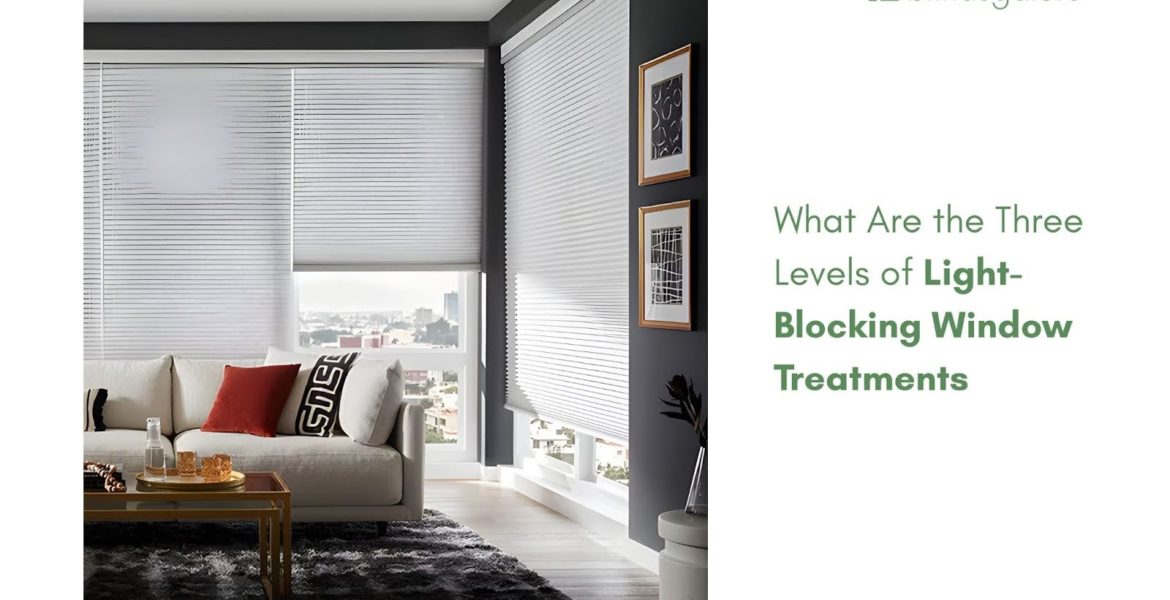
When shopping for window treatments, one question comes up again and again: how much light do you actually want to block?
The answer is rarely the same for every room. A sunlit living room benefits from softness and glow, while a bedroom often needs serious darkness.
Window treatments fall into three clear levels of light blocking. Once you understand how each level works, choosing becomes far simpler and far more intentional.
Understanding the Three Levels of Light Blocking
Light blocking refers to how much natural light passes through a shade or blind once it is installed. Fabric density, weave, backing, and mounting method all influence the final result.
According to the U.S. Department of Energy, properly selected window coverings can reduce heat gain by up to 77 percent, making light control an important factor in comfort and energy efficiency.
The three standard levels of light blocking are:
- Light filtering
- Room darkening
- Blackout
Each level serves a different purpose and fits different rooms and lifestyles.
Light Filtering: Soft Light With Daytime Privacy
Light filtering window treatments allow sunlight to pass through while diffusing its intensity. The room stays bright, but the harsh glare is softened.
Light filtering fabrics typically block less than 50 percent of incoming light. You still experience daylight, just in a gentler, more controlled way.
Best Rooms for Light Filtering
Light filtering works well in spaces where natural light is a priority.
- Living rooms and family rooms
- Kitchens and breakfast areas
- Home offices that need reduced screen glare
- Bathrooms where daytime privacy is sufficient
These treatments provide strong daytime privacy, but at night, silhouettes may be visible when interior lights are on.
- If you are browsing options, the Light Filtering category is a good place to compare fabrics and styles side by side.
- For a popular example, Blindsgalore Select Light Filtering Cellular Shades combine soft light diffusion with added insulation.
- For even more openness, Sheer treatments allow maximum light while maintaining a subtle layer of privacy.
Room Darkening: The Flexible Middle Ground
Room darkening treatments significantly reduce light without fully eliminating it.
How Much Light Does a Room Darkening Block?
Room darkening shades typically block about 85 to 99 percent of light, depending on fabric color, thickness, and how the shade is mounted. The room becomes noticeably dimmer, but not completely dark.
When Room Darkening Makes Sense
Room darkening works best in spaces that need flexibility.
- Guest bedrooms
- Nurseries and kids’ rooms
- Media rooms where glare reduction matters
- Multi-purpose rooms are used day and night
Mounting choice plays a major role here. Outside mounts that extend beyond the window frame reduce side gaps and noticeably improve performance compared to inside mounts.
Blackout: Maximum Light Control
Blackout window treatments are designed for near-total darkness.
What Blackout Really Means
Blackout fabrics block almost all light passing through the material itself. Any remaining light usually comes from gaps around the edges rather than through the fabric.
Best Uses for Blackout Window Treatments
Blackout is ideal when light control is critical.
- Primary bedrooms
- Nurseries and children’s rooms
- Home theaters
- Shift workers who sleep during the day
- Anyone sensitive to light
The Blackout category shows a wide range of fabrics and styles designed specifically for maximum light control.
For a cellular option that pairs blackout performance with insulation, Blindsgalore Select Blackout Cellular Shades are a strong choice.
How to Achieve True Blackout
For the darkest possible result:
- Choose an outside mount that extends beyond the window frame
- Add side channels or light blockers
- Ensure the shade sits flush against the wall or trim
Without these steps, even blackout fabrics may allow thin lines of light at the edges.
Comparing the Three Levels of Light Blocking
| Feature | Light Filtering | Room Darkening | Blackout |
|---|---|---|---|
| Light Blocked | Under 50% | About 85–99% | Nearly 100% |
| Daytime Privacy | Yes | Yes | Yes |
| Nighttime Privacy | Limited | Good | Complete |
| Room Brightness | Bright | Dim | Very Dark |
| Best Uses | Kitchens, offices, and living rooms | Guest rooms, nurseries, media rooms | Bedrooms, theaters, nurseries |
How to Choose the Right Level for Each Room
The best light level depends on how you use the space.
- Choose light filtering if you want brightness, daytime privacy, and an open, airy feel.
- Choose room darkening if you want glare reduction with flexibility.
- Choose blackout if sleep quality or media viewing is the priority.
Many homeowners mix light levels throughout the home or layer treatments, such as light-filtering shades paired with blackout curtains, for maximum control.
FAQs
The three levels are light filtering, room darkening, and blackout. They range from soft, translucent light to near-total darkness.
Yes. Light-filtering shades are translucent. They allow light through while obscuring clear views, providing daytime privacy with limited nighttime privacy.
Room darkening blocks most light but still allows some in. Blackout is designed to block all light when installed properly.
Blackout fabric blocks nearly all light, but installation matters. Outside mounts and side channels help eliminate light gaps.
Yes. Layering treatments or using dual shades allows you to adjust light throughout the day and night.