
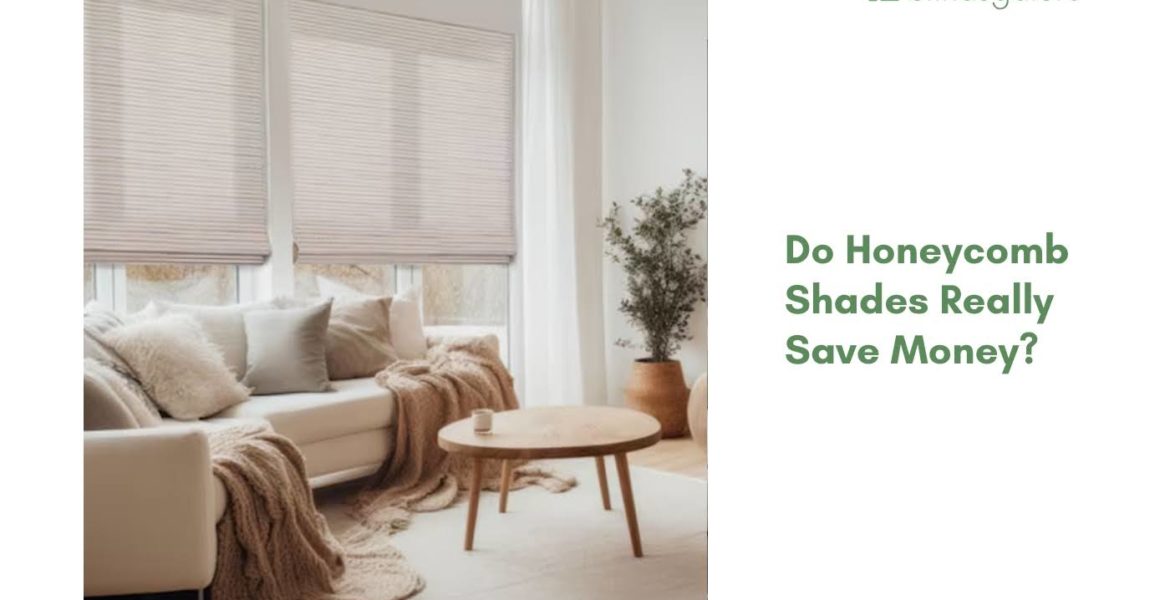
Short answer: yes. The longer answer is where things get genuinely interesting.
Honeycomb shades, also called cellular shades, are the most energy-efficient window covering available. Not by a small margin, either. The real-world savings data from the U.S. Department of Energy is impressive: tightly installed cellular shades can reduce heat loss through windows by 40% or more, and reduce unwanted solar heat gain by up to 80% in the cooling season.
Here is what you need to know to decide if they are worth the investment.
How Honeycomb Shades Actually Work
Cellular shades are fabric window shades engineered with a cross-section of hexagonal air pockets, like a honeycomb. Each cell traps a layer of still air between the window glass and the room. Still air is an excellent insulator. A single air pocket carries meaningful thermal resistance, and stacking cells multiplies the effect. The result is a shade that works like a thermal barrier, slowing the movement of heat in both directions, keeping rooms warmer in winter and cooler in summer.
Single Cell vs. Double Cell: What Changes?
Single-cell shades feature one row of honeycomb chambers. Good entry-level insulation, lighter in weight, and a strong fit for mild climates or rooms where energy loss is moderate.
Double-cell shades stack two rows of chambers. More air pockets mean better insulation. For homes with real seasonal temperature swings, double cell delivers a noticeable step up in comfort and energy performance.
At Blindsgalore, we express R-values as “up to” a given figure because real-world performance depends on mounting method, fabric type, and how well the shade seals around the window. A shade mounted inside a deep window well outperforms a flat surface mount every time.
Which Rooms Benefit Most?
South and West-Facing Rooms
West-facing windows absorb intense afternoon sun in summer, driving up cooling costs. Cellular shades on these windows block and slow that heat gain without cutting out all daylight. The Blindsgalore Essential Light Filtering Single Cellular Shade is a budget-friendly cordless option that softens light while adding a layer of insulation, making it an ideal starting point for sun-exposed living spaces and kitchens.
Bedrooms
Bedrooms with drafty windows lose heat overnight when the thermostat is set lower. A well-fitted honeycomb shade adds a meaningful layer of nighttime insulation. The Blindsgalore Essential Blackout Single Cellular Shade blocks light for deeper sleep and delivers stronger thermal performance than light-filtering fabric, making bedrooms, nurseries, and media rooms noticeably more comfortable. For a deeper comparison, see Light Filtering vs. Blackout Shades.
Living Rooms and Great Rooms
Large windows in open living areas are beautiful. Large windows are also significant sources of heat loss in winter and heat gain in summer. Cellular shades on big windows punch above their weight because the window-to-wall ratio is high. For rooms where both privacy control and light flexibility matter, the Blindsgalore Cordless Top Down Bottom Up Cellular Shade lets you lower the top of the shade for daylight while keeping the bottom raised for privacy, or any combination in between. The DOE specifically notes that top-down/bottom-up operation allows homeowners to most effectively control daylight entering the home.
Bathrooms and Kitchens
Cellular shades work in humid environments when made with moisture-resistant fabric. A bathroom or kitchen window benefits from insulation too, especially in older homes where smaller rooms tend to be the coldest in winter. For care tips, see Easy Cleaning Hacks for Window Blinds. One important note: never submerge any window treatment in water. Light dusting or gentle vacuuming with a brush attachment keeps cellular shades looking fresh.
Why Motorization Matters for Energy Savings
Cellular shades only save energy when they are closed. The DOE notes that 75% of residential window coverings remain in the same position every day, which means most homeowners are not capturing the full insulation benefit.
Motorized cellular shades solve that problem. Schedule them to close at sunset and open at sunrise, and the insulating benefit runs on autopilot. Solar-powered motorization options take the convenience a step further by eliminating the need for battery replacements or outlet access. Pair a solar-powered motor with a compatible smart hub, like the Connector Smart Hub or Levolor InMotion, for integration with Amazon Alexa, Google Home, Samsung SmartThings, Siri Shortcuts, Control4, and IFTTT.
Motorized also means fully cordless, which is cleaner and safer for homes with children and pets. For more on how motorized shades work day to day, check out Guide to Motorized Shades Battery Life and Maintenance.
Factors That Affect Your Actual Savings
A few variables determine how much of that DOE research translates to your utility bills. Mount type matters: inside mounts in deep window wells perform significantly better than outside mounts with air gaps on the sides. Cell count matters: double-cell shades outperform single-cell in any climate with real seasonal temperature swings. How often the shades are used makes a big difference, which is exactly why motorization and scheduling pay for themselves over time. And opening shades strategically, south-facing windows during winter sun, for example, can contribute to passive solar gain.
For help measuring your windows for the best fit, our measuring guide walks through everything step by step. For installation tips, see Install Cellular Shades.
Our Guarantee
At Blindsgalore, every purchase is backed by our 30-day guarantee, with free exchanges on up to four windows per household. Custom shades can be shipped out in as little as 5 to 7 business days, and shipping is free across the continental U.S. Call (877) 702-5463 with questions.
FAQs
Yes, completely. “Honeycomb” describes the shape of the air pockets. “Cellular” describes the construction. At Blindsgalore, we use both terms interchangeably.
R-values vary by cell count, fabric, and installation method. Single-cell shades typically reach up to R-2. Double-cell constructions can reach up to R-3 or higher when properly fitted. We always describe R-values as “up to” a given number because installation quality plays a significant role.
Yes. The DOE notes that cellular shades can reduce unwanted solar heat gain through windows by up to 80% when installed with a tight fit. The insulating air pockets slow heat transfer in both directions.
Top-down/bottom-up operation is not required, but the DOE specifically recommends it as the most effective way to control daylight entering the home. The Cordless Top Down Bottom Up Cellular Shade gives full flexibility to balance insulation, privacy, and natural light throughout the day.
Every order comes with our 30-day guarantee, covering free exchanges for any reason on up to four windows per household. Our team is available at (877) 702-5463 to help you find the right shade.