
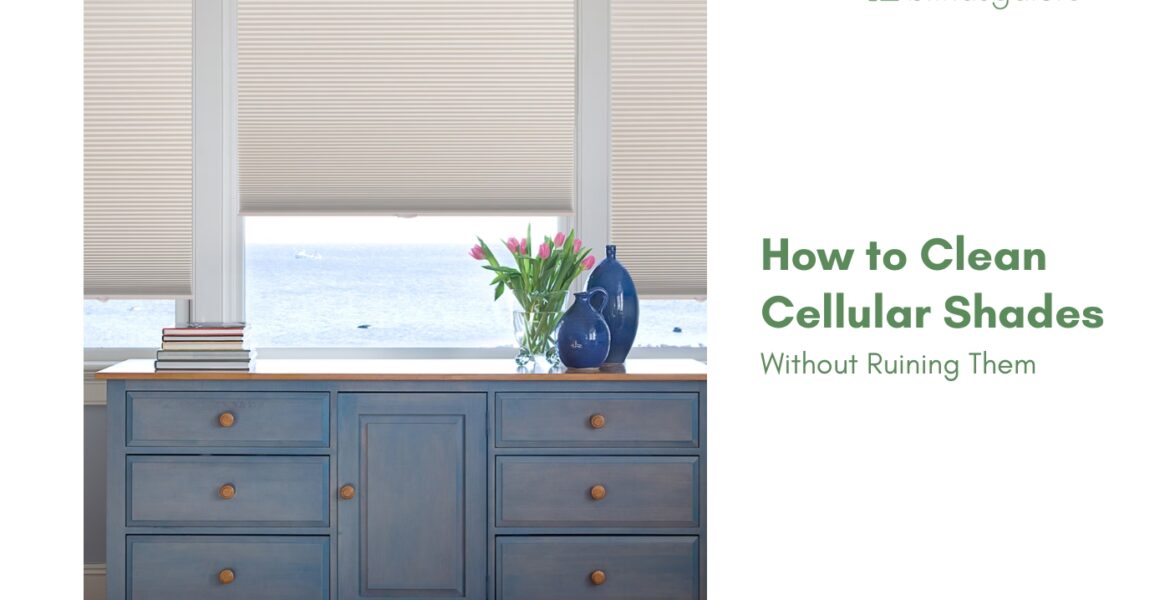
Cellular shades clean up in five gentle steps: dust the surface, vacuum with a brush attachment, clear trapped debris from the cells, spot treat stains with a barely damp cloth, then let the pleats re-set. The whole job protects the one thing that makes a honeycomb shade worth owning, the crisp pleated structure that traps air and insulates the room.
The honeycomb design that delivers that insulation also gives dust and the occasional bug more places to hide than a flat slat, and the structure is delicate. Too much water, aggressive scrubbing, or the wrong technique permanently crushes the cells. The safe routine below keeps the shape intact, and the crucial don’ts at the end cover the mistakes that ruin a shade for good.
Before you start the process of cleaning cellular shades
A few minutes of prep prevents the most common cleaning damage. Check these before touching the fabric.
Read the care tag first, since cellular fabrics vary and some carry finishes or backings that do not tolerate moisture at all. Know the fabric type, too. Standard light-filtering shades are reasonably forgiving of a damp cloth, but blackout cellular shades contain a metallic lining that can separate, or delaminate, if it gets too wet, so they stay dry-method only.
Test any damp method on a hidden back pleat first. And the most important rule of all: never submerge a cellular shade in water. Submerging warps the pleats, stains the fabric, and rusts the metal components inside. No cellular shade, light-filtering, room-darkening, or blackout should ever be soaked, dunked, or run under a tap.
How to clean cellular shades step by step
Work from the gentlest method to the most involved, and stop as soon as the shade is clean. Most never need more than the first two steps.
1. Dust the surface weekly
Lower the shade fully, then run a feather duster, dry microfiber cloth, or soft lint roller across the fabric in the direction of the pleats. Wipe one direction, not back and forth, since back-and-forth motion pills the fabric and knocks the cells out of shape. Weekly dusting is the single best thing for a cellular shade, stopping grime from setting into darkening stains that are far harder to remove later.
2. Vacuum with a brush attachment
For heavier dust, switch to a vacuum with the soft brush attachment on low suction and swipe gently along the line of the pleats. Low suction matters, since full power can pull the soft fabric into the nozzle and crumple a cell. Vacuuming handles pet hair, pollen, and settled dust that a duster leaves behind, and it is safe for every type of fabric, including blackout.
3. Clear debris from inside the cells
A dead bug or dust bunny trapped inside a cell and backlit by the sun is the classic honeycomb annoyance, and the fix is forced air, not a poke that risks puncturing the fabric. A can of compressed air, the kind used for keyboards, works perfectly: slip the straw into the cell and send short bursts through to push the debris out the far side. A hair dryer on its cool, no-heat setting does the same job. Never use heat, which warps the honeycomb.
4. Spot treat stains gently
Save water for last, and only when dusting has not done the job. Dampen a clean cloth with warm water and a single drop of mild dish soap, then wring it out hard so it is barely moist, never dripping. Blot the stain, do not scrub, since scrubbing pills the fabric and crushes the pleat. Follow with a dry cloth to lift the moisture out. Blackout shades skip this step entirely, since the metallic lining cannot take water, making a stained blackout shade a professional-cleaning situation.
5. Let the pleats reset
After any damp cleaning, raise the shade most of the way and leave it up for a few hours. Lifting lets the pleats retrain into their crisp accordion shape as they dry and keeps moisture from settling at the bottom rail. Keep the shade out of direct heat and harsh sun while it dries, since both warp the cells.
When to call in a professional
Some jobs are past a damp cloth. Deep-set-in grime across the whole shade, smoke or soot residue, or a blackout shade with a real stain are all candidates for professional cleaning. Ultrasonic cleaning exists precisely because home submersion does not work, and the in-house experts at (877) 702-5463 can point toward the right option for a specific fabric.
The crucial don’ts
The mistakes below ruin cellular shades for good, and each one is easy to avoid.
- Never submerge or soak a cellular shade in water, including light-filtering, room-darkening, and blackout fabrics. Soaking warps the pleats, stains the fabric, and rusts the internal metal parts.
- Never use bleach, ammonia, or harsh chemicals, which discolor the fabric and break down its finish.
- Never scrub, since aggressive rubbing pills the fabric and crushes the pleats.
- Never machine wash or dry, as the agitation and heat destroy the honeycomb structure.
- Never use heat to dry, including a hot hair dryer, radiator, or direct sun.
- Never get a blackout shade wet, since the metallic lining can delaminate.
Keep your shades looking their best
A consistent dust-and-vacuum routine does most of the work, and the gentle steps above handle the rest without risking the pleats. For the trickier trapped-bug-and-backlit-cell problem, the guide on how to clean honeycomb blinds without removing them covers the forced-air trick in more detail.
When the time comes to refresh a worn shade, the full cellular and honeycomb range is worth a look, and ordering up to 10 free swatches makes the new color real against the wall. The light-filtering cellular shades and blackout cellular shades lines both carry a 3-year limited warranty, upgradeable to five years, and pair with motorized lifts controlled through hubs like Bali Gateway, MotionBlinds, Alexa, and Google Home for a cleaner, less-touched fabric.
Love your view, crisp and clean.
Frequently Asked Questions
Cellular shades should never be submerged or soaked in water. Light spot cleaning with a barely damp cloth and a drop of mild dish soap is safe for most light-filtering fabrics, but soaking warps the pleats, stains the fabric, and rusts the internal metal parts. Blackout shades should stay dry entirely.
Use forced air to clear debris from inside the cells. A can of compressed air or a hair dryer on the cool, no-heat setting blows trapped dust and bugs through and out the other side. Never poke inside a cell with anything rigid, since it can puncture the fabric.
Clean blackout cellular shades with dry methods only. The metallic lining inside can separate, or delaminate, if it gets too wet, so stick to dusting with a microfiber cloth and vacuuming with a brush attachment on low suction. For real stains, use a professional cleaning service rather than water at home.
Dust cellular shades weekly with a duster or microfiber cloth, and vacuum with a brush attachment as needed for heavier dust. A deeper spot clean is only occasional, usually when a specific stain appears. Consistent light dusting prevents most grime from setting in.
Cleaning will not ruin the shape if done gently. Wipe in one direction along the pleats, use low vacuum suction, blot rather than scrub, and raise the shade to dry so the pleats reset. Back-and-forth scrubbing and heavy water are what crush the cells.
Blindsgalore brand cellular shades carry a 3-year limited warranty with a free upgrade to a 5-year warranty, covering defects in materials and workmanship when the product is properly installed and operated. Boutique products include a free 5-year extended warranty. Fading is not covered.