
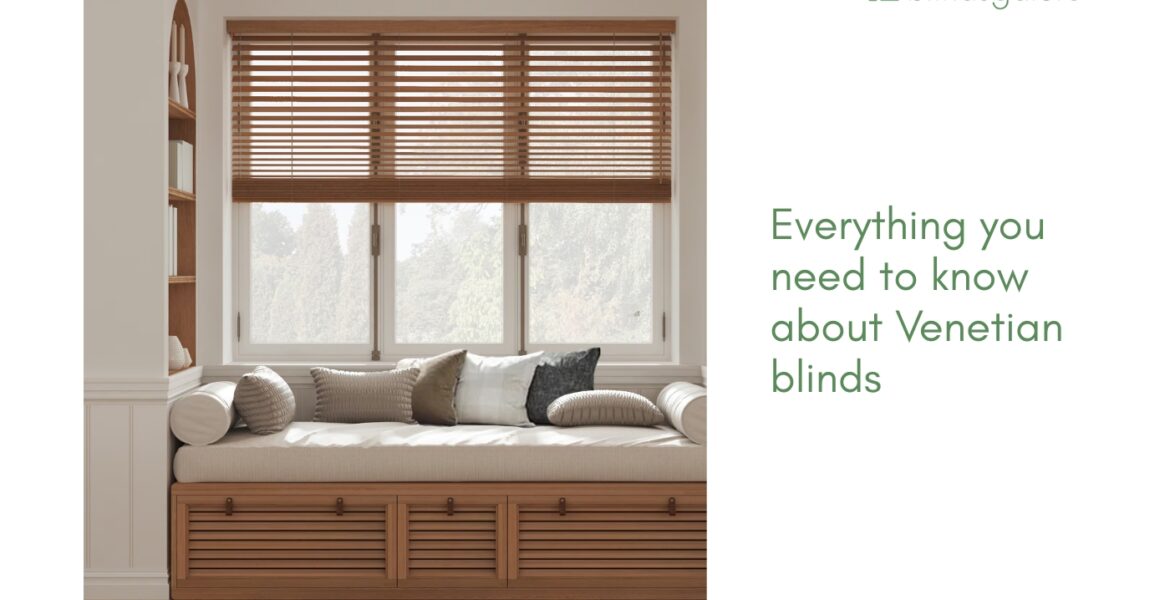
Venetian blinds are the most versatile window treatment on the market and probably the one type you’ve lived with somewhere along the way. The category covers a wide range of materials, slat sizes, and lift mechanisms, which is also why shopping for them can feel confusing.
Once you understand what’s actually different between the options, the right pick for your room becomes obvious.
Shop Custom Window Blinds and Shades
What are Venetian blinds?
A Venetian blind is a horizontal-slat window treatment with a tilt mechanism. The slats stack flat when fully raised and rotate together to let in or block light when lowered. Originally developed centuries ago and named after the city of Venice, the design has stayed remarkably consistent because the mechanics work.
Worth clearing up immediately: “Venetian blinds” and “mini blinds” overlap. Mini blinds are technically a subset of Venetians, specifically the 1-inch aluminum or vinyl slat version. When most US homeowners say “Venetian blinds” today, they mean the wider 2-inch or 2.5-inch wood or faux wood style, which is what most of this guide covers.
What types of Venetian blinds can you choose from?
Four materials cover almost every Venetian blind sold today.
- Faux wood blinds are the most popular pick by a wide margin. Slats are composite or PVC molded to look like real wood, in painted whites, stained finishes, and grain-embossed textures. Faux wood handles humidity, sun, and daily wear without warping or fading, and the price is friendlier. For most rooms, this is the right call.
- Real wood blinds deliver a warmth and grain variation that faux wood comes close to but doesn’t fully match. Real wood works beautifully in formal living rooms, studies, and primary bedrooms where the blind reads as part of the architecture. Not for bathrooms, kitchens, or sun-heavy west-facing windows, where moisture and UV cause warping and fading.
- Aluminum mini blinds are the budget Venetian. Thin 1-inch slats, lightweight construction, and resilient to humidity. The right call for rentals, garages, utility rooms, and any window where function trumps statement.
- Bamboo Venetian blinds bring a natural, organic texture that the other materials can’t replicate. Each slat has a slight variation in tone, which adds depth in coastal, boho, and farmhouse interiors. Our Bamboo vs. Wood Blinds comparison covers the practical differences.
What slat size should you pick?
Standard widths run 1 inch, 2 inches, and 2.5 inches.
The 1-inch slat is the classic mini blind look: light and contemporary on small windows, less proportional on larger ones. The 2-inch slat is the workhorse for residential windows from about 24 to 60 inches wide. Most faux wood and wood Venetians ship in this width by default because it balances light control, view-through when tilted, and visual proportion. The 2.5-inch slat is the wider, more architectural option. Fewer slats per window means a cleaner look and a slightly better view when tilted open. Best on windows wider than 60 inches or in rooms with high ceilings.
Rule of thumb: 1 inch for small or budget windows, 2 inches for almost everything residential, 2.5 inches for statement windows.
Should Venetian blinds be cordless, wand, or motorized?
Cordless is the default for most new installations and is now legally required on most US window coverings (per ANSI/WCMA standards effective June 2024) for safety around children and pets. Raise and lower by pulling the bottom rail; tilt by twisting it. Clean, simple, no dangling cords.
A wand tilt with cordless lift is the next step up. The wand rotates the slats with a smoother feel than thumb-tilting the bottom rail. Useful on taller blinds or for users with limited grip strength.
Motorized lift is the premium option. Raise, lower, and tilt with a remote, app, or voice command, and program schedules so the blinds open at sunrise and close at dusk. Worth it for tall, hard-to-reach windows, banks of multiple windows, and homes with smart-home integration. Our How to Schedule Your Motorized Blinds walks through what the daily operation looks like.
Which rooms suit Venetian blinds best?
Venetian blinds work in living rooms, bedrooms, dining rooms, home offices, hallways, kids’ rooms, and most kitchens. The tilt mechanism is the killer feature: you get soft filtered light without losing privacy, which fabric shades and drapery cannot really do.
A few rooms call for something different. Bathrooms with showers and laundry rooms benefit from faux wood specifically, since real wood can warp and crack and aluminum can oxidize in high moisture areas. Sliding glass doors and patio doors are wider than Venetians can handle gracefully; for those openings, vertical blinds, panel track blinds, or custom drapery are the right call. For total blackout, layered fabric shades or Roman shades with blackout liners outperform Venetians, since horizontal slats always leak some light at the edges.
How do you pick the right Venetian blind for your home?
Match material to room first, then slat size to window, then lift to how you’ll use it day to day. For a typical American home, faux wood in 2-inch slats with cordless lift covers most windows beautifully. Upgrade to real wood in formal rooms, drop to 1-inch aluminum in utility spaces, and go motorized for windows you can’t easily reach.
Order up to 10 free samples before you commit. Hold them at the actual window in morning, midday, and evening light. Our in-house experts at (877) 702-5463 can talk through tricky windows or full-house orders. Blindsgalore blinds come with a 3-year limited warranty (with a free upgrade to 5 years), a 30-day exchange guarantee, and free shipping across the contiguous United States and Canada. Most ship within 5 to 7 business days.
Our Ultimate Guide to Window Treatments covers broader options, and our How Long Do Custom Blinds Last article explains what to expect from a well-chosen blind.
Frequently Asked Questions
Not exactly. Mini blinds are technically a type of Venetian blind, specifically the 1-inch aluminum or vinyl slat version. When most US shoppers say “Venetian blinds,” they mean the wider 2-inch or 2.5-inch wood or faux wood style.
No. Even with the slats fully closed, horizontal Venetian blinds leak light along the slat edges and through the cord holes. For a true blackout, layer Venetians with blackout drapery or use blackout fabric shades.
A 2-inch slat is the standard choice for most bedrooms, balancing privacy, light control, and a clean finished look. Larger windows over 60 inches often look better with 2.5-inch slats.
Faux wood Venetian blinds work well in bathrooms since the material doesn’t warp in humidity. Avoid real wood in any bathroom with a shower or tub, since steam shortens the lifespan of the slats and risks visible cupping.
A well-made faux wood or real wood Venetian lasts 10 to 15 years with normal use. Aluminum mini blinds typically have a shorter functional lifespan because the slats bend out of shape more easily. Our warranty does not cover fading, so UV-resistant finishes are worth the small premium in sun-facing rooms.
Easier than fabric shades, harder than rollers. Dust each slat with a microfiber cloth or vacuum brush attachment, and wipe with a damp cloth for stains. Never submerge any blind or shade in water; soaking warps slats and ruins lift mechanisms, and that kind of damage is not covered under warranty.