
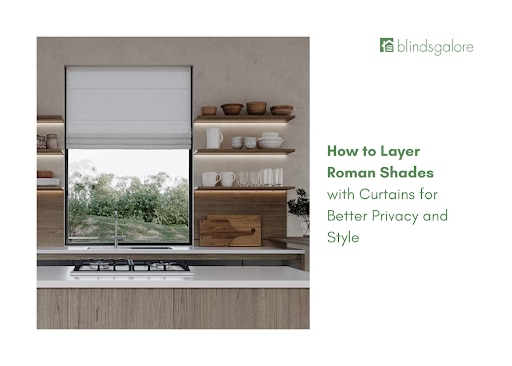
You close the blinds during the day for privacy, but your room feels dark and closed off. At night, when you want the windows open to show off your view, you have no privacy at all. You’re stuck choosing between one or the other. Here’s the solution: layering Roman shades with custom drapery. As a family-owned business with over 25 years of window treatment expertise, we’ve seen how elegant window treatments using Roman shades and drapery can solve multiple problems at once while creating a polished, designer look.
Layering gives you complete control. Use shades during the day for filtered light and privacy. Draw curtains at night for a soft frame and complete darkness. Adjust both throughout the day as your needs change. A layered window isn’t just functional, it’s the finishing touch that takes a room from basic to beautiful.
Why Should I Layer Roman Shades with Curtains?
Layering Roman shades and drapery offers benefits that a single window treatment simply cannot match.
- Complete Privacy Control Throughout the Day Roman shades give you daytime privacy while allowing soft, filtered light. When evening comes, curtains close for complete coverage. You’re never choosing between light and privacy again.
- Superior Light Management Options A light-filtering Roman shade softens harsh sunlight during peak afternoon hours. Blackout curtains eliminate every trace of light for sleeping. Sheer curtains add softness without blocking your shade’s function. You control exactly how much light enters at any moment.
- Increased Energy Efficiency Layering creates an insulating pocket of air between the window and room. Roman shades already have insulating properties. Add thermal curtains and you’ve created a barrier that keeps heat out in summer and warmth in during winter. Lower energy bills are a bonus.
- Visual Depth That Single Treatments Miss A single treatment, no matter how beautiful, sits flat against the window. Layering adds dimension. The play between the structured folds of a Roman shade and the soft drape of curtains creates depth, making windows appear larger and rooms feel more spacious.
- Flexibility for Every Season In summer, keep curtains open to show off your airy, light-filtering shades. In winter, draw heavy thermal drapes for warmth and coziness. Change the look and function of your windows without buying new treatments.
What Roman Shades Work Best for Layering?
Not all Roman shades are created equal when it comes to layering. Your choice depends on your privacy needs, room function, and style preferences.
Light-Filtering Roman Shades A light-filtering shade softens incoming light while maintaining daytime privacy. Pairs beautifully with sheer or semi-sheer curtains for an airy, elegant look. Perfect for living rooms and dining spaces where you want natural light but don’t need complete darkness.
Room-Darkening Roman Shades Blocks most light while maintaining the soft, folded aesthetic of a Roman shade. Works well when paired with decorative curtains that aren’t necessarily blackout. Great for bedrooms where you want darkness but still love the look of flowing drapes.
Blackout Roman Shades Eliminates almost all light on its own. When layered with blackout curtains, you achieve 100% darkness. Essential for nurseries, media rooms, or any space where light control is critical. Many parents swear by blackout layering for getting kids to sleep past sunrise.
Mounting Considerations for Layering Mount Roman shades inside the window frame for a clean, built-in look. Curtains hang on a rod mounted 4-6 inches beyond the frame. An inside-mount shade leaves wall space for curtain hardware without crowding. If you’re considering outside-mount options, our guide on outside mount Roman shades walks through the benefits.
Motorization for Layered Systems Here’s an insider tip: motorize your Roman shades when layering. You’ll thank yourself later. With curtains in front, reaching behind to adjust a corded or cordless shade becomes awkward. A motorized shade operates with a simple remote or wall switch. Even better, integrate with a smart hub like the Connector Smart Hub or Bali Gateway. Control both your shades and smart lighting through Alexa, Google Home, or Samsung SmartThings for a completely connected home.
Which Curtain Styles Actually Complement Roman Shades?
The right Roman shades and drapery ideas start with choosing curtains that enhance rather than compete with your shades.
- Sheer Curtains for Soft Light Diffusion Pairing a room-darkening Roman shade with sheer curtains gives you the best of both worlds. During the day, raise the shade and let sheers soften the light. At night, lower the shade for privacy and keep sheers closed for a layered, elegant look. Sheers in natural, earthy tones create a calming, spa-like atmosphere.
- Blackout Curtains for Complete Darkness When you need total darkness, pair a light-filtering or blackout shade with blackout curtains. Close the shade, draw the curtains, and you’ve created a sleep sanctuary. Perfect for bedrooms, especially for shift workers or anyone who needs to sleep during daylight hours. Our custom drapery comes with optional blackout lining that transforms any fabric into a light-blocking powerhouse.
- Solid vs. Patterned Fabrics A patterned Roman shade looks stunning with solid-colored curtains. A solid shade pairs beautifully with patterned drapes. Mixing both patterns rarely works unless you’re confident in your design skills. When in doubt, go solid on one element and patterned on the other. You can also draw inspiration from our living room window treatment ideas.
- Hardware That Accommodates Both Treatments Choose curtain rods mounted high and wide, at least 4-6 inches above and beyond the window frame. A higher rod draws the eye up, making ceilings feel taller. Wider placement allows curtains to stack back completely, revealing your Roman shade when open. Consider decorative rings or grommets for easy operation. Our Designer Custom Drapery: Ring Top pairs perfectly with this approach.
- Length and Fullness Recommendations Curtains should just kiss the floor or puddle slightly for a luxurious look. Never hang curtains that float above the floor, they look unfinished. For fullness, aim for panels that are 1.5 to 2.5 times the width of your window. Fuller curtains create elegant folds when open.
Step-by-Step: How to Layer Window Treatments Like a Pro
Installing layered luxury window treatments is simpler than you think. Follow these steps for a professional result.
Step 1: Measure Everything Twice Start with your window measurements. For an inside-mount Roman shade, measure the width and height of the window opening at three points. Use the smallest measurement. For curtains, measure from your planned rod placement to the floor. Our comprehensive measuring guide eliminates guesswork.
Step 2: Install Roman Shades First Always install the Roman shade before hanging curtains. For an inside mount, brackets screw directly into the top of the window frame. Mark bracket locations, pre-drill holes, and secure brackets. Hold the headrail up to the brackets and click into place. Test the operation before moving on. Need help? Our installation guides cover every product.
Step 3: Position Your Curtain Rod Mount the curtain rod 4-6 inches above the window frame and 3-4 inches beyond each side. Higher and wider makes windows appear larger. Use a level to ensure your rod is perfectly straight. Nothing screams “DIY disaster” like a crooked curtain rod.
Step 4: Hang Your Curtains Thread curtains onto the rod or attach rings, depending on your style. Hang the rod on its brackets and adjust curtain placement. Step back and check for even distribution and proper length. Adjust before finalizing.
Step 5: Test Both Treatments Raise and lower your Roman shade. Open and close your curtains. Make sure nothing catches or bunches. A clearance of 3-4 inches between the shade and curtains prevents interference. If something doesn’t operate smoothly, adjust before calling it done.
Pro Installation Tip: Whether you’re a DIY expert or not, installation will be a breeze. You’ll need basic tools: a drill, screwdriver, tape measure, level, and pencil. About an hour per window. Instructions are included and available on our site. No guessing, no stressing.
What Mistakes Ruin Layered Window Treatments?
Avoid these common pitfalls when creating Roman shades and drapery ideas.
- Crowding the Window Frame Mounting Roman shades outside the frame when you plan to add curtains creates a mess. The shade and rod compete for space. Always inside-mount your shade, outside-mount your curtains.
- Pattern Overload A bold geometric Roman shade with busy floral curtains creates visual chaos. Stick to one patterned element, one solid element. Your eyes will thank you.
- Skimping on Hardware Cheap brackets sag under the weight of heavy drapes. Invest in quality hardware rated for your curtain weight. Your curtains won’t stay beautiful if they’re sagging by next month.
- Ignoring Room Proportions Massive, heavy drapes in a small room feel overwhelming. Delicate sheers on huge windows look skimpy. Match the scale of your treatments to your room size.
- Forgetting Daily Operation If you rarely use your curtains, having them overlap the shade is fine. If you plan to open and close curtains daily, ensure they stack back completely. Plan for how you’ll actually live with your windows, not just how they look in a photo.
Room-by-Room: Where Layering Makes the Biggest Impact
Different rooms have different needs. Here’s how to approach elegant window treatments in each space.
Living Rooms: Balance Natural Light with Functionality Living rooms need flexibility. Use light-filtering Roman shades with neutral, textured curtains. During the day, raise shades for full light. In the evening, lower shades and keep curtains open for ambiance. Only draw curtains when you want complete privacy or to reduce TV glare. A living room with layered treatments feels pulled together, intentional, and undeniably polished.
Bedrooms: Create Your Sleep Sanctuary Bedrooms demand darkness. Pair room-darkening or blackout Roman shades with blackout curtains for total light elimination. A dual approach also reduces outside noise, creating a quieter sleep environment. Choose calming colors and soft textures. Your bedroom should feel like a retreat, and layered treatments deliver that luxury hotel experience.
Kitchens: Manage Morning Sun and Evening Privacy Kitchens need practical solutions. A simple Roman shade in an easy-clean fabric handles daily messes. Add café-style curtains covering just the lower half of the window for evening privacy while keeping the upper half open for light. Or skip curtains entirely and use a valance for a finishing touch.
Home Offices: Reduce Screen Glare Without Losing Light Home offices present a unique challenge: you need light but not glare on your monitor. A light-filtering Roman shade cuts glare while maintaining brightness. Add sheer curtains on the sides for softness without blocking additional light. Position your desk perpendicular to windows rather than facing them directly for the best lighting setup.
Why Layering Creates a Bigger Visual Impact Than You’d Expect
Here’s something most people don’t realize: luxury window treatments using Roman shades and drapery actually change how you perceive the size and feel of a room.
The depth created by layering adds dimension that makes small rooms feel larger. Your eye tracks the layers, the Roman shade at the window, the curtains in front. A sense of space exists between them, creating the illusion of depth. Large rooms benefit too. Layering makes vast windows feel more intimate and grounded, preventing that “empty warehouse” feeling.
There’s also a psychological component. Layered windows signal attention to detail, care, investment. Your brain interprets a carefully dressed window as a sign of a well-maintained, comfortable home. A room with layered elegant window treatments feels more expensive than it actually is, even when you’ve chosen budget-friendly options.
Can I Motorize Both Roman Shades and Curtains?
Yes, and it’s easier than you think. Motorized Roman shades operate via remote, wall switch, or smart hub integration. Motorized curtain tracks also exist, though they’re less common for residential use. Most people motorize shades and operate curtains manually since curtains are opened and closed less frequently.
The real magic happens when you integrate motorized shades with a smart home system. Use the Connector Smart Hub, Bali Gateway, or Levolor InMotion to connect your shades to Alexa, Google Home, Siri Shortcuts, IFTTT, Control4, or Savant. Program shades to open gradually in the morning as your alarm goes off. Set them to close automatically at sunset. Control everything from your phone, even when you’re away from home.
How Do I Keep Layered Window Treatments Looking Fresh?
Proper maintenance ensures your luxury window treatments look new for years.
Cleaning Roman Shades Regular dusting or a gentle pass with the vacuum’s brush attachment is almost all Roman shades need. For spot cleaning, use a damp cloth with mild detergent and blot gently. Never submerge Roman shades in water. Water can damage the fabric, internal mechanisms, and cause permanent warping or discoloration. We would never advise customers to submerge blinds or shades in water, whether light-filtering, blackout, or motorized.
Curtain Care To clean and care for your window treatments, always check the care tag and refer to the product guide. For delicate fabrics or lined curtains, dry cleaning is often recommended. A steamer removes wrinkles and refreshes fabric between cleanings.
Warranty Coverage We back our craftsmanship with a free 3-year warranty, upgradable to 5 years on Blindsgalore products. Our warranties do not cover fading from sun exposure, so choosing UV-resistant fabrics from the start is smart. We also offer the industry’s best guarantee: free product exchanges for any reason within 30 days, covering up to four windows per household.
FAQs
Absolutely. Mount Roman shades inside the window frame and curtains on a rod 4-6 inches beyond the frame. Proper spacing ensures both treatments operate smoothly without interference.
Leave 3-4 inches of clearance between the Roman shade and curtains. A gap prevents the curtain fabric from catching on the shade during operation and ensures smooth functionality.
Sheer, semi-sheer, and lightweight curtains complement most Roman shades beautifully. For bedrooms needing complete darkness, blackout curtains paired with room-darkening shades create a sleep sanctuary.
When properly proportioned, layered treatments actually add visual depth and can make rooms appear larger. The key is mounting curtains high and wide, creating dimension and drawing the eye upward.
Yes. Motorized Roman shades are widely available and easy to control via remote or smart hub. Motorized curtain tracks exist but are less common. Most people motorize shades and operate curtains manually for the best balance of convenience and cost.