
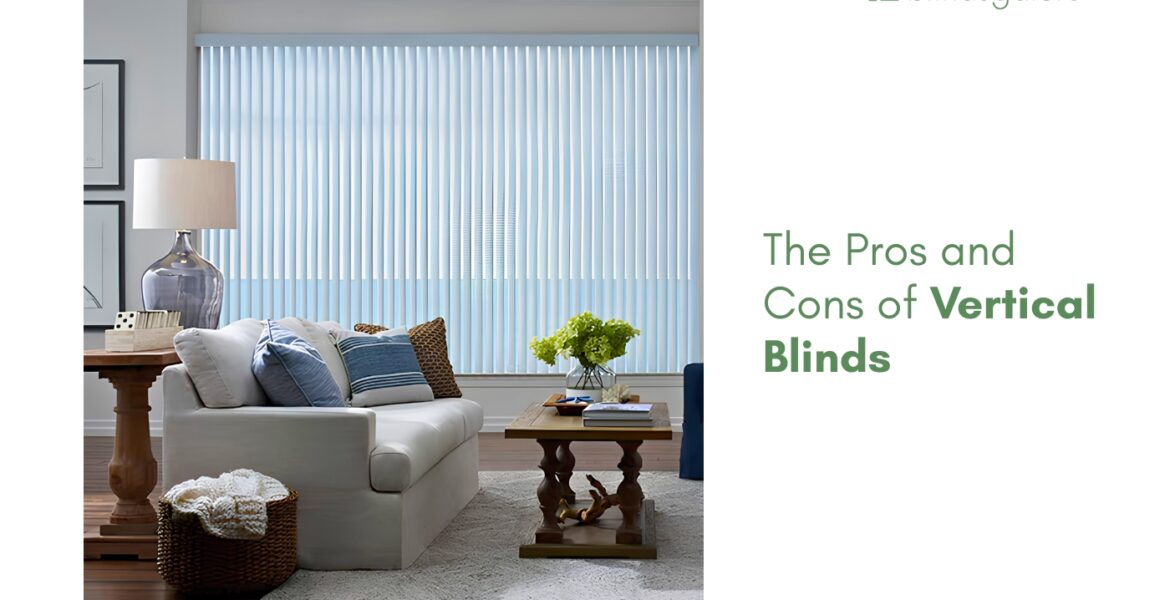
Vertical blinds are one of the most practical window treatments you can buy, and one of the most debated. Homeowners love them for sliding doors and large windows, then wonder if they look too utilitarian for the rest of the house.
The honest answer is that vertical blinds do specific things extremely well and other things not at all, which makes the pros and cons of vertical blinds worth understanding before committing.
What are the advantages of vertical blinds?
Vertical blinds earn their reputation on five genuine strengths. Each one matters most in a specific kind of room or window.
Side-to-side operation for large openings
Vertical blinds move the same way a sliding door does, which is why they remain the default choice for wide windows and patio doors. The vanes stack neatly to one side and clear the doorway completely. For anyone covering a sliding or patio door, this motion match is the single most important feature. A horizontal blind would need to be raised entirely out of the way, which gets old fast on a door used multiple times a day.
Precise, adjustable light control
The vanes rotate a full 180 degrees, which means you can tilt them to soften glare, angle them for privacy while still letting light in, or close them fully for near-darkness. The level of control rivals most horizontal blinds and outperforms many shades. For rooms with changing light throughout the day, that adjustability makes a real difference. The guide on Hello Sunshine, Goodbye Glare covers more ways to manage light across the home.
Less dust than horizontal blinds
Vertical vanes hang straight down, so dust does not settle on them the way it does on horizontal slats. The result is less buildup and less frequent cleaning. A quick wipe with a damp cloth or a pass with a vacuum brush attachment is usually enough to keep vertical blinds looking clean.
Affordable for wide windows
Covering a large opening with most treatments gets expensive fast. Vertical blinds are one of the most budget-friendly ways to dress a wide window or sliding door without sacrificing function. For rental properties and multi-room projects where cost per window matters, that affordability adds up quickly. The guide on the Best Blinds for Airbnb and Vacation Rentals shows how verticals fit into a practical whole-property plan.
Easy single-panel replacement
When a vane gets damaged, replacing one panel costs far less than replacing the whole blind. The individual vane pops out, and the replacement clips in, which keeps long-term ownership costs low and extends the life of the treatment. Vertical blinds generally hold up well across years of daily use, and the guide on How Long Do Custom Blinds Last walks through what affects the lifespan of any custom window treatment.
Material range for different rooms
Vertical blinds come in vinyl, fabric, and faux wood finishes, so the same side-to-side mechanism works across very different rooms. Vinyl vanes are the most moisture-resistant and budget-friendly, making them a natural pick for kitchens and bathrooms. Fabric vanes add softness and texture for living rooms and bedrooms. The material choice changes the feel of the blind without changing how it operates.
What are the disadvantages of vertical blinds?
The downsides are real and worth knowing before you buy. None of them are deal-breakers, but each one matters in certain rooms.
Noise from airflow
When a breeze moves through an open window or a ceiling fan pushes air across the room, the vanes can swing and tap against each other. The sound is soft but noticeable, especially in quiet bedrooms. Heavier fabric vanes reduce this, and fabric vertical blinds in particular dampen the clatter better than standard vinyl.
Light gaps between vanes
Even when closed, small slivers of light can slip between the individual vanes, especially near the edges where the vanes meet the wall. Vertical blinds are not a true blackout treatment. For a bedroom that needs total darkness, pairing verticals with blackout drapery or choosing a different treatment for that specific window is the more honest answer. The gaps also mean privacy is not absolute at night with interior lights on, so street-facing bedrooms may want a layered approach.
A more functional look
Vertical blinds read as clean and practical rather than decorative. In a living room or dining room where warmth and texture matter, they may feel too utilitarian for the space. The vanes give a linear, structured look that works well in modern and minimal rooms but can feel cold in traditional or textured interiors. If the room calls for a softer, more designed feel, panel track blinds deliver a similar side-to-side operation with wider fabric panels and a more contemporary look, or custom drapery adds softness that vanes cannot.
Not ideal for small or narrow windows
Vertical blinds are built for width. On a small or narrow window, the vanes can look oversized, and the stack can crowd the opening when drawn aside. Horizontal blinds or roller shades tend to suit smaller windows better, and mixing verticals with a different treatment on smaller windows in the same room is a common and smart approach. The result looks intentional rather than forced.
Are vertical blinds outdated?
No. Vertical blinds are not outdated, but the old vinyl vanes in a rental apartment are not the whole category anymore. Modern verticals come in a wider range of materials, textures, and finishes than they did a decade ago. Vinyl vertical blinds still serve the practical end, while fabric verticals bring texture and softness that change the whole feel. Motorized options now let verticals open and close on a schedule or by voice command, which brings them into the smart-home world alongside everything else. The guide on Motorized Shades and Blinds covers what motorization looks like across treatments. For anyone who has not looked at verticals recently, the current options may surprise. The Ultimate Guide to Window Treatments puts verticals in context alongside every other category.
Who should choose vertical blinds and who should look elsewhere
Vertical blinds are the right call for sliding doors, patio doors, large windows, rental properties, and any room where side-to-side operation and easy cleaning matter most. For small windows, rooms that need true blackout, and spaces where warmth and texture are the priority, a different treatment will serve the room better. Mixing verticals with other treatments across the same home is normal and smart, since each room has different needs.
Ordering up to 15 free swatches makes the material and finish real against the window before any commitment, and the in-house experts at (877) 702-5463 can help match the right vane material to each room. At Blindsgalore, every vertical blind is 100% custom, handcrafted to order, and backed by a 3-year limited warranty upgradeable to five years. Order free samples and see the difference modern verticals make.
Frequently Asked Questions
Yes. Vertical blinds are one of the best treatments for sliding doors because they move side to side, matching the door’s motion and clearing the opening completely when stacked to one side.
No. Modern vertical blinds come in fabric, vinyl, and faux wood finishes that look more refined than the basic rental-grade vane most people picture. The category has evolved significantly.
Vertical blinds provide strong light control but are not true blackout treatments. Small gaps between vanes allow some light through when closed. For total darkness, pair verticals with blackout drapery or choose a dedicated blackout shade.
No. Vertical vanes collect less dust than horizontal slats because they hang straight down. A quick wipe with a damp cloth or a pass with a vacuum brush attachment keeps them clean with minimal effort.
Panel track blinds use wider fabric panels on a track and offer the same side-to-side operation with a cleaner, more contemporary look. Custom drapery is another option for rooms where softness and texture matter more than precise light control.
Covering defects in materials and workmanship when properly installed and operated. Boutique products include a free 5-year extended warranty. Fading is not covered.