
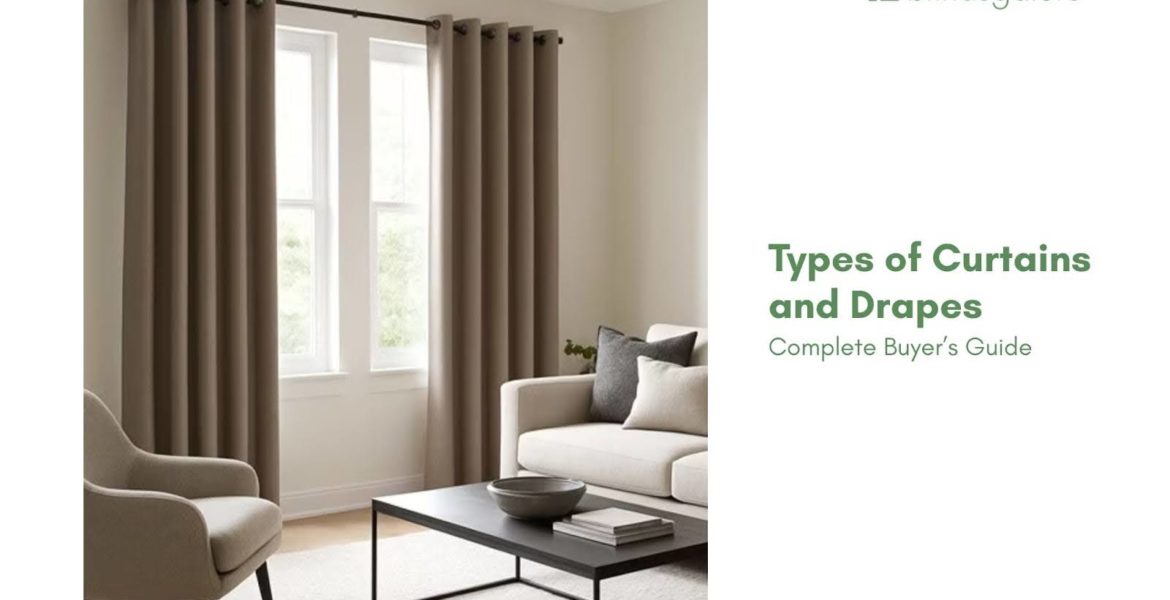
Shopping for window treatments can feel overwhelming. With so many fabric options, heading styles, and lengths to consider, where do you even start? After 25+ years helping families find their perfect window coverings, we’ve learned that understanding the basics makes all the difference.
Curtains vs. Drapes: A Quick Comparison
Not sure which you need? Here’s the difference:
| Feature | Curtains | Drapes |
| Fabric weight | Light (cotton, linen, polyester) | Heavy (velvet, silk, lined materials) |
| Length | At or below the window sill | Floor-length or puddles |
| Light control | Filters light through | Blocks most/all light |
| Look | Casual, breezy | Formal, elegant |
| Best for | Kitchens, bathrooms, casual spaces | Bedrooms, formal living rooms |
| Typical cost | Lower | Higher |
Bottom line: Curtains are lightweight and casual. Drapes are heavy and formal.
Fabrics: What Each Does
Cotton
Easy to clean. Works in any room. Can look formal or casual depending on the weave. Best for: versatile spaces.
Linen
Lightweight and airy. Let natural light through. Relaxed, casual feel. Best for: living rooms, sunrooms.
Velvet
Heavyweight luxury fabric. Blocks light effectively. Creates beautiful folds. Best for: formal rooms, bedrooms.
Silk
Sophisticated and lustrous. Shows pleats beautifully. Often needs lining for privacy. Best for: formal spaces.
Polyester blends
Durable and easy to care for. Blends with natural fibers for affordability. Best for: high-traffic areas.
How Different Types of Curtains and Drapes Function
The heading is how your curtain attaches to the rod. Each style looks and operates differently:
| Style | How It Works | Look | Best For | Ease of Use |
| Grommet | Metal rings slide onto the rod | Contemporary, clean | Modern rooms | Very easy, smooth gliding |
| Pinch Pleat | Pinched fabric stitched at intervals | Structured, elegant | Formal spaces | Easy with proper hardware |
| Rod Pocket | Fabric pocket slides onto the rod | Cottage, casual | Stationary panels | Moderate doesn’t glide easily |
| Back Tab | Fabric loops attach to the rod | Clean, modern | Contemporary rooms | Easy smooth operation |
| Ripple Fold | Consistent S-shaped waves on track | Hotel-polished | Any style | Very easy track system |
Choosing: If you’ll open and close panels daily, choose a grommet or a back tab. For stationary or formal panels, pinch pleat works beautifully.
Popular Curtains and Drapes Styles
Grommet Headers
Metal rings punched through fabric slide directly onto your rod. Creates a contemporary, minimalist look with smooth, rolling folds. Perfect if you’ll open and close panels frequently. Our Blindsgalore Grommet Curtain Panels offer this clean, modern style in multiple fabrics.
Pinch Pleat Headers
Fabric is pinched and stitched at intervals, creating structured pleats. The most traditional and elegant option. Works with both rods and tracks. Our Blindsgalore Pinch Pleat Curtain Panels provide classic elegance in custom sizes.
Rod Pocket Headers
A sewn pocket at the top slides onto your rod, creating soft gathers. Casual, cottage-like charm. Works best for panels you don’t move frequently since fabric doesn’t glide easily. Our Blindsgalore Stationary Curtain Side Panels feature this style.
Back Tab Headers
Fabric loops attach directly to the rod. Clean, modern look. Smoother operation than a rod pocket, but still has a casual feel. Our Blindsgalore Back Tab Curtain Panels offer this streamlined style.
Ripple Fold Headers
Creates consistent S-shaped waves that look polished whether open or closed. Requires a track system. Sleek, hotel-room aesthetic. This style works on any décor.
Panel Length: Choose Based on Your Space
| Length | Where Panel Ends | Look | Best For |
| Sill length | At the windowsill | Practical, cut-off | Kitchens, above sinks |
| Apron length | A few inches below the sill | Intentional, balanced | General living spaces |
| Floor length | Just touches floor (½ inch above) | Tailored, formal | Bedrooms, living rooms, most spaces |
| Puddle length | Pools on the floor | Romantic, dramatic | Low-traffic formal spaces |
Pro tip: Most windows look best with floor-length panels. This length works in nearly any room.
What Do Liners Do?
Liners go behind your fabric and affect light control, durability, and insulation.
Standard liner
Minimal light filtering. Helps panels hang properly. Budget-friendly.
Room darkening liner
Blocks most light. Ideal for bedrooms and media rooms.
Thermal liner
Insulates. Keeps heat out in summer, warmth in during winter. Best for energy efficiency.
Blackout liner
Blocks virtually all light. For shift workers, nurseries, and complete darkness rooms.
How to Measure for Custom Drapes
Accurate measurements ensure a professional fit and proper function.
Step 1: Measure Width
Decide what you want to cover. Measure from outside the left frame to outside the right frame (for outside mount) or inside edge to inside edge (for inside mount).
For a full, luxurious look, order panels that are 1.5 to 2 times your window width. For a sleek, tailored look, order panels equal to your window width.
Step 2: Measure Length
Measure from where your rod will sit to where you want the panels to end:
- Floor length: Measure to floor, subtract ½ inch
- Sill length: Measure to sill
- Apron length: Measure to the sill, add 3-4 inches
Step 3: Decide Mount Type
- Inside mount: Fits within the window frame (makes windows look smaller)
- Outside mount: Sits above and outside the frame (makes windows appear larger)
Need help? Call us at (877) 702-5463. Our design consultants walk through measurements step-by-step, or request free fabric samples to see options in your own light.
Why Custom Matters
Ready-made curtains fit standard windows. Your windows probably aren’t standard.
Custom drapes are built to your exact measurements. You choose:
- Fabric (from dozens of options)
- Liner type (standard, room darkening, thermal, blackout)
- Heading style (grommet, pinch pleat, rod pocket, back tab, ripple fold)
- Length (sill, apron, floor, puddle)
No compromises. Every order is made specifically for you and backed by our 30-day satisfaction guarantee.
Curtain and Drape Buying Checklist
Before you order, decide:
- Curtains or drapes? (Light casual vs. heavy formal)
- Fabric type? (Cotton, linen, velvet, silk, polyester blend)
- Heading style? (Grommet, pinch pleat, rod pocket, back tab, ripple fold)
- Panel length? (Sill, apron, floor, puddle)
- Liner type? (Standard, room darkening, thermal, blackout)
- Inside or outside mount?
- Single panel or pair?
- Width needed? (Measure and multiply by 1.5-2 for fullness)
Once you’ve decided, browse our custom drapes and curtains collection or call (877) 702-5463 for personalized recommendations.
FAQs
Curtains use lighter fabrics and stop at or below the sill. Drapes use heavier fabrics and extend to the floor. Drapes provide better light control and insulation.
Grommet and back tab styles slide smoothly on rods. Use these if you’ll open and close panels daily.
Consider your room’s purpose. Light fabrics (linen, cotton) work for casual spaces. Heavy fabrics (velvet, lined silk) suit formal rooms or bedrooms where light control matters.
Lined panels last longer, hang better, and offer more light control. Unlined panels maximize light. For most rooms, lining is worth it.
For a gathered, luxurious look, order drapes 1.5 to 2 times your window width. For a sleek, tailored look, order panels equal to the window width. Single panels work for smaller windows; pairs balance wider windows.
Not always. One panel can work for smaller windows or as a side panel. Pairs (two panels) create balance on wider windows and are more common.