
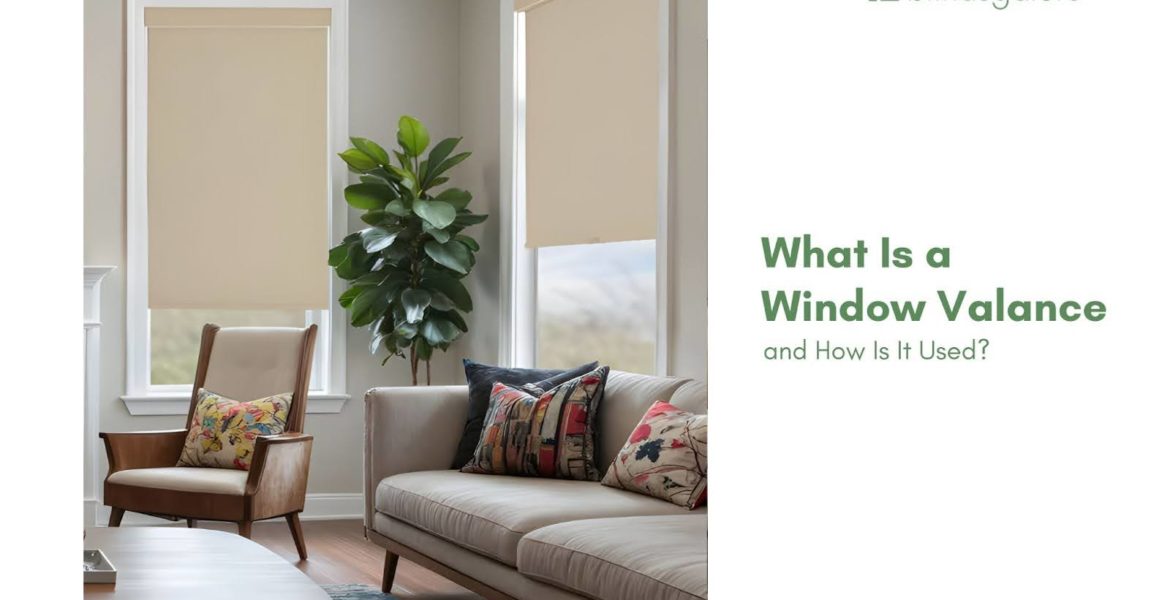
January is the perfect time to refresh your windows. A valance is a short fabric panel that hangs across the top of your window. It hides hardware, adds style, and gives your window treatments a finished look. Whether you’re styling bare blinds or layering over curtains, valances solve a practical problem while improving how your windows look.
For complete peace of mind, understanding what a valance does and how to use one helps you make confident decisions about your window treatments.
What Does a Valance Actually Do?
A valance is a horizontal fabric treatment covering just the top 12 to 18 inches of your window. It sits above your blinds, shades, or curtains.
Valances serve real purposes:
- Hide curtain rods, blind hardware, and mounting brackets
- Add color, pattern, and texture to your space
- Create the illusion of taller windows and higher ceilings
- Block light gaps at the top of your window
- Give window treatments a professionally designed appearance
You can use a valance alone or layer it over blinds, shades, or curtains for a more complete look.
Do You Actually Need One?
The honest answer: you don’t need a valance, but one often improves the finished look of your window treatment.
Valances help when:
- Your blinds or shades have visible headrails or mounting hardware you’d rather hide
- You want to block light gaps at the top of the window
- You’re layering window treatments and want a cohesive appearance
- Your room needs a decorative element that adds warmth
You can skip a valance if:
- Your blinds or shades come with built-in decorative headrails
- Your room has a minimalist aesthetic
- Light blocking at the top isn’t a priority
Modern Valance Styles
Clean, simple designs work best in contemporary homes. Ornate, ruffled valances feel dated. Here’s what works now.
- Flat Valances. A simple, straight panel in neutral tones. Works beautifully with roller shades for a streamlined look.
- Box Pleat Valances. Subtle folds add dimension without overwhelming your space. Brings polish to bedrooms and living rooms.
- Layered Valances. A sheer fabric over a heavier material creates depth and texture. Works well when you want both light and privacy control.
- Kitchen Valances. Rod pocket style in washable fabric. Practical and decorative for smaller windows above sinks or counters.
Valance vs. Cornice
Confused about the difference? Here’s the simple version.
A valance is a soft fabric that drapes and moves. It creates a flowing, relaxed appearance.
A cornice is a rigid, box-like structure made of wood or foam covered in fabric. It provides structured architectural interest and a more formal look.
Both hide hardware effectively. Blindsgalore Cornice Boards come in Modern, Tailored, Arched, and Shaped styles. Additional customization options are available when ordering. Most products include a matching valance.
How to Hang a Valance
Hanging a valance is a straightforward DIY project. Most customers install their own successfully.
Step 1: Measure Your Window
For an outside mount, measure the total window width, including casing. Add 4 inches on each side, giving you 8 inches of total overlap. Mounting slightly above the frame creates the illusion of a taller window.
Step 2: Mark Bracket Positions
Use a pencil and a level to mark where brackets will go. In rooms with 8-foot ceilings, mounting 1 to 2 inches below the ceiling line looks best.
Step 3: Drill Pilot Holes
If hitting a stud, standard screws work fine. If not, use wall anchors rated for your rod and fabric weight.
Step 4: Secure Brackets
Tighten screws firmly and test each bracket. Sturdy brackets every 30 to 36 inches prevent sagging.
Step 5: Mount the Valance
Slide your rod through the fabric pocket. Distribute the fabric evenly across the rod. Adjust gathers until balanced.
Pro Tips:
- Add a center support bracket if your rod spans more than 48 inches. Extra brackets will ship with products that exceed certain widths.
- When layering over curtains, mount valance brackets about twice as long as your curtain rod brackets
- Step back and check your work from across the room before final adjustments
Choosing a Valance for Your Space
Your room style and window treatments guide your choice.
For modern spaces: Flat or box pleat valances in solid colors. Clean lines create a contemporary feel.
For traditional rooms: Valances with subtle pleating add classic elegance without looking dated.
For casual areas: Rod pocket valances in relaxed fabrics like cotton or linen bring warmth.
For layered looks: Match your valance fabric to your drapery or choose a coordinating color that ties the room together.
Valance Selection Checklist
Before ordering, confirm these details:
- [ ] Decided: Do you want to hide hardware or add decoration?
- [ ] Chosen your style: flat, box pleat, layered, or kitchen-friendly?
- [ ] Measured your window width and ceiling height
- [ ] Selected a fabric that coordinates with your room
- [ ] Confirmed mounting location (inside or outside frame)
- [ ] Checked if you need a center support bracket (rods over 48 inches)
FAQs
A valance is a soft fabric that drapes. A cornice is rigid, typically wood or foam covered in fabric. Both hide hardware, but valances create movement while cornices provide structure.
Absolutely. Valances work beautifully alone, especially in kitchens or bathrooms where you want style without full window coverage. Just remember, a standalone valance doesn’t provide privacy or light control.
Most valances hang 12 to 18 inches from the top of the window frame. The exact length depends on your window size and ceiling height. A general rule: your valance should cover roughly one-sixth of your window height.
Yes. While ornate, ruffled valances feel dated, clean and tailored designs remain popular. Natural fabrics, neutral colors, and simple silhouettes keep valances relevant in modern homes.
Yes. If your blinds or shades don’t have a built-in valance, you can always add one separately. Mount brackets above your current treatment and hang your valance in front.