
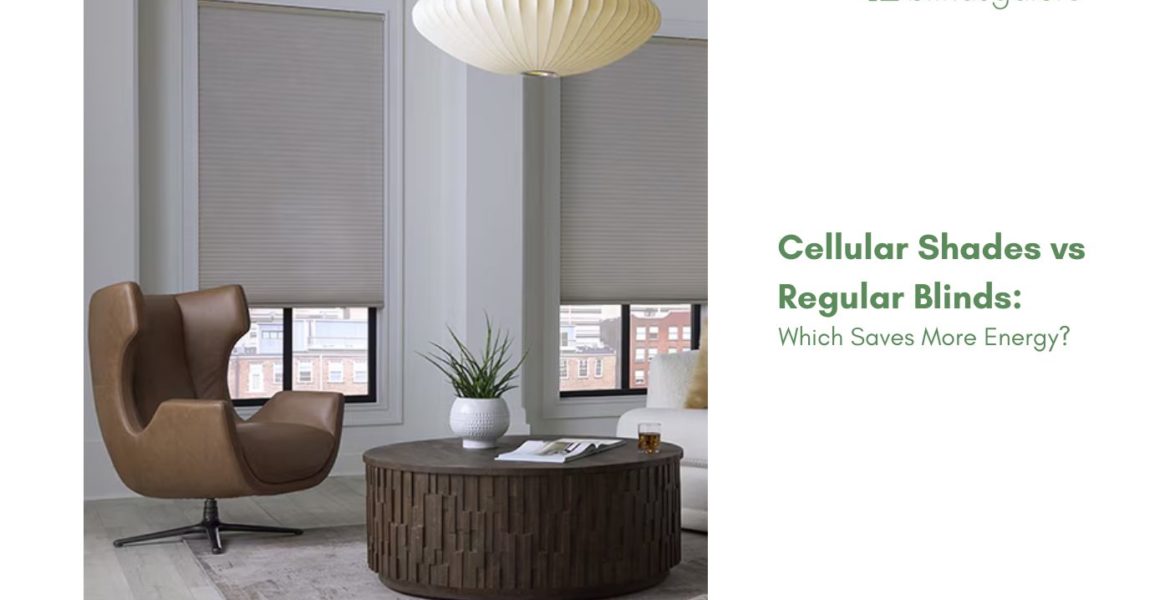
November is the start of the heating season and, with winter weather approaching, families are cranking up their thermostats and watching energy bills climb. However, most people don’t realize that windows account for a significant portion of home heat loss. It only takes one brutal winter month to understand the impact. The U.S. Department of Energy strongly recommends that homeowners assess their window treatments before the heating season peaks.
To help homeowners make this decision confidently, we have created a practical comparison guide for this heating season. Once your windows are properly treated with cellular shades, you can enjoy winter knowing your home is properly insulated and your heating costs are optimized. It’s sure to make the colder months more comfortable and affordable for your family.
How Cellular Shades Create Energy Savings
Cellular shades, also called honeycomb blinds, are engineered specifically for insulation. The honeycomb design features air pockets that trap a layer of non-moving air against your window. Think of it as building an invisible thermal blanket that works both seasons.
In winter, this air barrier stops your warm indoor air from escaping through cold glass. In summer, it blocks the sun’s radiant heat from warming your rooms. The trapped air is one of the poorest conductors of heat, making it an extremely effective insulator. Premium double-cell designs provide even better performance, with some models reducing cooling costs by up to 15 percent alone.
Our Blindsgalore Gallery Cellular Shades with Light Filtering deliver this proven performance while maintaining natural light. For skylights and overhead windows, our Blindsgalore Gallery Skylight Cellular Shades with Light Filtering offer identical energy-saving technology in configurations designed for these challenging spaces.
Premium Cellular Shades for Maximum Winter Protection
Not all cellular shades perform equally. Construction quality matters significantly. Premium double-cell designs, with two layers of honeycomb cells, provide superior insulation compared to single-cell options. The cell design also affects how well the shade fits against your window frame. Shades with tight seals around edges prevent warm air from sneaking out during the heating season.
Blindsgalore Gallery Cellular Shades with Blackout perform even better because the denser fabric adds an additional insulating layer. If you want maximum efficiency, combine double-cell construction with blackout fabrics. Yes, they cost more upfront. But energy savings over five to ten years often offset the higher initial investment completely.
For skylights, Blindsgalore Gallery Skylight Cellular Shades with Blackout provide optimal performance. Our Blindsgalore Select Motorized Skylight Shades add ultimate convenience with automated scheduling.
Regular Blinds: The Affordability Trade-off
Regular blinds excel at affordability and ease of maintenance. However, they fall short when it comes to insulation. Roller blinds are essentially a single layer of fabric rolled onto a tube. Even with thermal or reflective backings, they can’t match the engineered insulating power of cellular shades.
Venetian blinds create gaps between slats that allow air to move freely. In winter, warm air rises and escapes. In summer, heat penetrates between the gaps. These gaps are fundamental to the design and can’t be eliminated without defeating the shade’s purpose.
If you prefer the traditional look of wood blinds at a lower price point, our Blindsgalore Privacy Plus 2″ Faux Wood Blinds offer durability and style. For more detail on how different shade types compare, check out Shades vs Blinds: What’s the Diff. Regular blinds are fine for rental properties or short-term homes. But for long-term homeowners, cellular shades deliver measurably better performance.
Research Proves Cellular Shade Effectiveness
Oak Ridge National Laboratory compared cellular shades directly to generic venetian blinds in identical rooms during winter months. Results showed that cellular shades achieved substantially better heating performance across all climate zones tested. This wasn’t laboratory theory. This was real-world testing in homes with real families.
Energy modeling predicts that if 20 percent of residential buildings adopted cellular shades, the United States could reduce carbon emissions by up to 3 million tons annually. That’s the scale of impact when individual homeowners make this switch.
Summer performance is equally impressive. Cellular shades can reduce heat gain by up to 60 percent during hot months, depending on fabric color and cell construction. That translates directly to reduced air conditioning runtime and lower cooling bills.
Energy Savings Comparison: Cellular vs Regular Blinds
Here’s the real-world math. A typical set of cellular shades costs $200 to $400 more than comparable roller blinds. If your heating and cooling costs drop by 15 to 20 percent (research suggests 10 to 24 percent savings are realistic), you’re looking at annual savings of $100 to $300 per year for most households.
Your cellular shades pay for themselves in one to three years, then continue saving money every year. If you stay in your home five to ten years, savings multiply significantly. For renters or short-term homeowners, roller blinds make sense. For homeowners planning to stay, cellular shades are the smarter investment.
Factor in comfort improvement too. Properly insulated windows mean fewer drafts, more consistent room temperatures, and less HVAC strain. That’s the comfort you feel every day.
Deciding Between Cellular Shades and Regular Blinds
How long will you stay in this home? Staying five years or more means cellular shades make financial sense. Planning to move within two years? Roller blinds are adequate.
What’s your climate? Cold climates benefit dramatically from cellular shade insulation. Mild climates see smaller savings. Climates with extreme winters and hot summers benefit year-round.
How important is low maintenance? Cellular shade cells collect dust and require gentle vacuuming. Roller blinds wipe clean in seconds. Choose based on your maintenance preferences.
What’s your comfort priority? Notice temperature variations or drafts near windows? Cellular shades will noticeably improve comfort. Homes with consistent temperatures see smaller improvements.
Window Treatment Maintenance Checklist
Once your window treatments are properly installed, maintenance ensures optimal performance all season long. Proper care means your investment delivers comfort and savings for a decade or more.
For Cellular Shades
Vacuum gently with a soft brush attachment monthly to prevent dust buildup in honeycomb cells. Use compressed air for deep cleaning before the heating season begins.
For Roller Blinds
Wipe with a damp cloth as needed to maintain appearance and prevent dust accumulation. Check brackets periodically for tightness.
For All Window Treatments
Ensure shades close fully against window frames with no light gaps visible. Maximum contact with the frame maximizes insulation performance.
Seasonal Inspection
Before the heating season begins, inspect all shades for damage or wear. Replace thermal backing if it deteriorates or separates.
For detailed guidance, check out Easy Cleaning Hacks for Window Blinds or How to Clean Wood Blinds.
Making Your Final Decision
If energy efficiency is your priority and you’re staying five or more years, cellular shades win clearly. If you need affordability for rental properties or short-term situations, roller blinds work fine.
Many homeowners choose a hybrid approach: cellular shades in main living areas and bedrooms where comfort matters most, and roller blinds in less-used spaces.
Being proactive about your window insulation before winter arrives is the best way to avoid unnecessarily high heating bills. Start with your primary bedrooms and living areas. Experience the comfort improvement and energy savings firsthand. Once you see the difference on your bills, you’ll understand why research consistently shows cellular shades as the smart choice for efficient, comfortable homes.
Oak Ridge documented 24% heating savings. Most homes save $100-$300 yearly. Payback happens in one to three years.
Only motorized shades connect to smart homes. Automation closes them at peak heat hours. Costs $100-$300 per shade additional.
Monthly vacuuming with a soft brush prevents dust buildup. Seasonal compressed air cleaning maintains insulation. It takes five minutes monthly.
Install before November for the heating season, before June for cooling. Early installation captures full seasonal benefits immediately.
Yes, DIY-friendly with basic tools. Accurate measurement is critical. Use our measuring guide. Professional installation: $50-150 per window.
Prioritize south/west-facing windows and bedrooms first. Master bedroom and living room deliver biggest impact. Expand over time.