
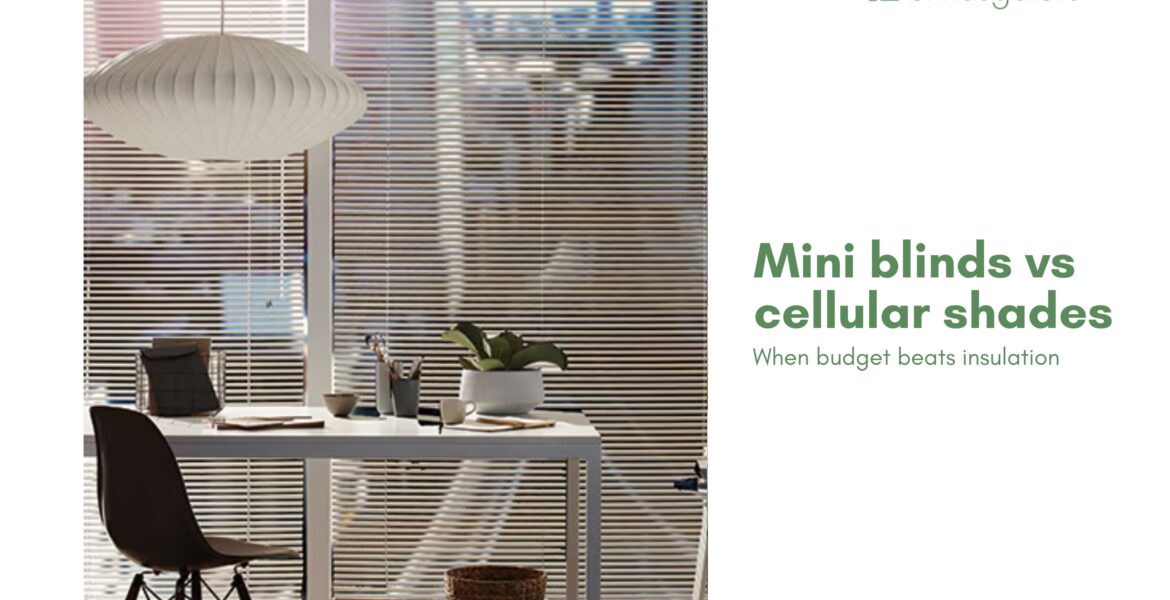
Mini blinds and cellular shades solve the same basic problem: providing privacy and light control for your windows. But they do the job in completely different ways, at completely different price points. Mini blinds give you precise light adjustment and cost less. Cellular shades trap air in honeycomb pockets and can measurably lower your energy bills.
The right choice depends on what matters more for each room in your home: stretching a tight budget or reducing your heating and cooling costs over time. Here’s how to make that call without overthinking the decision.
Mini Blinds vs Cellular Shades: The Side-by-Side Comparison
Before getting into the details, here’s how these two stack up across the categories that matter most.
| Mini Blinds | Cellular Shades | |
|---|---|---|
| Light control | Adjustable slat angles for precise control | Light filtering, room darkening, or blackout fabric |
| Insulation | Minimal | Excellent (honeycomb air pockets) |
| Privacy | Full privacy when closed | Full privacy when closed |
| Cleaning | Wipe with a damp cloth | Vacuum with brush attachment |
| Moisture resistance | High (aluminum and vinyl) | Low (fabric absorbs humidity) |
| Cordless options | Yes | Yes |
| Style | Classic, utilitarian | Modern, soft |
For a broader look at how hard and soft window treatments compare, the guide on differences between blinds and shades breaks down the fundamentals.
When Mini Blinds Are the Right Choice
Mini blinds win in situations where budget, durability, and moisture resistance matter more than insulation. Here’s where they make the most sense.
Outfitting multiple windows on a budget
If you need to cover 10 or 15 windows in a new apartment or rental, the math matters. Mini blinds are the most affordable custom window treatment available. You can outfit an entire home for what a few cellular shades would cost. Blindsgalore Luxera 1″ Aluminum Blinds deliver a clean, lightweight option that works across every room.
Kitchens and bathrooms
Moisture is the enemy of fabric window treatments. Steam from a shower or a pot of boiling water can warp and stain cellular shades over time. Aluminum and vinyl mini blinds shrug off humidity, wipe clean with a damp cloth, and won’t develop mildew. For these rooms, mini blinds are the practical pick. The guide on easy-to-clean blinds for busy homes covers material-by-material cleaning tips.
Rentals and short-term living
If you’re in a place for a year or two and want something functional without a big investment, mini blinds make sense. Easy to install, easy to remove, and affordable enough that leaving them behind isn’t painful. Blindsgalore 2″ Aluminum Blinds offer a slightly wider slat for a more modern look that still keeps the cost low.
Precise daytime light control
Mini blinds let you tilt the slats to redirect light at exactly the angle you want. You can bounce glare off the ceiling, block a direct beam hitting your TV, or let in a soft ambient glow, all without raising the blind. Cellular shades don’t offer that kind of adjustment. With a cellular shade, you’re either looking through the fabric or raising the shade entirely.
When Cellular Shades Are Worth the Extra Cost
Cellular shades cost more upfront, but they deliver performance that mini blinds simply can’t match. Here’s where spending more pays off.
Cold or hot climates where energy bills add up
Cellular shades are the most energy-efficient window treatment on the market. According to the U.S. Department of Energy, tightly installed cellular shades can reduce heat loss through windows by 40% or more during heating season. Mini blinds, with their rigid slats and visible gaps, provide almost no insulation. If you live somewhere with extreme winters or brutal summers, cellular shades can pay for themselves through lower utility bills over a few seasons.
Bedrooms and nurseries
Sleep quality often comes down to how dark and quiet you can make the room. Blindsgalore Select Blackout Cellular Shades block up to 99% of incoming light while also dampening outside noise through the honeycomb structure. Mini blinds let light leak between the slats even when fully closed, which can be a problem for light-sensitive sleepers. For a deeper comparison of insulation levels, see single vs. double cell shades.
Living rooms and spaces where aesthetics matter
Cellular shades have a softer, more finished look than mini blinds. The continuous fabric creates a clean surface with no visible slats, cords, or hardware. Blindsgalore Classic Cordless Light Filtering Cellular Shades diffuse natural light into a warm, even glow that makes the room feel inviting. Mini blinds work well functionally, but read as more utilitarian.
Rooms with large or drafty windows
Older windows with poor seals and single-pane glass lose a lot of heat. Cellular shades create a buffer of trapped air between the window and the room, which acts as an extra layer of insulation where you need it most. Mini blinds don’t offer that thermal barrier.
Room-by-Room Recommendations
Every room has different priorities. Here’s the short version of which treatment works best where.
- Kitchen: mini blinds (moisture resistance, easy cleaning)
- Bathroom: mini blinds (humidity won’t cause damage)
- Bedroom: cellular shades (blackout, insulation, noise reduction)
- Living room: cellular shades (aesthetics, light diffusion, energy savings)
- Home office: either works, but cellular shades reduce screen glare more evenly
- Rental apartment: mini blinds (budget-friendly, portable, easy to replace)
- Nursery: cellular shades in blackout fabric (darkness for naps, cordless for safety)
For rooms where sun exposure is the main concern, the comparison of solar shades vs. cellular shades covers a different set of trade-offs worth considering.
Can You Use Both in the Same Home?
Absolutely. Mixing mini blinds and cellular shades room by room is one of the smartest ways to stretch a budget while still getting performance where you need the upgrade. Put mini blinds in the kitchen, bathrooms, and guest bedrooms. Use cellular shades in the primary bedroom, living room, and any room with drafty windows or extreme sun exposure. The two styles work well together, especially in neutral white or off-white tones that carry across the whole home.
The Right Window Treatment Is the One That Fits Your Life
You don’t have to choose one type for every window in the house. Order a few free samples of each, hold them up to your windows, and feel the difference in weight and texture. Our in-house experts can walk you through the options at (877) 702-5463 if you want help matching treatments to rooms. The right combination of budget and performance is closer than you think. Love your view.
Frequently Asked Questions
Cellular shades are significantly better. The honeycomb air pockets create insulation that can reduce heat loss through windows by 40% or more. Mini blinds provide almost no insulating benefit.
Yes. Mini blinds are the most affordable custom window treatment available. Cellular shades cost more due to the fabric construction and honeycomb engineering, but they can offset that cost through energy savings over time.
Yes. Aluminum and vinyl mini blinds resist moisture and humidity, making them ideal for bathrooms. Cellular shades are fabric-based and can develop moisture damage in steamy environments.
Cellular shades in blackout fabric block up to 99% of incoming light. Mini blinds allow some light to leak between the slats even when fully closed, which makes them less effective for total darkness.
Mini blinds are easier. A quick wipe with a damp cloth or duster keeps them clean. Cellular shades need gentle vacuuming with a brush attachment, and the honeycomb cells can trap dust over time.
Yes. Many homeowners use mini blinds in kitchens, bathrooms, and rentals while installing cellular shades in bedrooms and living rooms. Matching neutral colors across both styles creates a cohesive look.