
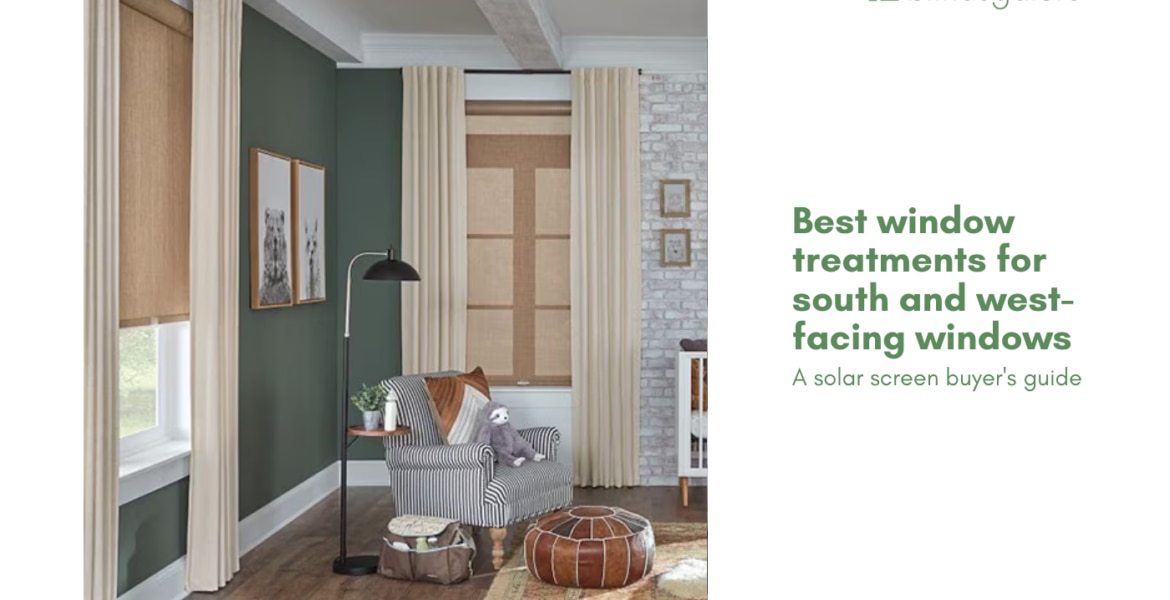
South and west-facing windows get the hardest sun in your home. South-facing glass takes direct rays for most of the day, and west-facing windows absorb low-angle afternoon sun that heats rooms fast and fades furniture even faster. The right window treatment for these exposures needs to do three things at once: cut glare, reduce heat, and block UV rays without turning your room into a cave.
Solar shades are the most effective single solution for both orientations. But the openness factor, fabric color, and whether you layer with a second treatment all affect how well they actually perform. Here’s how to make the right call for your sunniest rooms.
Why South and West-Facing Windows Need Special Treatment
Window orientation determines how much heat and light enter your home throughout the day. South-facing windows receive consistent, direct sunlight from mid-morning through late afternoon. The sun sits high in the sky, and the exposure is steady and predictable.
West-facing windows face a different challenge. The afternoon sun hits at a low angle, which means the rays penetrate deeper into the room. Afternoon heat builds fast, and screen glare on TVs and monitors becomes a real problem between about 2 pm and sunset.
According to the U.S. Department of Energy, about 76% of the sunlight that falls on standard double-pane windows enters the home as heat during the cooling season. On south and west-facing walls, that percentage translates directly into higher cooling bills, faded upholstery, and rooms that feel uncomfortably warm for hours at a stretch.
Solar Shades: The Go-To for Sun-Facing Windows
Solar shades work like sunglasses for your windows. The woven mesh fabric intercepts sunlight at the glass, reducing glare and heat while preserving your view of the outdoors. Unlike blackout or room-darkening shades, solar shades keep the room bright and connected to the outside.
What makes solar shades especially effective on south and west-facing windows is the fabric itself. The tight weave reflects a portion of the sun’s energy away from the glass, absorbs some within the fabric, and limits radiant heat from entering the room.
What is the Openness Factor?
The openness factor is the percentage of the fabric weave that allows light to pass through. A lower number means a tighter weave, more heat blocking, and more daytime privacy. A higher number means a more open weave, a clearer view, and more natural light.
Here’s how the ranges break down:
- 1% to 3%: Maximum heat and glare reduction. Blocks up to 99% of UV rays. The view is still visible but muted. Best for rooms with intense, direct sun exposure where cooling is the top priority.
- 5% to 7%: A balanced middle ground. Strong UV and heat reduction while maintaining a clear view of the yard or landscape. Works well for living rooms and kitchens.
- 10% to 14%: Maximum view-through with moderate glare reduction. Better suited for rooms with indirect or filtered light, not ideal for sun-facing windows.
For a deeper breakdown, the blog post Hello Sunshine, Goodbye Glare walks through openness vs. opacity in more detail.
How to Pick the Right Openness for Your Room
South-facing windows generally do well with a 3% to 5% openness. The sun is high and consistent, so a tighter weave provides steady heat control without making the room feel dark.
West-facing windows benefit from an even lower openness, around 1% to 3%. The afternoon sun hits at a sharper angle and generates more concentrated heat. A tighter weave keeps the room cooler during peak hours.
For sun-facing home offices where screen glare is the main issue, we recommend starting at 3%. For living rooms where you want to preserve the view, 5% strikes the right balance.
South-Facing Windows vs. West-Facing Windows
Both orientations get heavy sun, but the exposure type is different.
South-facing windows receive long, even light with the sun high overhead. A solar shade at 3% to 5% openness handles most rooms effectively. Blindsgalore Harmony Solar Shades offer openness factors between 5% and 10% with Bluetooth motorization for easy daily adjustment.
West-facing windows deal with intense, low-angle sun for a shorter but more aggressive stretch. The heat builds fast. A 1% to 3% openness shade, like the Blindsgalore Essential Solar Shades, provides the tightest weave for maximum heat rejection during those peak afternoon hours.
Corner rooms with both exposures can use different openness levels on each wall. A 5% on the south side and a 3% on the west side balances light without overheating from either direction.
Other Window Treatments Worth Considering
Solar shades are the strongest performer for heat and glare, but they aren’t the only option for sun-facing windows.
Cellular Shades for Year-Round Insulation
Cellular shades trap air in their honeycomb pockets, creating an insulating barrier that works in both summer and winter. If energy efficiency across all seasons matters more than maintaining the view, cellular shades are worth a close look. The blog post Solar Shades vs. Cellular Shades compares the two side by side.
Layering Solar Shades with Drapery
Solar shades do not provide nighttime privacy. When interior lights are on after dark, people outside can see in. Pairing a solar shade with custom drapery panels solves that problem. Use the solar shade during the day for glare and heat control, then draw the drapes in the evening for complete privacy. The combination also adds texture and visual depth to the room.
How Fabric Color Changes Performance
Color choice matters more than you’d think on a sun-facing window. Darker solar shade fabrics (charcoal, bronze, black) absorb more heat but provide a clearer outward view and better glare reduction. Lighter fabrics (white, cream, linen) reflect more heat away from the glass, keeping the room cooler.
For west-facing windows where heat is the primary concern, a lighter fabric in a low openness factor gives you the best cooling performance. For south-facing windows where you want to see outside clearly, a darker fabric at 3% to 5% openness delivers sharp glare control with a better view.
Order up to 10 free samples and hold them against your window during peak sun hours. The difference between colors is much easier to evaluate in your own light.
When to Go Motorized
Sun-facing windows often need daily adjustment. Motorized solar shades let you schedule your shades to lower automatically during peak sun and raise again after sunset. The Blindsgalore Envision Solar Shades pair with Alexa and Google Home, so you can control them from your phone without leaving the couch.
Motorization also makes sense for hard-to-reach windows, like transoms or high clerestory glass on a south-facing wall.
Your Sunniest Rooms Deserve Better
If your south or west-facing rooms feel like a greenhouse by mid-afternoon, the fix is simpler than you think. Start with a few free samples in different openness levels and colors, hold them against your glass during the hottest part of the day, and see the difference for yourself. Our in-house experts are available at (877) 702-5463 if you want help picking the right shade for your specific windows. Love your view.
Frequently Asked Questions
Solar shades with a 3% to 5% openness factor are the most effective option. The tight weave reduces glare, blocks up to 99% of UV rays, and cuts heat without eliminating natural light.
Yes. West-facing windows benefit from solar shades with a 1% to 3% openness factor. The low afternoon sun angle generates concentrated heat, so a tighter weave provides better protection during peak hours.
A 5% openness factor works well for most living rooms. If your living room faces west and overheats in the afternoon, drop to 3%.
No. Solar shades offer daytime privacy only. At night, when interior lights are on, people outside can see in. Pair solar shades with drapery panels for full nighttime privacy.
Cellular shades insulate in both directions, making them better for year-round energy performance. Solar shades focus specifically on blocking incoming solar heat and UV, making them the stronger choice for glare control and view preservation.
Absolutely. A 5% openness shade on the south wall and a 3% shade on the west wall is a smart strategy for corner rooms. Each wall gets the protection level that matches its sun exposure.