
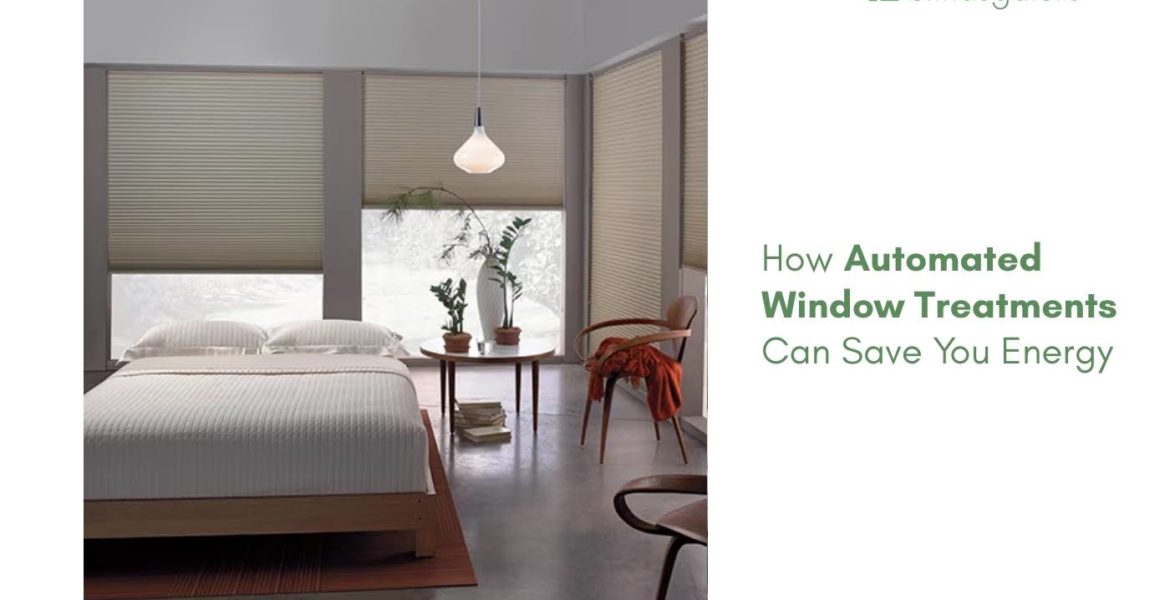
Windows are one of the biggest weak points in any home’s insulation. About 30% of heating energy escapes right through them, and in summer, most of the sunlight hitting standard double-pane windows enters as heat. Automated window treatments solve both problems by adjusting throughout the day, keeping homes comfortable and energy bills lower, without anyone needing to lift a finger.
Here is a practical look at how motorized blinds and shades deliver real energy savings, and what to look for when choosing the right option.
Why Automated Window Treatments Outperform Manual Ones
Manual blinds only work when someone remembers to adjust them.
Automated treatments change that equation entirely. Temperature-based scheduling adjusts shades at the right times. Smart home integration with platforms like Alexa, Google Home, or Siri Shortcuts means voice commands or app-based schedules keep everything optimized, even when nobody is home.
A landmark study conducted by the Illinois Institute of Technology at Willis Tower found that automated insulating window shades reduced energy use by 25% during both heating and cooling seasons, with an estimated payback period of 3 to 5 years. The consistency of automation is what makes that possible. A scheduled shade closes at the same time every afternoon, whether anyone is around or not.
How Cellular Shades Create an Insulation Barrier
Not all window treatments insulate equally. Cellular shades stand out because of their honeycomb structure, which traps air in pockets between the window and the room. That trapped air acts as a thermal barrier, slowing heat transfer in both directions.
Single-cell options work well for moderate climates, while double-cell motorized cellular shades offer the best energy efficiency.
Pairing that kind of insulation with motorization means shades adjust automatically at optimal times, day after day. For anyone weighing the differences between window covering types, the post Shades vs. Blinds: What’s the Diff? breaks down the key distinctions.
Summer Cooling Strategy
During hot months, automated shades make the biggest impact by closing before the sun heats a room, not after.
A smart schedule might look like this: shades close from around noon to 4 PM when solar heat gain peaks, then reopen in the evening as outdoor temperatures drop. South- and west-facing windows benefit the most from automated scheduling.
Motorized solar shades are especially effective for rooms with large windows or direct sun exposure. The fabric reduces solar heat gain while still allowing filtered natural light in, so rooms stay bright without turning into an oven. For spaces like sunrooms where heat buildup is a constant challenge, What to Consider When Choosing Sunroom Blinds covers specific solutions worth considering.
Winter Heating Strategy
In colder months, the approach flips. Automated shades open during sunny hours to capture free passive solar warmth, then close at dusk to trap that heat inside. The insulating properties of cellular shades keep warm air from escaping through the glass overnight.
Motorized roller shades with blackout fabrics are another strong option for winter insulation. Heavier fabric creates an additional barrier between cold window glass and a room’s interior, lowering the workload on the heating system.
The real advantage of automation in winter is consistency. Shades open and close at the same time every day, capturing solar warmth and sealing it in, even when the house is empty.
Smart Home Integration That Maximizes Savings
Modern motorized blinds and shades pair with most major smart home platforms, making scheduling and group control simple to set up.
Compatible integrations include Alexa, Google Home, Siri Shortcuts, Samsung SmartThings, Control4, and IFTTT. Smart hubs like the Connector Smart Hub or MotionBlinds connect shades to a home’s Wi-Fi network, allowing app-based control from anywhere. Bluetooth connectivity is also available for straightforward single-room setups.
Practical features that boost energy savings include scheduling shades to open at sunrise and close at sunset, grouping shades by room or sun exposure for coordinated adjustments, and using voice commands for quick changes throughout the day. For anyone already using a smart thermostat, linking automated shades creates a more complete climate control system. The shades manage heat gain and loss at the window while the thermostat adjusts for whatever gets through.
Choosing the Right Motorized Treatment
Matching the right product to the room matters. A few considerations go a long way.
Material makes a difference. Cellular shades deliver the highest insulation values, with R-values up to R-4 for double-cell blackout options. Roller shades and solar shades are better suited for rooms where light control, glare reduction, and maintaining a view are higher priorities.
Fit matters just as much as material. Tightly installed shades with minimal gaps perform significantly better than loose-fitting ones. Measuring accurately is critical, and the Blindsgalore measuring guide walks through the process step by step.
For renters or anyone who wants to avoid putting holes in their walls, no-drill custom shades use a tension headrail to snap securely into place. No tools, no hardware, no damage, and still custom-made to exact window measurements from premium materials.
Installation and Getting Started
Motorized shades are surprisingly simple to put up. About 99% of Blindsgalore customers handle installation themselves. Battery-powered and wand-motorized options need no electrical work at all, just a measuring tape and about 15 to 20 minutes per window. Installation guides, video tutorials, and in-house expert support are all available by phone at (877) 702-5463 or text at (858) 550-4750.
Custom shades ship in as little as 5 to 7 business days with free shipping across the continental U.S. A 30-day satisfaction guarantee covers free exchanges for any reason, up to four windows per household. For a broader overview of what is available, The Ultimate Guide to Window Treatments is a solid starting point.
FAQs
Savings depend on climate, window count, and existing insulation. The Illinois Tech study documented a 25% reduction in energy use with automated insulating shades. Most homeowners notice meaningful reductions in heating and cooling costs, especially in homes with older or single-pane windows.
No. Battery-powered motorized shades run on rechargeable lithium-ion batteries that last for months on a single charge. The energy the motor uses is negligible compared to the HVAC savings the shades deliver.
Absolutely. Most motorized shades arrive ready to mount with all hardware included. Battery-powered and wand-motorized options require no electrical work. Blindsgalore’s in-house team is available for questions during installation, and installation guides cover every step.
Cellular shades offer the best insulation, but motorized roller shades with blackout fabrics and motorized solar shades also reduce heat transfer and solar gain significantly. The best choice depends on the room’s specific needs, sun exposure, and whether maintaining an outside view is a priority.