
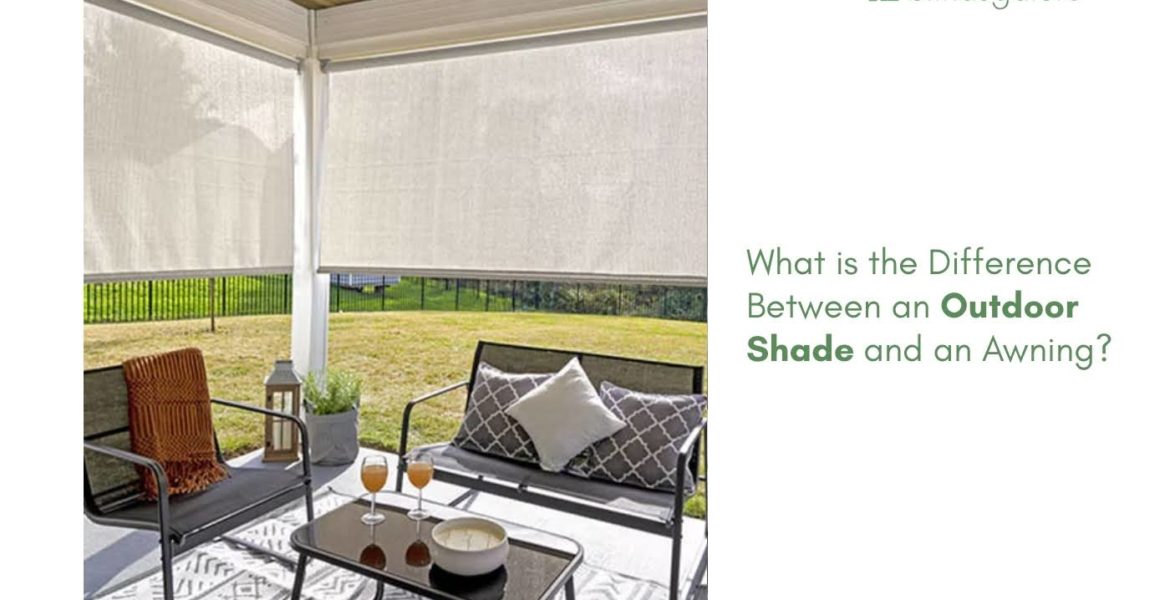
Outdoor shades and awnings both block the sun and reduce heat, but they work in completely different ways. An outdoor shade is a fabric screen that mounts directly to a window frame or exterior wall. An awning is a rigid structure that projects outward from a building, creating an overhang above windows, doors, or patios.
The right choice depends on whether the goal is precise window-level sun control or broader overhead coverage for an outdoor living space.
What is an Outdoor Shade?
An outdoor shade, sometimes called an exterior solar screen, is a roller-style window covering installed on the outside of the home. Products like the Blindsgalore Outdoor Solar Screen mount flush against the window frame or wall and roll up and down as needed.
The key advantage here is that exterior solar screens intercept solar heat before it passes through the glass. Interior window treatments can only deal with heat after it has already entered the room. Exterior shades stop it at the source, which makes a real difference in rooms with south- or west-facing windows that take a beating from afternoon sun.
Outdoor solar screens are custom-sized for each window and available in different openness factors. Darker fabric colors tend to preserve the outward view better, while lighter colors offer more heat reduction. This is because lighter colors reflect more sunlight. Options like the Coolaroo Outdoor Sun Shades feature knitted HDPE fabric that blocks up to 90-95% of UV rays while still allowing airflow.
For hands-free convenience, motorized outdoor sun shades can be raised or lowered with a remote control. That is especially helpful for hard-to-reach windows or homes with multiple shades to manage. Motorized also means cordless, which is safer for homes with children and pets.
What is an Awning?
An awning is a rigid or semi-rigid structure that extends outward from a home’s exterior, typically mounted above a window, door, or patio. Awnings are built from metal frames with fabric, aluminum, or vinyl stretched across the top, creating a permanent or retractable overhang.
Fixed awnings stay in place year-round and offer consistent coverage. Retractable awnings extend when shade is needed and pull back during storms or cooler months. According to the U.S. Department of Energy, window awnings can reduce solar heat gain by up to 65% on south-facing windows and 77% on west-facing windows.
Awnings are popular for creating shaded patios, decks, and outdoor dining areas. Compared to window-mounted shades, awnings cover a much larger footprint and can serve as a functional extension of the indoor living space.
How Outdoor Shades and Awnings Compare
Installation
Outdoor shades are a straightforward DIY project. Mounting brackets attach to the window frame or exterior wall, and most homeowners complete the job in about an hour per window with basic tools. Blindsgalore offers detailed measuring guides and installation resources to walk through the entire process.
Awnings require more involved installation because they project outward and need hardware that can support the full structure, plus wind load. Professional installation is common for awnings, which adds to the overall cost.
Coverage Area
Outdoor shades cover the window itself, offering precise sun control for individual openings. Awnings extend well beyond the window to shade a broader zone, making them better suited for patios, decks, or entryways where overhead protection is the priority.
Operation and Convenience
Motorized exterior shades make daily adjustments effortless. A remote or smartphone handles everything; there’s no need to step outside. Retractable awnings offer similar motorized options, but fixed awnings have no adjustability at all.
Durability and Maintenance
Outdoor solar screens are built with weather-resistant materials like PVC-coated fiberglass or knitted HDPE fabric. The Blindsgalore Outdoor Solar Screen includes a bungee tiedown accessory that secures the bottom bar during gusty conditions, and the shade can stay down during light rain.
Awnings face more exposure due to their horizontal position, which means rain, snow, and debris can collect on top. Retractable awnings should be pulled in during storms to avoid damage, and fabric versions typically need re-covering every five to seven years.
Cost
Outdoor shades are generally the more budget-friendly option, especially since most homeowners handle installation themselves. Awnings carry a higher upfront price tag, and professional installation adds to the total. For homeowners looking to cover multiple windows, custom outdoor solar shades offer a cost-effective way to manage heat and glare across the entire home.
Energy Efficiency
Both options significantly outperform interior window treatments when it comes to reducing cooling costs. Outdoor shades excel at targeted window-level protection, blocking heat right at the glass before it enters the room. Awnings create a shaded buffer zone above the window. Either way, homes with exterior sun protection typically run air conditioning less during the summer months.
Which One is the Right Fit?
For homeowners focused on reducing heat and glare through specific windows while maintaining a view, outdoor shades are the more practical choice. For anyone looking to create a covered outdoor living area or shade a patio, an awning makes more sense.
A good starting point: if the main concern is indoor comfort and energy savings, window by window, go with exterior solar screens. If the goal is overhead protection for an outdoor space, an awning will serve that purpose better.
For more on how different window treatments compare, check out Shades Vs. Blinds: What’s The Diff? and What To Consider When Choosing Sunroom Blinds.
FAQs
Yes. Many outdoor shades come with accessories like bungee tiedowns that secure the bottom bar and prevent flapping. Motorized shades can also be raised quickly when storms approach.
No. Most outdoor shades are designed for DIY installation with basic tools. The process usually takes about an hour per shade.
Both are effective at reducing heat gain compared to interior window treatments. Outdoor shades provide more targeted, window-by-window control, making them easier to adjust throughout the day. Awnings offer broader coverage, and the U.S. Department of Energy notes they can reduce solar heat gain by up to 77% on west-facing windows.
Fabric openness determines visibility. A higher openness percentage (like 10%) allows a clearer view, while a lower percentage (like 1%) offers maximum UV and heat protection. Darker fabric colors also tend to preserve the outward view better than lighter ones.
Common materials include PVC-coated fiberglass and knitted HDPE (high-density polyethylene). Both are designed to withstand outdoor conditions, resist UV degradation, and hold up against moisture.