
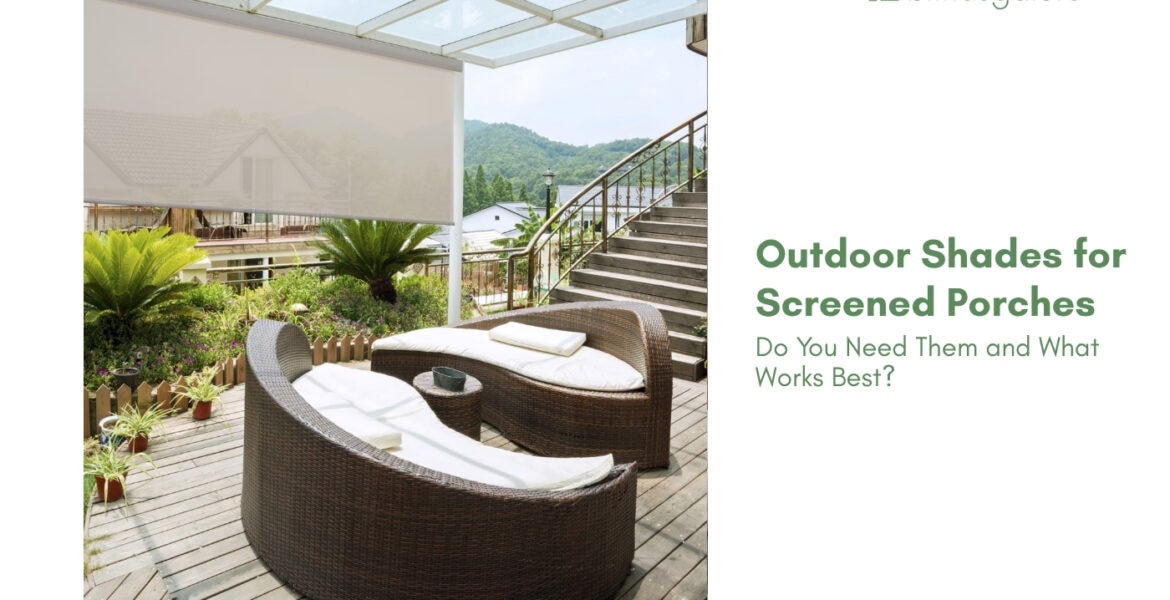
A screened porch keeps bugs out, but screens alone do very little to block heat, glare, or UV rays. On a south-facing or west-facing porch, afternoon sun can make the space uncomfortably hot even with screens in place. Outdoor shades add the missing layer of sun control, turning a seasonal porch into a comfortable space from spring through fall.
We try to help you understand what works, what to look for, and how to choose the right outdoor shade for a screened-in porch.
Do Screened Porches Really Need Shades?
Screens filter insects, not sunlight. A standard porch screen blocks very little UV and almost no solar heat. When the afternoon sun hits a screened porch directly, the temperature inside can climb well above the surrounding shade, making the space uncomfortable during the warmest hours of the day.
Adding outdoor solar screens outside or inside the screened framework intercepts that solar energy before the porch heats up. The result is a noticeably cooler, more comfortable space without sacrificing the airflow and openness that make a screened porch appealing in the first place.
Outdoor shades make the most difference on porches that face south, southwest, or west, where direct sun exposure is strongest during afternoon and early evening hours.
What Material Works Best for Porch Shades?
The best outdoor shade fabrics are engineered to handle sun, rain, wind, and temperature swings without breaking down.
PVC-coated polyester is the most common material for outdoor solar screens. The coating makes the fabric weather-resistant, mold-resistant, and easy to clean. A simple hose-down removes pollen, dust, and light debris. For tougher spots, a soft cloth with mild soap does the job.
HDPE (high-density polyethylene) is another popular choice, especially for shades that need maximum breathability. HDPE fabrics resist fading and hold up well in direct sun over multiple seasons. The Coolaroo Motorized Outdoor Sun Shades use knitted HDPE fabric that blocks UV rays while still allowing air to flow through, keeping the porch cool without creating a stuffy, enclosed feeling.
Both materials resist mold and mildew, which matters on porches that stay exposed to humidity and morning dew. Neither material should be submerged in water for cleaning. A gentle rinse and air drying are all that’s needed.
How the Openness Factor Affects Heat and Visibility
Outdoor solar shades come in different openness factors, and the number directly affects how much heat, light, and visibility pass through the fabric.
- 1% openness blocks 99% of UV rays and provides the strongest heat reduction. Outward visibility is reduced but not eliminated. Best for porches with intense, direct sun exposure where cooling is the top priority.
- 3% to 5% openness strikes a practical balance. Strong UV and heat reduction while maintaining a clear view of the yard or landscape. Most screened porch installations fall into this range.
- 10% openness allows more light and view but blocks less heat. Better suited for porches with partial shade from trees, overhangs, or north-facing orientation.
Darker fabric colors generally provide better outward visibility and glare reduction. Lighter colors reflect more heat but can create more glare on the fabric surface. For more on how solar shades work alongside other window treatments, see What to Consider When Choosing Sunroom Blinds.
Manual vs. Motorized: Which Is Better for Porches?
On a screened porch, shades often cover wide openings and may sit in spots that are awkward to reach by hand. Motorized operation makes daily adjustment simple and eliminates the need for cords.
The Coolaroo Motorized Outdoor Sun Shades raise and lower with a remote control, making it easy to adjust coverage as the sun moves throughout the day. No climbing, no stretching, no manual cranking.
Manual outdoor shades with a cord loop or crank system work well on smaller openings where the shade is easy to reach. For wider spans or multiple shades across a long porch, motorization saves real effort over a full season of daily use.
How to Keep Outdoor Shades Secure in Wind
Wind is the biggest practical concern for outdoor porch shades. A shade that flaps or lifts in a breeze becomes annoying fast and can sustain damage over time.
Most quality outdoor shades offer optional tie-down hardware. Bungee or cable tie-downs attach to the bottom hem bar and hook into anchors on the wall or post, holding the shade taut even in moderate gusts.
For areas with frequent strong winds, roll shades up before storms and severe weather events. Outdoor shades are built to handle normal breezes and light rain, but heavy wind and driving rain can stress the fabric and hardware beyond their design limits. For guidance on installations around doors and larger openings, see How to Install Blinds on Sliding Glass Door.
Installation Tips for Screened Porches
Outdoor shades mount to the header beam, ceiling, or wall above the porch opening. Most installations use standard brackets and screws included with the shade. A few things to keep in mind:
Check your mounting surface
Wood framing accepts standard wood screws. Brick, stone, or metal may require masonry anchors or self-tapping screws.
Measure each opening individually
Porch openings can vary by a fraction of an inch, even on the same porch. Measure the width and drop for each opening separately. For detailed guidance, visit our measuring guide.
Account for the roll
When fully raised, the shade rolls around a tube at the top. Make sure there’s enough clearance between the roll and the top of the screen frame so the shade doesn’t press against the screen when retracted.
Bring help for wide shades
Large outdoor shades can be heavy. An extra set of hands makes installation safer and easier.
For a full overview of all window treatment options for indoor and outdoor spaces, see The Ultimate Guide to Window Treatments.
FAQs
PVC-coated polyester and HDPE (high-density polyethylene) are the two most common and durable materials. Both resist UV, mold, mildew, and fading. PVC-coated polyester is slightly more rigid, while HDPE is more breathable.
Yes. Outdoor solar shades are designed to preserve outward visibility while blocking UV and heat. Darker fabric colors generally offer better see-through clarity. Lower openness factors (1% to 3%) reduce visibility more than higher ones (5% to 10%).
Outdoor solar shades can deflect drizzle, but the woven mesh allows heavier rain to pass through. Roll shades up during heavy storms and severe weather to prevent damage.
Outdoor solar screens mounted above each porch opening are the most effective solution. Choose a 3% to 5% openness factor for balanced heat reduction and visibility, and add tie-down hardware to keep shades secure in wind.