
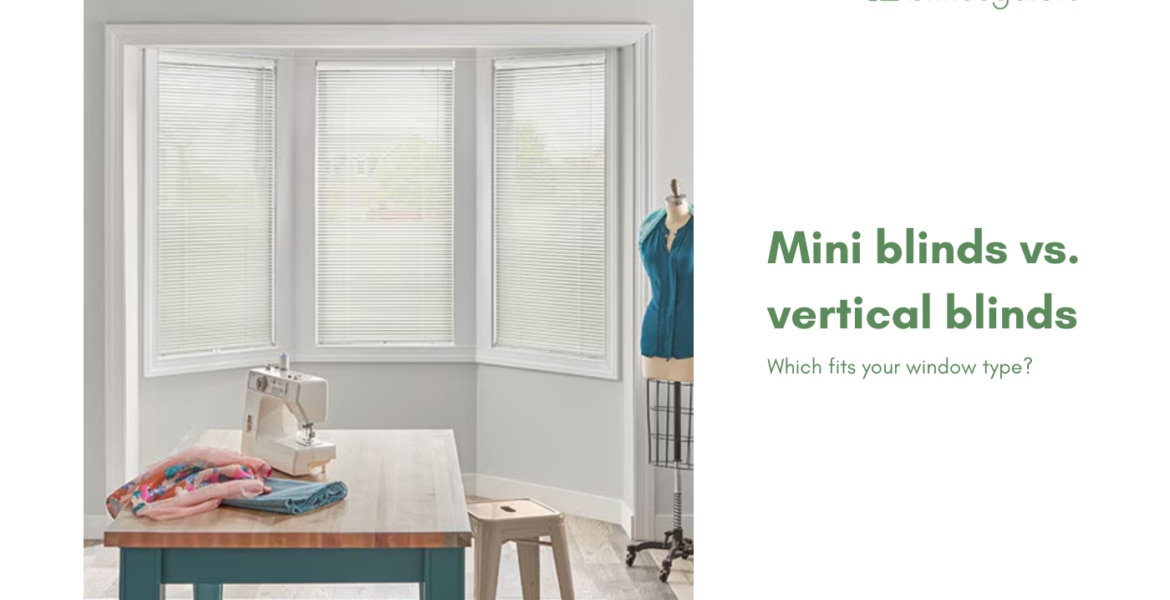
Choose mini blinds for standard windows, like double-hung and single-hung windows, small windows, and windows with shallow frames. Choose vertical blinds for sliding glass doors, patio doors, and wide windows that are wider than they are tall. Mini blinds lift up and down with narrow horizontal slats, while vertical blinds draw side to side with tall vanes, so the shape and use of the opening decides which one fits.
It’s one of the first decisions to make when you’re ordering blinds, and it’s simpler than it looks. Start with the window, and the format usually picks itself.
What is the core difference between mini blinds and vertical blinds?
Mini blinds are horizontal. Vertical blinds are, well, vertical. That changes how they open, what they fit, and how they look.
| Features | Mini blinds | Vertical blinds |
|---|---|---|
| Slats or vanes | Horizontal slats, mostly 1 inch | Vertical vanes, 3 1/2 inches |
| How they open | Raise and lower; slats tilt | Draw to one side or split; vanes rotate |
| Materials | Aluminum or vinyl | Vinyl, fabric, or faux wood |
| Width range | Up to 96 inches on our widest styles | Up to 192 inches in vinyl and fabric |
| Controls | Cordless lift with a wand tilt | One wand that rotates and draws the vanes |
| Best for | Standard and small windows | Sliding doors, patio doors, wide windows |
What windows work best with mini blinds?
Mini blinds suit windows that are about as tall as they are wide, or taller, and openings where you want a slim, tidy look.
- Double-hung and single-hung windows. The classic fit for mini blinds.
- Small windows. Narrow slats keep the blind in scale on bathroom, kitchen, and laundry room windows.
- Shallow window frames. Our 1-inch blinds need only 3/4 inch of depth for an inside mount.
- Humid rooms. Aluminum and vinyl both resist moisture, so mini blinds work well in kitchens and bathrooms.
- Rentals and offices. They’re affordable, simple to operate, and easy to replace.
Width limits matter. Our Blindsgalore 1″ Aluminum Blinds can be made up to 96 inches wide, and our Blindsgalore 1″ Vinyl Blinds up to 72 inches. Wider than that, a vertical blind or a different style is the better choice.
One firm rule: Don’t put mini blinds on a sliding glass door or patio door. Horizontal blinds have to be raised all the way every time someone walks through, and the slats get in the way.
What windows work best with vertical blinds?
Vertical blinds shine on openings that are wide, that you walk through, or that slide sideways.
- Sliding glass doors and patio doors. The vanes draw to the side, so the walkway stays clear.
- Wide picture windows. Our vertical blinds in vinyl and fabric can be made up to 192 inches wide, and faux wood up to 120 inches.
- Floor-to-ceiling windows and window walls. Tall vanes cover large expanses cleanly.
- Windows that slide side to side. Vertical blinds move in the same direction as the window.
You also get a choice of stack. A single stack gathers the vanes on the left or right, and a split stack parts them in the middle like a pair of drapes. For door-specific tips, see our guide to window treatments for sliding glass doors.
How do price and materials compare?
Mini blinds generally cost less per window. Every product is custom, so your price depends on size, material, and options, but mini blinds sit at the entry level of what we sell.
Vertical blinds sit a step up, but compare them by opening, not just by blind. One vertical blind can cover a sliding door or window wall that would otherwise need two or three separate window treatments. Our guide to custom blinds pricing explains how each category is priced.
Material options differ too:
- Mini blinds come in aluminum, with a range of colors from white to darker tones, or vinyl, which has a softer look and resists dents better than aluminum.
- Vertical blinds come in vinyl for durability, fabric for a softer drapery-like feel, or faux wood for a warm, fully opaque finish. S-shaped vinyl vanes interlock for extra privacy.
Which is easier to maintain?
Vertical blinds are a little easier, especially in busy homes.
Mini blinds:
- Close the slats and dust with a microfiber cloth or vacuum brush, working top to bottom.
- Flip the slats and repeat.
- Wipe with a damp cloth and mild soap, then dry right away.
Aluminum slats can dent or bend when bumped, and a bent slat usually means replacing the blind.
Vertical blinds:
- Dust the vanes with a microfiber cloth or a vacuum brush.
- Wipe vinyl vanes with a damp cloth.
- Replace a damaged vane on its own, since each vane hangs independently.
Never submerge either type in water. For more cleaning tips by material, see our guide on How to Clean Blinds: The Complete Material-by-Material Guide.
Have mostly standard windows? Browse our mini blinds collection to compare aluminum and vinyl options. Love your view.
Frequently asked questions
Get mini blinds for standard windows, small windows, and shallow frames. Get vertical blinds for sliding glass doors, patio doors, and wide windows. The shape and use of the opening is the deciding factor.
Mini blinds work best on double-hung, single-hung, and small windows. Vertical blinds work best on sliding glass doors, patio doors, wide picture windows, and windows that slide side to side.
We don’t recommend it. Mini blinds have to be raised fully every time you use the door, and the slats get in the way. Choose vertical blinds, panel track blinds, vertical cellular shades, sliding door shutters, or drapery instead.
Usually, per window. Mini blinds are an entry-level option, while vertical blinds sit a step up. On a wide opening, though, one vertical blind can replace two or three separate treatments, so compare the total cost for the opening.
Our 1-inch aluminum mini blinds can be made up to 96 inches wide, and our 1-inch vinyl mini blinds up to 72 inches. Vertical blinds go wider, up to 192 inches in vinyl and fabric.
Slightly. Vertical vanes are easy to dust and wipe, and a damaged vane can be replaced on its own. Mini blinds have more slats to clean, and bent aluminum slats usually mean replacing the blind.