
Source: Blindsgalore
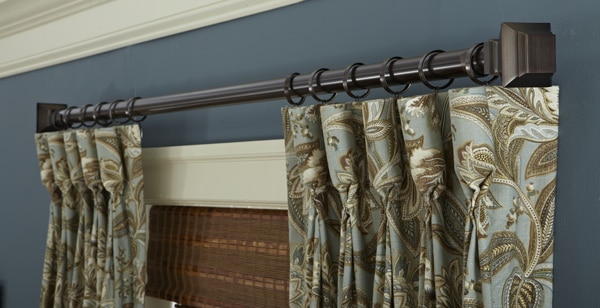
Drapery hardware tops off drapery the way a frame accents your favorite piece of art. It may solely act as structural support, fade away into the background and allow your drapery to shine, or it can make its own bold and contrasting decorative statement while effortlessly holding up your stunning drapery. Whether you plan on installing simple panels or full custom drapery, you will need some drapery hardware to help your window treatment come to life.
Source: Blindsgalore
Knowing Drapery Hardware Basics
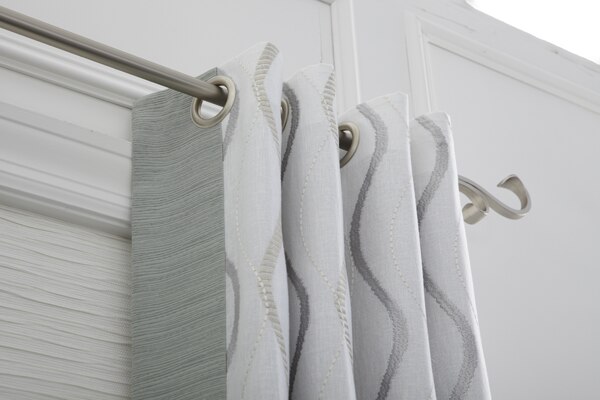
The ideal placement of drapery is to have the outside edges fall about 6” wider than the window frame. This gives the illusion of a wider window and allows space for the panels to stack in order to fully clear the window when they are drawn back. A good rule to follow is to add about 12” to your window width to determine the size of the drapery rod you need to order. Unlike window treatments, you only need one measurement to ensure the correct size, but remember to consider the size of the finials before you drill any holes. Once the brackets are installed, if the finials are too high, then the rod won’t fit between the brackets and the ceiling. Depending on the look you’re going for, drapery may be installed anywhere from 4” above the top of the window to the highest point on the wall.
Source: Tobi Fairley
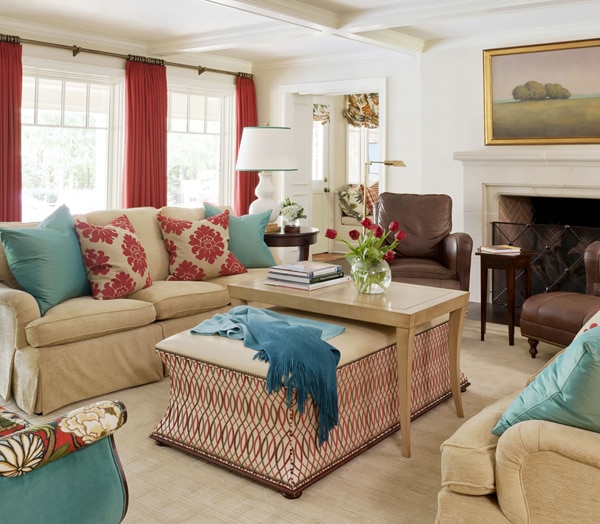
When installing drapery hardware, remember to account for any lift the fabric may experience once shirred onto the rod. The flat measurement of a drapery panel is one thing, but the length may easily shorten an inch or so once gathered onto the rod.
Source: Home Bunch
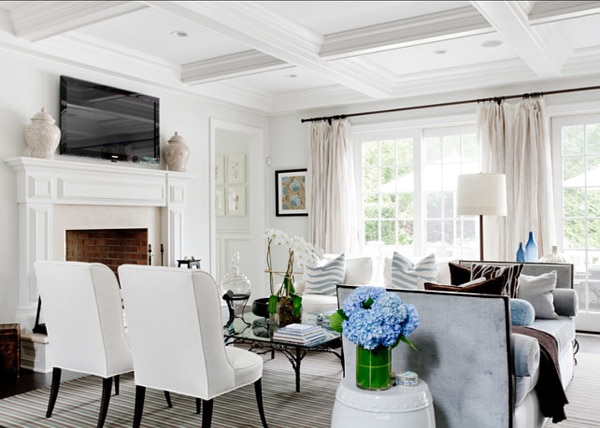
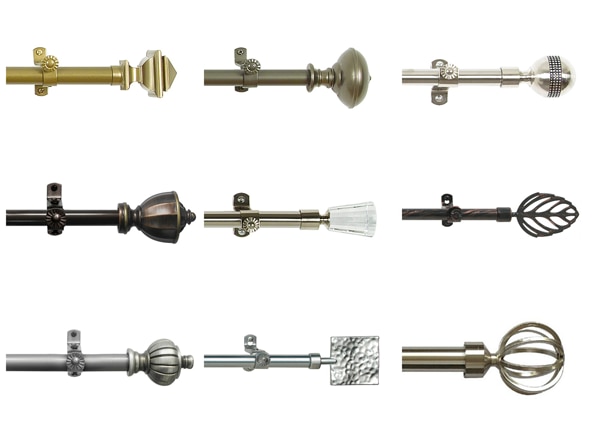
As with any other decorative accent in your home, consider the general style you’re envisioning to help narrow down the vast selection of drapery hardware styles to choose from. Gold, geometric finials would work well with silk drapery in a formal dining room. A brushed nickel ball shaped finial may be the perfect match for some causal and durable cotton drapery in a family friendly room. A natural relaxed home could feature hardware with an oil rubbed bronze finish paired with flax colored linen drapery for a cohesive look.
Source: Blindsgalore
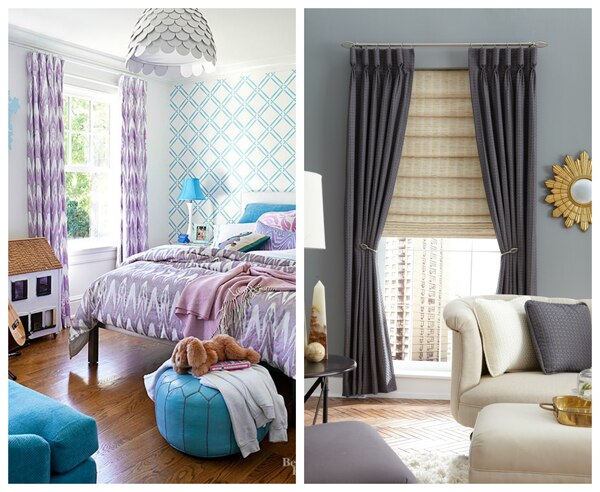
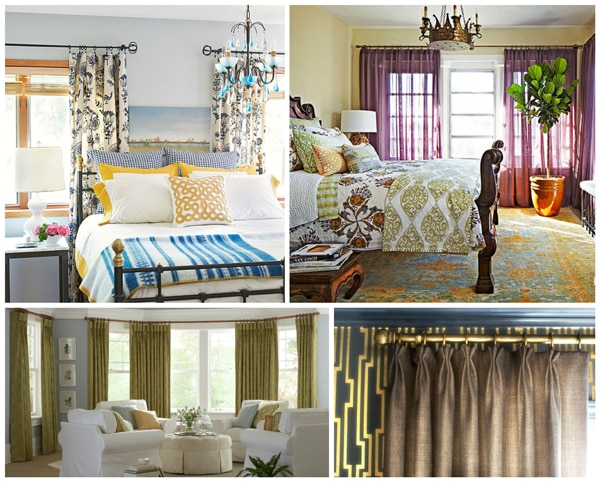
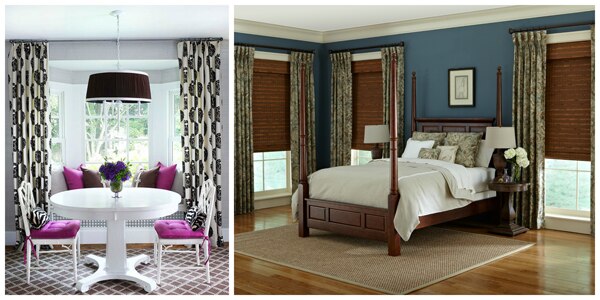
Another thought to consider when deciding on hardware is if you want your hardware to blend into the background, complement the room, or be a real standout? Here are some ideas to get you thinking.
Blending In To The Background

Sources: Blindsgalore, HGTV, BHG
Sources: BHG, Blindsgalore
Complementing The Surroundings
Sources: BHG, BHG, Blindsgalore, HGTV
Sources: BHG, Blindsgalore
Stealing The Show

Adding drapery to any room never fails to bring warmth, softness and another layer of considerable style. Further elevate the look of your drapery by finding the perfect hardware, then hang them up and show them off!