
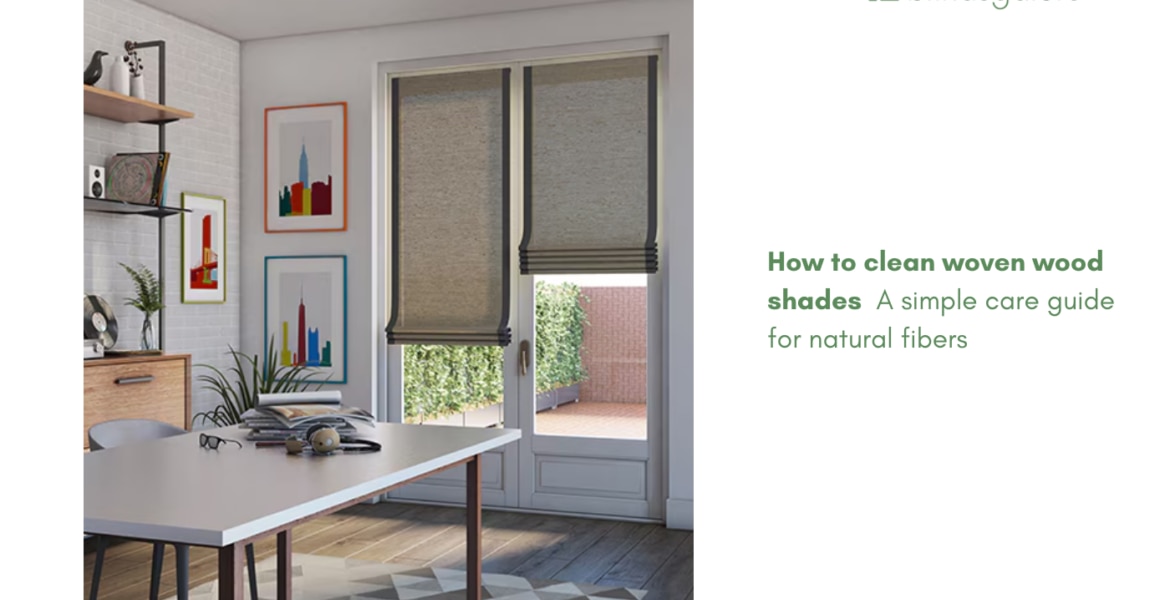
To clean woven wood shades, dust them regularly with a feather duster or microfiber cloth, and use the soft brush attachment on your vacuum for a deeper clean. Wipe bamboo and wood weaves with a dry cloth in long, even strokes, and vacuum grass and textured weaves instead of wiping so nothing snags. Keep water, vinegar, and household cleaners off the weave, and never submerge the shade.
Woven wood shades bring warmth and texture that no other window treatment quite matches. Because they’re made from real plant fibers, they need a slightly different routine than fabric or vinyl. The good news is that the routine is quick, dry, and easy.
Why do natural materials need different care than fabric or vinyl?
Woven wood shades are handwoven from natural materials like bamboo, reeds, jute, and grasses. Those fibers behave differently from synthetic fabric or vinyl in three ways:
- Water absorption. Natural fibers soak up moisture, so treat woven shades as dust-only surfaces. Water can stain the weave or change its shape.
- Texture. The raised weave holds dust in its gaps, and loose fibers can catch on a rough cloth.
- Natural variation. Every shade has natural differences in tone and texture, so a “stain” may simply be part of the material.
That’s why the cleaning methods that work on a roller shade or vinyl blind, like a damp cloth and mild soap, aren’t right for woven wood. Our woven wood shades are built to last for years with gentle, dry care. For help choosing a weave in the first place, see our bamboo blinds buying guide.
How should you dust and vacuum woven wood shades?
Dust weekly or whenever you notice buildup. A light, regular dusting keeps dirt from settling into the weave.
Routine dusting:
- Lower the shade fully so the weave lies flat.
- Dust with a feather duster or a dry microfiber cloth, working from top to bottom.
- For bamboo and wood weaves, wipe with a dry cloth using long, even strokes.
Deeper cleaning:
- Attach the soft brush or upholstery attachment to your vacuum.
- Set it to a low suction setting if you have one.
- Vacuum gently across the shade, working from top to bottom.
- Use the vacuum, not a cloth, on grass and textured weaves, since a cloth can snag on the fibers.
Yes, you can vacuum bamboo shades. Just use a soft brush and a light touch, and avoid pressing hard into the weave.
How do you spot clean without damaging the weave?
Spot cleaning woven wood is about speed and staying dry. Act quickly, and remove as much as you can before it sets.
- Dry debris or crumbs: Brush them off with a soft, dry brush or vacuum them up.
- Fresh spills: Blot immediately with a clean, dry cloth. Don’t rub, which pushes liquid deeper and can fray the fibers.
- Dried marks: Try a soft, dry brush first. If the mark stays, check the care instructions that came with your shade before trying anything else.
Skip the urge to scrub with water or cleaners. Natural fibers absorb liquid, and a wet spot can leave a ring or a lighter patch that’s harder to fix than the original mark. If a stain won’t come out with dry methods, call our team before you try anything stronger.
What should you avoid when caring for woven wood shades?
A few habits do more damage than dust ever will.
- Water. Never submerge woven wood shades, and don’t wipe them with a wet cloth. Keep them away from steam, too. Woven shades handle the moderate moisture of a half bath or powder room, but not a full bathroom with a shower.
- Harsh chemicals. Skip strong detergents, spot removers, bleach, and vinegar, which can discolor or weaken natural fibers. Dry cleaning and ultrasonic cleaning aren’t recommended either.
- Prolonged harsh sun. Natural fibers can lighten or shift in tone over years of strong, direct sun. Raising the shade or adding a liner on very sunny windows helps. Our warranty doesn’t cover fading, so this is worth planning for on south- and west-facing windows.
- Rough handling. Raise and lower the shade gently, and avoid pulling on the weave itself.
For care on every other material in your home, see our guide on How to Clean Blinds: The Complete Material-by-Material Guide.
How do you care for blackout or light-filtering liners?
Liners are stitched directly to the back of the shade, so they’re cleaned in place with the shade.
- Dust the liner side the same way you dust the front, with a feather duster or a soft vacuum brush.
- Blot any spot on the liner with a dry cloth. Avoid soaking it, since moisture can travel into the woven face.
- Never remove the liner or submerge the shade to wash it.
Liners also help protect the shade. A light-filtering liner softens the sun coming through the weave, and both light-filtering and blackout liners add privacy at night. On our Luxera and Boutique styles, blackout liners have an off-white street side, which keeps the exterior uniform.
Wondering how long a well-kept shade will last, or when it’s time to replace one? Our post on how long woven wood shades last covers it. If you’re ready for a new shade, our measuring guide walks you through a fresh measurement.
Thinking about adding woven shades to another room? Order up to 10 free samples and see how each weave looks in your light. Love your view.
Frequently asked questions
Dust them regularly with a feather duster or microfiber cloth, and use the soft brush attachment on your vacuum for a deeper clean. Wipe bamboo and wood weaves with a dry cloth in long, even strokes. Keep water and cleaners off the weave.
Yes. Use the soft brush or upholstery attachment on a low setting, and work gently from top to bottom. Vacuuming is the best way to clean grass and textured weaves, since a cloth can snag on them.
No. Natural fibers absorb water, which can stain or reshape the weave. Never submerge woven wood shades or wipe them with a wet cloth. Blot spills with a dry cloth right away.
Dust weekly or whenever you notice buildup. Regular light dusting keeps dirt from working its way into the weave.
Brush off what you can with a soft, dry brush, and blot fresh spills with a dry cloth. Avoid water, vinegar, and household cleaners. If a stain won’t lift with dry methods, check your care instructions or call our team at (877) 702-5463.
Natural fibers can lighten or change tone over years of strong, direct sun. Raising the shade on very sunny afternoons or adding a liner helps. Our warranty doesn’t cover fading.