
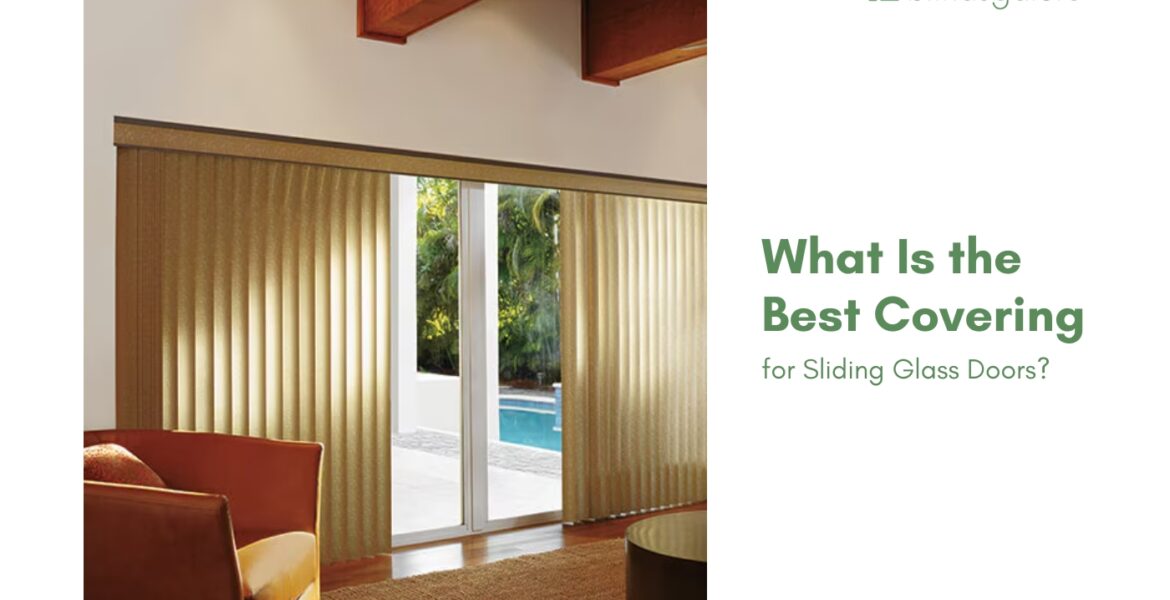
The best covering for a sliding glass door is one that moves the way the door moves: side to side, not up and down. Vertical solutions that stack to one side keep the doorway clear every time it opens, which is exactly what a horizontal blind cannot do. The strongest choices are vertical blinds, panel track shades, vertical cellular shades, drapery, and sliding shutter panels.
A sliding door is a wide expanse of glass that doubles as a daily entrance, so the covering has to solve two things at once: privacy and light control across a big span, and easy access through a door opened constantly. The treatments below all pass that test, while the ones to avoid fail it for a simple mechanical reason. Here is how each approved option works and which door it suits best.
Shop Custom Window Coverings for Sliding Glass Doors
What makes a covering right for a sliding glass door?
The right covering operates in the same direction as the door. A sliding door moves horizontally, so a treatment that also moves horizontally, stacking to the side, leaves the doorway clear without any extra steps.
Three requirements separate a good sliding-door covering from a frustrating one:
- Side-to-side operation. The covering should stack or draw to one side so the door opens freely.
- Wide-span coverage. The treatment must span a large opening, often six to twelve feet, without sagging or gapping.
- Easy daily access. Anyone using the door many times a day should not have to fully raise a shade each time.
Any treatment that forces you to lift it out of the way before stepping outside will quietly annoy you for years. Matching the motion to the door is the whole game.
The best coverings for sliding glass doors
Five treatments handle a sliding door well. Each suits a slightly different priority, from budget to insulation to style.
Vertical blinds
Vertical blinds are the classic sliding-door solution for good reason. The vanes rotate to dial in light and privacy, then stack completely to one side to walk through. A set of vertical blinds gives precise control across a wide span at an approachable price, and a vinyl vane handles humidity well if the door opens to a pool or patio. For a hardworking cover on a daily-use door, this is the default pick.
Panel track shades
Panel track shades, also called sliding panels, use wide fabric panels that glide along a track and stack neatly to the side, clean and contemporary on very wide openings. The light-filtering sliding panels span large doors gracefully and can open from the left, right, or center. For a sliding door over about eight feet, or any room going for a modern, architectural look, panel track is the standout.
Vertical cellular shades
Vertical cellular shades bring insulation to the sliding-door problem. The honeycomb cells run vertically and glide side to side, trapping a layer of air across all that glass to slow heat transfer. A vertical cellular shade is the energy-efficiency choice, since a sliding door is often the largest single pane of glass in the room and a major source of heat gain and loss. For a door in a room that runs hot or cold, the insulation pays off.
Drapery
Drapery is the choice when style leads. Floor-length panels on a sturdy track soften the hard lines of a big glass door and add color, texture, and height. Pinch-pleat or grommet-style drapery slides easily side to side, unlike rod-pocket curtains, which are not built for daily opening. Drapery also layers beautifully over a vertical shade, pairing soft fabric with the light control behind it.
Sliding shutter panels
Sliding shutter panels bring the architectural, built-in look of shutters to a door. Mounted on a track, the panels glide aside rather than swinging, so they clear the doorway cleanly. The sliding door shutters deliver a timeless, high-end finish with solid light control and durability. For a home that already features shutters elsewhere, or one that wants a permanent, polished statement on the patio door, this is the upscale option.
What to avoid on a sliding glass door
The treatments that fail a sliding door all fail for the same reason: they move the wrong way.
Horizontal blinds are the main offender. The slats hang across the door, so the whole blind has to be raised every time the door opens, which gets old fast and leaves the stack drooping in the way. Standard wood, faux wood, and mini blinds all share this problem and are not the right call for a sliding door or any extra-large window opening.
Shades that raise vertically, like standard roller, Roman, or horizontal cellular shades, have the same limitation. Mounted outside the frame and raised fully each time, they can technically work, but on a door opened many times a day, that is a daily chore rather than a solution. The fix is always the same: choose a treatment that slides or stacks to the side.
Pick the cover that matches how you live
The best covering comes down to the priority for that specific door: vertical blinds for value, panel track for wide modern spans, vertical cellular for insulation, drapery for style, and sliding shutters for a permanent high-end look. Ordering up to 10 free swatches makes the fabric and color real against the door before any commitment, and the in-house experts at (877) 702-5463 can help match the right vertical solution to the opening. All Blindsgalore brand treatments carry a 3-year limited warranty, upgradeable to five years, against defects in materials and workmanship when properly installed.
Love your view, with the door wide open.
Frequently Asked Questions
The best coverings are vertical solutions that stack side to side: vertical blinds, panel track shades, vertical cellular shades, drapery, and sliding shutter panels. All of them keep the doorway clear when the door opens, unlike horizontal blinds that must be raised each time.
Horizontal blinds hang across the full width of the door, so the entire blind has to be raised every time the door is opened. The lowered stack also sits in the doorway. Wood, faux wood, and mini blinds all share this limitation, which is why vertical, side-stacking treatments are recommended instead.
Panel track shades are the best choice for wide sliding doors, especially openings over about eight feet. The wide fabric panels glide along a track and stack neatly to one side, spanning large doors without sagging while keeping a clean, modern look.
Vertical cellular shades are the most energy-efficient option. The vertical honeycomb cells trap a layer of air across the glass to slow heat transfer, which matters because a sliding door is often the largest single expanse of glass in the room.
Yes. Pinch-pleat or grommet-style drapery slides easily side to side and works well on a sliding door, while rod-pocket curtains are not ideal for frequent opening. Drapery can also layer over a vertical shade for both style and light control.
Blindsgalore brand treatments carry a 3-year limited warranty with a free upgrade to a 5-year warranty, covering defects in materials and workmanship when the product is properly installed and operated. Boutique products include a free 5-year extended warranty. Fading is not covered.