
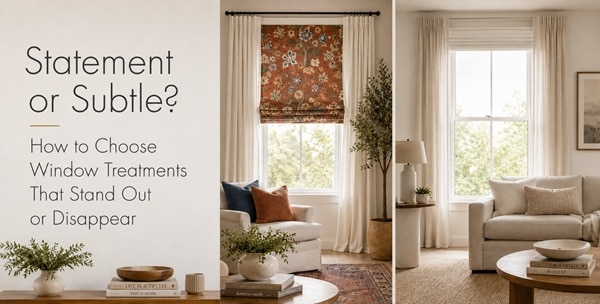
Some window treatments walk into a room and make themselves known. Others quietly manage sunlight, privacy, and glare, then all but disappear. Neither approach is better. The real question is whether you want your window treatments to become part of the design or step back and let the rest of the room take the lead.
A sculptural shutter, tailored roman shade, or pair of full-length drapes can frame a window and add color, texture, or architectural interest. A slim roller shade or neatly stacked cellular shade can provide light control when lowered, but can raise without competing with the view.
So, do you want something, or do you want nothing?
Shop Custom Window Blinds and Shades
What Are Statement Window Treatments?
Statement window treatments are meant to be seen. Even when open, raised, or tilted, their shape and material remain part of the room. They can introduce pattern, soften hard surfaces, or give a plain window more definition. They can also reinforce a design style, whether coastal, traditional, organic, tailored, or modern.
A statement doesn’t have to be loud; it doesn’t have to shout across the room. A neutral linen roman shade may feel understated while still adding texture and visible folds. White shutters might blend with the trim, yet give the window far more structure than it had before.
What Are Subtle Window Treatments?
Subtle window treatments do their job without taking over. They tend to have simple profiles, restrained colors, and compact stacks when raised. They’re especially useful when the view is the main attraction or the room already has plenty of pattern and personality. They also work well in smaller spaces, rooms with closely spaced windows, and open floor plans where visual consistency matters.
Roller shades are a classic example. A single panel of fabric rolls around a tube, leaving very little bulk at the top of the window when raised. Cellular shades offer a similarly streamlined look. Their pleated fabric folds into a compact stack, despite their powerful insulation properties.
Subtle doesn’t mean boring. It simply means the treatment supports the room instead of starring in it.
Window Treatments That Make a Statement
Roman Shades – Soft, Tailored, and Noticeably Stylish
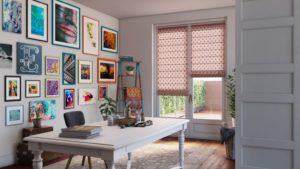
Roman shades combine soft fabric with the clean operation of a shade. As they rise, the material gathers into horizontal folds that remain visible above the window. That stack is part of the appeal. They’re a strong choice when you want the softness of fabric without full drapery. roman shades can bring pattern into a kitchen, bedroom, or living room and coordinate easily with upholstery, rugs, or bedding. A solid, neutral feels tailored and tame. A stripe, geometric design, or botanical print can turn the window into a focal point.
Shutters – Built-In Architectural Character
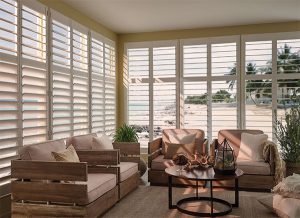
Shutters do more than cover a window. They change its architecture. Their frames and louvers add structure, repetition, and depth. Even in plain white, shutters have a strong identity and can feel classic or contemporary, depending on the style. They’re a smart choice when you want a window treatment that feels built into the home or need adjustable light control without adding fabric.
Woven Wood Shades – Natural Texture That Shows
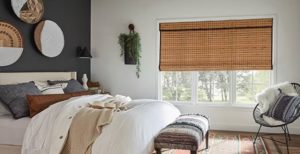
Woven wood shades bring natural fibers and organic warmth into a room. Unlike a smooth roller shade, woven materials are meant to show off their texture. No two shades are made the same! They’re a natural fit for relaxed living rooms, coastal interiors, and spaces with wood, stone, rattan, or other natural finishes. Add a liner when you need greater privacy or light control, since some open weaves allow a fair amount of light to pass through on their own.
Window Treatments That Nearly Disappear
Roller Shades – Clean, Simple, and Compact
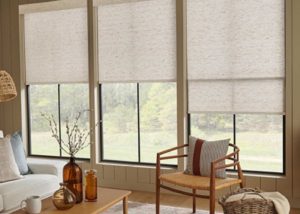
Few window treatments are as visually efficient as a roller shade. When lowered, the shade creates a clean plane across the window. When raised, the fabric rolls neatly around a tube instead of creating a bulky stack. This makes roller shades especially useful when the view is the priority. Choose a fabric close to the wall or trim color for the quietest effect. A cassette or fascia can conceal the roller and hardware for an even cleaner finish.
Solar Shades – Keep the View, Lose the Glare
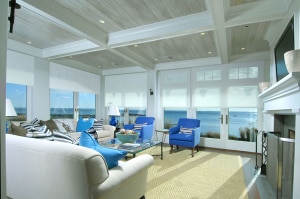
Solar shades are designed for rooms where sunlight is welcome but glare isn’t. Their performance fabrics filter direct sunlight while preserving some outward visibility, depending on the openness factor. More open fabrics maintain more of the view. Tighter weaves provide stronger glare, UV, and sunlight control. Solar shades are a good fit for living rooms with a view, home offices, or anywhere where you want the view without the light.
Cellular Shades – Quiet Looks, Serious Function
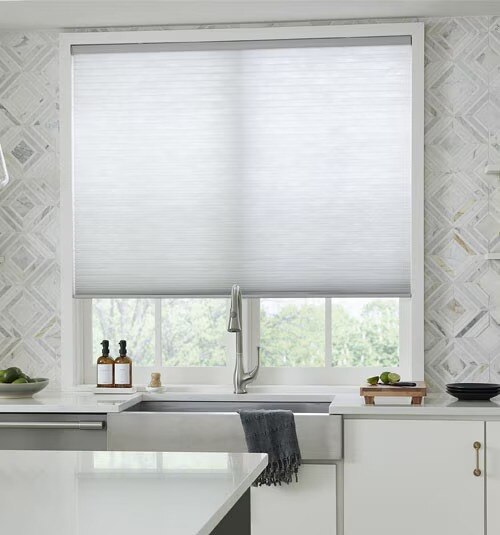
Cellular shades look simple, but there’s more happening than meets the eye. Their honeycomb-shaped cells trap air and slow heat transfer at the window, making them a strong option when you want a clean appearance with added insulation. Cellular shades are available in light-filtering and blackout materials, and a variety of other customizable options. This includes motorization, top-down/bottom-up lift, cornice boards, Bluetooth control, and a variety of natural neutrals.
Their honeycomb-shaped cells trap air and slow heat transfer at the window, making them a strong option when you want a clean appearance with added insulation.
Cellular shades are available in light-filtering and blackout materials, and many offer top-down/bottom-up operation. This allows you to lower the shade from the top, bringing in daylight while keeping the lower part of the window covered for privacy.
Sheer Shades – Light Control Without Visual Weight
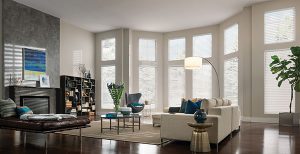
Sheer shades combine fabric vanes with sheer material. When open, they soften daylight and create a light, floating appearance. When closed, the vanes provide added privacy and light control. They’re more expressive than a basic roller shade but less architectural than shutters. Think of them as a middle ground: still something, just an airy something.
How to Choose Between Statement and Subtle
Start with the view.
A mountain, garden, city, or water view usually calls for a window treatment with a small stack or compact roll. Roller, solar, and cellular shades are strong options because they take up less space when raised. A less inspiring view may benefit from a treatment that gives the eye somewhere better to land. Roman shades, woven wood shades, shutters, and drapery can make the window itself more interesting.
A less inspiring view may benefit from a treatment that gives the eye somewhere better to land. Roman shades, woven wood shades, shutters, and drapery can make the window itself more interesting.
Next, look at the rest of the room.
Spaces with hard flooring and streamlined furniture often benefit from fabric or natural texture. Rooms that already have patterned rugs, bold artwork, and plenty of visual detail may need quieter window treatments.
Size matters, too. Large walls can support fuller treatments, while small rooms and closely spaced windows often look cleaner with low-profile shades. Mounting depth may also narrow your choices. Shutters and layered treatments generally need more room than slim inside-mount roller or cellular shades.
Finally, think about how the treatment looks when it’s open. Roman shades create a visible fabric stack. Drapery rests beside the window. Shutters remain part of the opening. Roller and solar shades retract more compactly.
The Final Verdict: Something or Nothing?
Choose statement window treatments when the room needs texture, architectural interest, or a stronger focal point. Choose subtle window treatments when you want to protect the view or allow other design elements to lead.
Can’t decide? Layer. Curtains and drapery can pair with virtually any style of window treatment. A hardworking shade can nearly disappear when open, while drapery gives the room its finishing touch.
Your windows need to function. Whether they also need to make an entrance is entirely up to you.
Shop Custom Window Blinds and Shades
Frequently Asked Questions
They don’t have to, but choosing a shade close to the wall or trim color can help the treatment blend into the room. Contrasting colors, patterns, and natural textures will make the window stand out more.
Roller shades, solar shades, and cellular shades are among the most subtle options. They have clean profiles and retract into relatively compact rolls or stacks when raised.
Drapery, shutters, patterned roman shades, and woven wood shades tend to have the strongest visual presence. Their fabric, texture, folds, frames, or natural materials remain noticeable even when the treatment is open.
Yes. Different treatments can work together when their colors, materials, or overall style coordinate. For example, a roller shade may be used on a narrow window while matching drapery covers a larger opening.
Layering can be helpful when you need one treatment for function and another for style. A shade can manage sunlight and privacy, while curtains or drapery add softness, color, and another layer of coverage.