
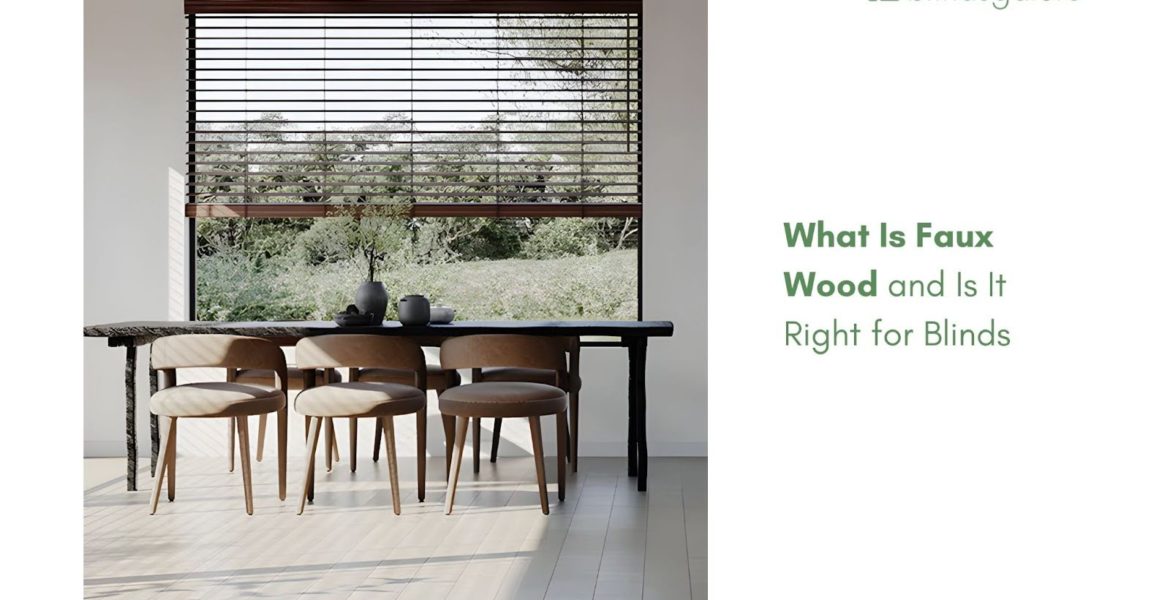
Faux wood blinds are designed to deliver the classic look of real wood with greater durability and lower maintenance. They are especially popular in homes where humidity, heat, or daily wear make natural wood impractical. Our guide explains what faux wood blinds are made of, how they perform, and how to decide if they are the right choice for your windows.
What Are Faux Wood Blinds Made Of
Faux wood blinds are made from engineered synthetic materials rather than solid lumber. Most use PVC (polyvinyl chloride), vinyl, or composite blends that may include wood byproducts for texture. These materials are molded or extruded into uniform slats, then finished with coatings that replicate wood grain and color.
The advantage of this process is consistency. Faux wood slats maintain their shape and finish more reliably than natural wood, especially in environments with moisture or temperature swings.
Are Faux Wood Blinds Durable?
Yes. High-quality faux wood blinds are built to handle conditions that shorten the lifespan of real wood.
Synthetic slats resist cracking, peeling, and warping. Many are manufactured with UV inhibitors to slow fading and yellowing caused by sunlight. Because the material does not absorb moisture, faux wood performs especially well in kitchens, bathrooms, and laundry rooms where real wood often fails.
In everyday homes, faux wood blinds commonly last many years with basic care, often matching or exceeding the lifespan of real wood blinds in challenging environments.
How Faux Wood Handles Heat and Sun
Faux wood blinds are engineered for heat stability. Unlike natural wood, which can dry out and split after repeated exposure to the sun, composite materials remain dimensionally stable under normal residential heat conditions.
South and west-facing windows benefit most from faux wood, as the slats hold their shape and color better over time. While extreme, prolonged heat can eventually affect any material, quality faux wood blinds are designed to tolerate daily sun exposure without visible damage.
Where Faux Wood Blinds Work Best
Faux wood blinds are versatile, but they shine in spaces that challenge traditional materials.
- High-humidity rooms: Bathrooms and kitchens are ideal because faux wood does not swell or warp when exposed to steam or moisture.
- Sun-heavy windows: Rooms with intense afternoon light benefit from UV-resistant slats.
- High-traffic homes: Faux wood stands up well to bumps, pets, and active households.
- Rental and investment properties: Durability and cost-effectiveness make faux wood a practical long-term choice.
For a straightforward, durable option, Blindsgalore 2″ Faux Wood Blinds offer a clean, classic look that works in nearly any room.
Faux Wood vs. Real Wood Blinds
Faux wood and real wood both have strengths. The better option depends on how and where the blinds will be used.
- Moisture resistance: Faux wood performs better in humid environments.
- Maintenance: Faux wood wipes clean easily, while real wood requires gentler care.
- Appearance: Real wood offers natural grain variation; faux wood provides a more uniform finish.
- Weight: Faux wood can be heavier, which matters for wider windows. Motorization or reinforced headrails help offset this.
For rooms where privacy and durability are priorities, Blindsgalore Privacy 2″ Faux Wood Blinds add tighter slat closure for better light blocking.
Design and Style Options
Modern faux wood blinds are available in a wide range of colors, finishes, and slat sizes. Neutral whites and off-whites remain the most popular for bright, clean interiors, while wood-tone finishes suit traditional and transitional spaces.
If design detail matters as much as performance, Boutique 2″ Faux Wood Blinds offer upgraded finishes and styling for a more tailored look.
Things to Consider Before Buying
Faux wood blinds work for most homes, but a few factors are worth noting.
Very wide windows may feel heavier to lift manually because faux wood slats are denser than real wood. In these cases, reinforced headrails or motorized lift options improve ease of use and reduce strain on the hardware.
Ordering samples is the best way to compare finishes, textures, and colors in your own lighting. This helps ensure the faux wood finish complements your space rather than looking flat or overly uniform.
How to Care for Faux Wood Blinds
Maintenance is simple. Dust regularly with a microfiber cloth or vacuum using a brush attachment. For deeper cleaning, wipe slats with a damp cloth and mild detergent.
Never submerge blinds or shades in water, including faux wood products. Excess moisture can damage headrails, ladders, and internal components, even if the slats themselves are water-resistant.
FAQs
Faux wood blinds are primarily made from PVC (polyvinyl chloride), vinyl, or composite wood blends. Manufacturers apply coatings and colorants to replicate natural wood grain patterns. Some products incorporate wood byproducts for enhanced texture.
Yes. Faux wood blinds resist moisture and humidity, making them ideal for bathrooms, kitchens, and laundry rooms. Unlike real wood, they won’t warp, swell, or develop mold when exposed to steam and moisture.
Quality faux wood blinds are engineered with UVA inhibitors that protect against sun damage. Standard sun exposure won’t cause warping or yellowing. Extreme, prolonged heat may cause minor effects over time, but proper care maintains their appearance.
Faux wood blinds typically outlast real wood due to their resistance to moisture, UV rays, and temperature changes. With regular cleaning and care, expect many years of reliable performance.
Absolutely. At Blindsgalore, every set of faux wood blinds is built to your exact window measurements. We never sell pre-made or cut-down products. Order free samples and give us a call when you are ready to order.