
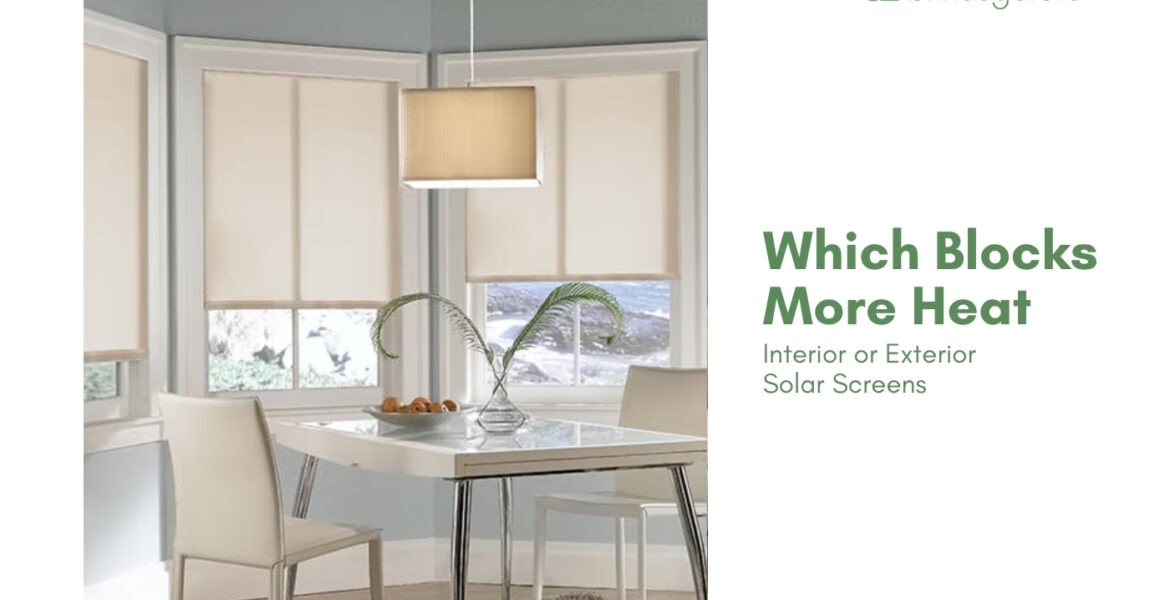
Exterior solar screens block more heat than interior solar screens. The reason is simple: exterior screens intercept solar energy before it reaches the glass, while interior screens can only manage heat that has already entered the room. Both types reduce glare, protect furnishings from UV damage, and improve comfort, but the placement makes a measurable difference in cooling performance.
How Solar Screens Reduce Heat
Solar screens work by filtering sunlight through a tightly woven mesh fabric. The tightness of the weave determines the openness factor, which controls how much light, heat, and visibility pass through.
A lower openness factor (like 1% or 3%) blocks more solar heat and glare but reduces outward visibility. A higher openness factor (like 5% or 10%) lets in more light and view but blocks less heat.
The key difference between interior and exterior placement comes down to where the heat gets stopped. Exterior screens reject solar energy outside the building envelope. Interior screens absorb or reflect heat that has already passed through the glass and entered the room.
According to research published by the DOE’s Building America Solution Center, interior roller shades reduced solar heat gain by about 18%, while exterior shades reduced solar heat gain by approximately 55%.
Exterior Solar Screens: Maximum Heat Blocking
Exterior solar screens mount on the outside of the window, stopping solar radiation before it touches the glass. The heat gets absorbed and dissipated outdoors rather than trapped inside the home.
The Blindsgalore Classic Outdoor Solar Screens are designed for exterior mounting and built to withstand sun, wind, and weather exposure. Available in multiple openness factors and colors, outdoor screens provide significant heat reduction on south-facing and west-facing windows where sun exposure is strongest.
For hands-free operation on hard-to-reach exterior windows, the Coolaroo Motorized Outdoor Sun Shades raise and lower with a remote control, making daily adjustment easy even on large openings like patios and covered porches.
Shop Solar Shades for Windows
Exterior solar screens are best for:
- South-facing and west-facing windows with heavy afternoon sun
- Homes in hot climates where cooling costs are a primary concern
- Patios, porches, and covered outdoor spaces
- Large glass openings like sliding doors and picture windows
For more on treating sliding doors and large openings, see How to Install Blinds on Sliding Glass Doors.
Interior Solar Screens: Versatility and Comfort
Interior solar shades mount inside the home like any other window shade. While less effective than exterior screens at blocking raw solar heat, interior solar shades still reduce glare, filter UV rays, protect furniture and flooring from fading, and improve visual comfort throughout the day.
The Blindsgalore Classic Solar Shades offer a range of openness factors and neutral colors for clean, modern light control. The Blindsgalore Envision Solar Shades add premium fabric options with color-coordinated components for a polished, designer-level finish.
Interior solar shades are best for:
- Rooms where glare reduction and UV protection are the main goals
- HOA-restricted communities where exterior modifications aren’t allowed
- Rental properties where exterior installations aren’t practical
- Home offices, living rooms, and sunrooms where view preservation matters
For sunroom-specific guidance, see What to Consider When Choosing Sunroom Blinds.
Side-by-Side Comparison
Heat reduction: Exterior screens block significantly more heat because they stop solar energy before it reaches the glass. Interior screens manage heat that has already entered.
Glare control: Both types reduce glare effectively. Interior shades offer slightly more adjustability since they can be raised and lowered throughout the day with a simple pull or motorized control.
UV protection: Both types filter UV rays. Exterior screens protect the glass itself, while interior shades protect furnishings, flooring, and artwork inside the room.
View preservation: Both types maintain outward visibility depending on the openness factor. Darker screen colors generally offer better outward views with less glare.
Weather exposure: Exterior screens must withstand sun, rain, wind, and temperature extremes. Interior shades operate in a controlled environment and generally last longer with less maintenance.
Aesthetic flexibility: Interior solar shades come in a wider range of colors, textures, and styles to coordinate with room decor. Exterior screens tend to be more utilitarian in appearance.
Ease of operation: Interior shades are easier to adjust daily. Exterior screens are often fixed panels, though motorized exterior options exist for more flexible use.
Choosing the Right Type for Each Room
Living rooms and sunrooms: Interior solar shades provide comfortable glare reduction while keeping the view open. For rooms with extreme afternoon sun, exterior screens on the most exposed windows can make a noticeable difference in temperature. For more living room ideas, see 4 Living Room Window Treatment Ideas.
Home offices: Interior solar shades are usually the best fit. Reducing screen glare without darkening the room keeps the workspace comfortable and productive.
Bedrooms: Solar screens (interior or exterior) reduce heat but are not blackout treatments. For bedrooms, pairing a solar shade with a blackout roller shade or blackout curtains provides both heat reduction and darkness for sleep.
Patios and porches: Exterior solar screens are the natural choice for outdoor living spaces. Lowering the temperature on a covered porch or patio extends usable outdoor time during hot months.
Care and Maintenance
Both interior and exterior solar screens benefit from regular light dusting or gentle vacuuming. Exterior screens can be hosed down occasionally to remove dirt and pollen, but never submerge any interior shade in water. A damp cloth for spot cleaning and air drying is the safest approach for indoor treatments. For more cleaning strategies, see Easy Cleaning Hacks for Window Blinds.
For a complete overview of all window treatment types, see The Ultimate Guide to Window Treatments.
FAQs
Yes. Both interior and exterior solar screens reduce solar heat gain. Exterior screens are more effective because they stop heat before it enters through the glass. Interior screens manage heat that has already passed through the window.
Exterior solar screens and exterior shutters block the most heat because they intercept sunlight outside the building envelope. Among interior treatments, cellular shades with their honeycomb air pockets offer the strongest insulation, while interior solar shades focus more on reducing solar heat gain and glare.
For maximum heat blocking, exterior placement wins. For daily adjustability, UV protection, and design flexibility, interior placement is more practical. Many homeowners in hot climates use exterior screens on the most sun-exposed windows and interior solar shades elsewhere in the home.
Yes. Outdoor solar screens and shades reduce heat by blocking solar radiation before it reaches the glass, lowering indoor temperatures and easing the load on air conditioning systems.