
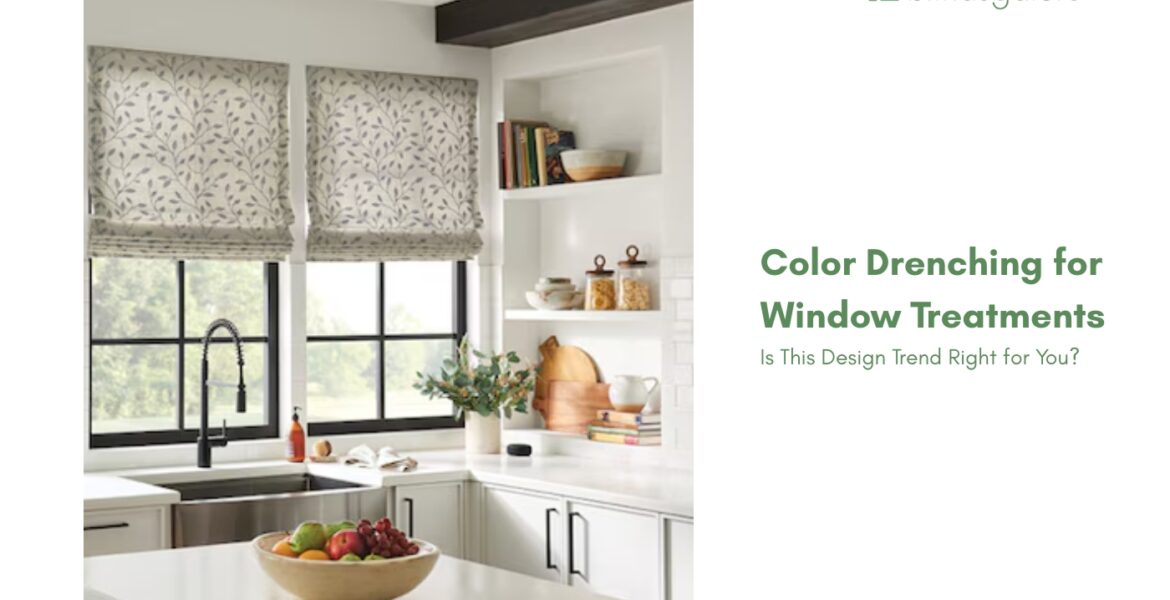
Color drenching is the design trend where every surface in a room, including the walls, trim, ceiling, and window treatments, shares one continuous color. The effect is immersive, intentional, and surprisingly calming when done well. Where most rooms use white trim and a contrasting shade at the window, a color-drenched room wraps everything in the same hue and lets texture, light, and fabric do the visual work instead.
The question for anyone considering color drenching window treatments is not whether the trend looks good. The question is which treatments actually pull it off and which ones break the effect.
What is color drenching?
Color drenching is the practice of saturating a room in a single color across all surfaces. Walls, ceiling, trim, molding, built-ins, and window treatments all share the same hue or tonal range. The idea is to remove visual interruptions and create a space that feels like one continuous, enveloping environment.
The trend started gaining momentum around 2021 in paint and wall design, and it has steadily moved into soft furnishings and window coverings. Unlike an accent wall, which draws attention to one surface, color drenching does the opposite: it makes no single surface stand out, so the room itself becomes the statement. The effect works best when the same color appears in slightly different textures and finishes, such as a matte wall paired with a woven shade in the same tone. That variation in texture keeps the room from feeling flat. For a broader look at how color and window coverings work together across rooms, the Ultimate Guide to Window Treatments covers the fundamentals.
Which window treatments work for color drenching?
Not every treatment holds a dye match well enough to blend into a color-drenched room. The fabric and the way light hits it determine whether the treatment disappears into the wall or stands out as a mismatch.
Roman shades
Roman shades are the strongest candidate for color drenching. The flat or soft-fold fabric sits flush against the window and presents a clean, unbroken panel of color when lowered. Because Roman shades come in a wide range of solid fabrics, matching the exact wall color is genuinely possible. A room painted in deep sage green with a Roman shade in the same sage looks seamless, and the fabric pleats add texture variation that keeps the surface from going monotone-flat.
Roller shades
Roller shades work beautifully for color drenching in modern and minimal rooms. The single smooth panel rolls up completely when raised, so the treatment disappears when the window is open and presents a clean color-matched surface when lowered. Roller shades come in a broad color palette, including muted earthy tones and deeper saturated hues, which makes matching a drenched wall straightforward.
Cellular shades
Cellular shades are a strong fit when the color is a warm neutral, off-white, cream, or soft taupe. The pleated honeycomb texture adds subtle depth that reads well in a drenched room, and the insulation benefit is a practical bonus. For deeper or bolder colors, cellular shade color ranges may be more limited, so checking the available palette against the wall color is worth doing early in the process.
Drapery
For rooms going all-in on drenching, floor-length custom drapery in a matched fabric is the most dramatic option. Drapery adds volume, movement, and a sense of height that shades cannot, which makes it the choice for formal living rooms, dining rooms, and primary bedrooms where the drenching effect should feel luxurious rather than just coordinated. For seasonal inspiration on how fabric and color work in layered settings, the Spring Fling feature shows how soft tones anchor a room.
What does not work for color drenching
Slatted blinds, including wood, faux wood, and aluminum, are the hardest treatments to color-drench. Three construction features break the illusion:
- Horizontal slat lines interrupt the continuous color flow
- Visible ladder strings, cord routes, and headrails add visual noise
- The overall structure reads as a separate object, even in the exact wall color
For rooms with slatted blinds you love, embracing a coordinating accent rather than full drenching is the more effective approach.
Which rooms suit color drenching?
Color drenching works best in rooms where the walls and the window treatment are both visible at the same time, which is most rooms, and where the mood benefits from an enveloping, cohesive feel.
Bedrooms are one of the strongest fits. A room drenched in a soft, warm neutral (warm white, clay, or muted blush) with a matched Roman shade creates a cocooning, restful atmosphere that helps the space feel quieter and more personal. The guide on Hello Sunshine, Goodbye Glare covers how to manage natural light without breaking the color flow.
Living rooms work well in muted, earthy tones. Sand, sage, oat, and terracotta are trending palette choices for color drenching in 2026, and all pair naturally with roller or Roman shades in matching tones. Deeper colors, such as forest green, navy, or charcoal, create a moodier effect that works in dens, libraries, and media rooms.
Bathrooms and kitchens are harder to drench because hard surfaces (tile, countertops, fixtures) introduce competing tones. Partial drenching works better here:
- Match the walls and window treatment in the same hue
- Let other surfaces (tile, countertops, fixtures) stay neutral
- Keep the fabric treatment moisture-appropriate for the room
How to get the color match right
The most common mistake in color drenching window treatments is ordering the shade based on a screen swatch and discovering the fabric reads differently in person than it did online. Fabric and paint absorb and reflect light differently, so a color that looks identical on screen can look off by a full shade in the room.
Ordering free swatches and holding the fabric against the actual painted wall, in both natural daylight and evening light, is the only reliable way to confirm the match. Colors shift noticeably between morning sun and lamplight, and a shade that looks perfect at noon can look mismatched at 8 pm. For a deeper look at how custom treatments hold their color and finish over time, the guide on How Long Do Custom Blinds Last covers what affects longevity.
Is color drenching right for your home?
Color drenching is not for every room or every homeowner, and that honesty matters. Rooms with lots of architectural detail (crown molding, wainscoting, built-ins) can feel heavy if every surface shares one color. Rooms with very small windows may lose the visual benefit because there is not enough shade surface to contribute to the effect. And anyone who changes their mind about color frequently may find drenching too committal, since repainting the walls means replacing or reordering the shade to match.
For rooms where the mood calls for immersion, calm, and intentional design, a matched Roman shade, roller shade, or floor-length drapery panel can turn a painted room into something that feels designed from the ground up. All Blindsgalore brand treatments are custom-built to order and backed by a 3-year limited warranty upgradeable to five years.
Browse our full window shades collection to see what colors are available across every type. Order free samples to hold the fabric against the wall before committing, and call the in-house experts at (877) 702-5463 for help matching the tone.
Frequently asked questions
Color drenching is the practice of saturating a room in a single color across all surfaces, including walls, ceiling, trim, and window treatments. The effect creates an immersive, cohesive environment where no single surface stands out.
Roman shades, roller shades, and custom drapery work best because their smooth or fabric surfaces blend seamlessly into the wall color. Slatted blinds break the continuous-color illusion due to their horizontal lines and visible hardware.
Warm neutrals (cream, sand, oat, clay), muted earth tones (sage, terracotta, warm taupe), and deeper saturated hues (forest green, navy, charcoal) all work well. The 2026 trend leans toward warmer, nature-rooted tones rather than cool grays.
Slatted blinds are the least effective treatment for color drenching because the horizontal lines and hardware break the single-color illusion. Smooth fabric treatments like roller shades, Roman shades, and drapery blend far more seamlessly.
Order free fabric swatches and hold them against the painted wall in both natural daylight and evening light. Colors shift between morning and evening, so confirming the match in both conditions prevents a visible mismatch.
Blindsgalore brand treatments carry a 3-year limited warranty with a free upgrade to a 5-year warranty, covering defects in materials and workmanship when properly installed. Boutique products include a free 5-year extended warranty. Fading is not covered.