
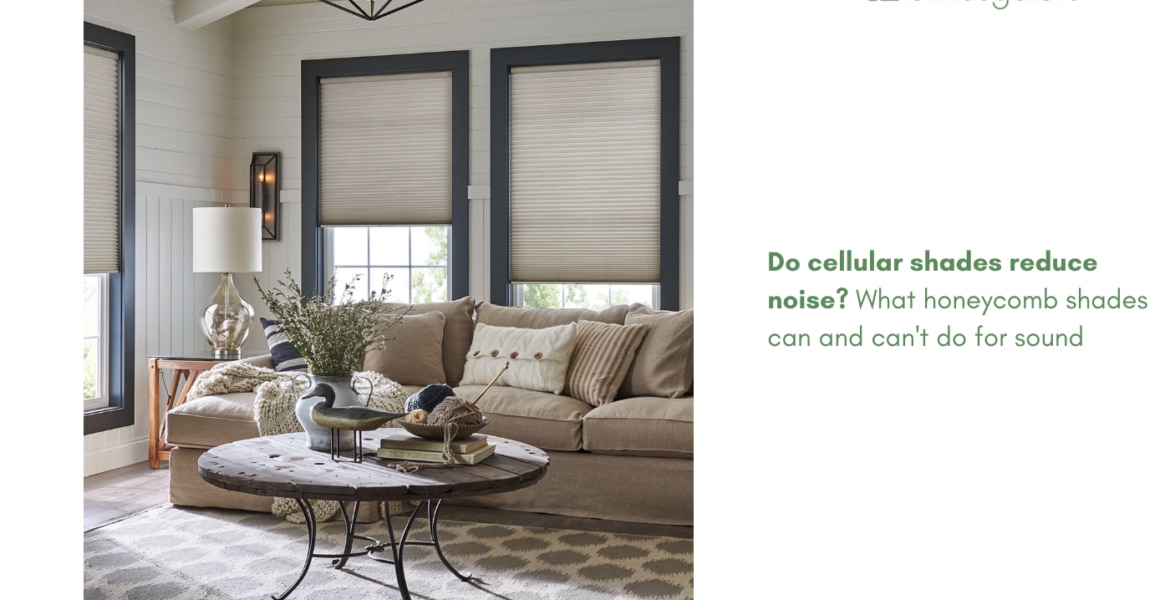
Cellular shades can make a room sound softer and a little quieter, but they won’t soundproof a window. The honeycomb cells and fabric absorb some sound, which cuts echo and takes the edge off higher-pitched outside noise. Low traffic rumble, sirens, and loud neighbors will still come through. For a noisy street, a double-cell shade layered with lined drapery does the most a window treatment can do.
That’s a less exciting answer than “block all street noise,” but it’s the true one. Knowing what cellular shades can actually do helps you spend your budget where it makes a difference.
Can any window treatment actually block outside noise?
Not completely. Blocking sound and absorbing sound are two different jobs.
- Blocking sound means stopping it from passing through. That takes mass and an airtight seal, which is why heavy walls and well-sealed, thicker glass do the real work.
- Absorbing sound means soaking up sound energy so less of it bounces around the room. Soft, porous materials like fabric do this well.
Window treatments are mostly absorbers. They’re lightweight, and they hang with small gaps at the edges, so sound can travel around and through them. Researchers at the University of Adelaide, writing in the Journal of the Acoustical Society of America, describe glazing as usually the weakest point for sound entering a room. To get a large drop in transmitted noise, they had to build specialized acoustic curtains that pair a heavy mass-loaded vinyl layer with absorbent linings. That’s a very different product from a standard shade.
So the honest goal for a cellular shade is a calmer-sounding room, not a silent one.
How does the honeycomb structure affect sound, not just heat?
The same design that helps cellular shades insulate also helps them absorb sound. Most cellular shades are made from spunlace, nonwoven polyester folded into hexagon-shaped cells. When the shade is down, you get a layer of fabric, a layer of trapped air, and another layer of fabric between the glass and the room.
Here’s what that structure does for sound:
- Softens echo. Fabric absorbs sound that would otherwise bounce off the glass and back into a room with hard floors and bare walls.
- Takes the edge off higher-pitched noise. Voices, birds, and the hiss of passing tires are easier for soft materials to absorb than deep, low-frequency sounds.
- Adds a buffer at the glass. A closed shade puts extra material between you and the window, which slightly dampens sound coming through it.
Here’s what it doesn’t do:
- Low rumble gets through. Trucks, buses, and bass from a neighbor’s speaker carry a lot of energy that lightweight fabric can’t stop.
- The window stays unsealed. Sound leaks through any gap around the edges, the same way light does.
If you’re shopping for energy savings too, our article on whether cellular shades save on energy bills covers the insulation side.
Single-cell vs. double-cell: Which is better for noise?
Double-cell shades are better for noise. Each one has two layers of air pockets instead of one, so there’s more fabric and more trapped air between the window and the room. Our cellular shade guide notes that double-cell construction offers both better insulation and better noise reduction.
| Feature | Single-cell | Double-cell |
|---|---|---|
| Layers of cells | One | Two |
| Sound | Some softening | More softening, from extra fabric and air |
| Insulation | Good | Better (higher R-value) |
| Best for | Moderate noise, slim profile | Bedrooms, nurseries, and offices on busy streets |
Fabric matters as well. Blackout cellular fabrics often include a thin metallic lining inside the cell, which adds another layer of material. A few shades worth a look:
- Harmony Blackout Cellular Shades: Available in a 1/2-inch double-cell blackout fabric.
- Gallery Blackout Cellular Shades: Offered in single-cell and double-cell options.
- Day/Night Cordless Cellular Shades: Light-filtering and blackout fabrics in one shade, so you can close the blackout layer at night.
What should you pair with cellular shades for a noisy room?
Layering does more than any single product. Each layer adds material and another pocket of air for sound to pass through.
- Mount the shade inside the frame with a snug fit. Gaps let sound in, so custom sizing to the exact opening matters. Our measuring guide walks you through it.
- Add lined drapery over the shade. Custom drapery with a lining adds weight and fabric, and blackout lining is the heaviest option. Hang the rod wide and high so the panels cover the whole window and frame.
- Go full length. Floor-length panels cover more of the wall and leave less open space below the window.
- Soften the rest of the room. Rugs, upholstered furniture, and bookshelves absorb echo that window treatments can’t reach.
For a ranked look at other options, see our list of the best window treatments for noise reduction.
What results should you realistically expect?
Expect a softer, calmer room, not silence. Here’s a simple way to set expectations by noise type:
| Noise | What cellular shades do |
|---|---|
| Echo inside a room with hard surfaces | Noticeably softer |
| Voices and light street noise | Somewhat quieter |
| Heavy traffic, buses, and sirens | Slightly muffled at best |
| Low bass and rumble | Little to no change |
If outside noise is affecting your sleep or work, the bigger gains come from the window itself. Sealing gaps around the frame, acoustic window inserts, and upgraded glazing all block sound in ways fabric can’t. Cellular shades and drapery then add a finishing layer of softness on top.
Not sure which combination fits your room? Contact our in-house team of design experts, and we’ll help you pick the right cell size, fabric, and layering for your windows.
Frequently asked questions
A little. The honeycomb cells and fabric absorb some sound, which softens echo and higher-pitched noise like voices. Cellular shades won’t block loud or low-frequency sounds like heavy traffic, and they won’t soundproof a window.
A double-cell cellular shade mounted snugly inside the frame, layered with floor-length lined drapery, gives the most noise reduction you can get from window treatments. For bigger results, address the window itself by sealing gaps or adding an acoustic insert.
No. Soundproofing requires mass and an airtight seal, and lightweight fabric shades have neither. Cellular shades absorb some sound but don’t stop it from passing through the window.
Yes, somewhat. Double-cell shades have two layers of air pockets and more fabric, so they absorb more sound than single-cell shades. The difference is noticeable but modest.
Slightly. Blackout cellular fabrics often have a thin lining inside the cells, which adds material at the window. Like any shade, they still won’t block loud or deep sounds.
Lined, heavy drapery adds more fabric and weight than a cellular shade, while a cellular shade fits more closely to the window. Using both together works better than either one alone.