
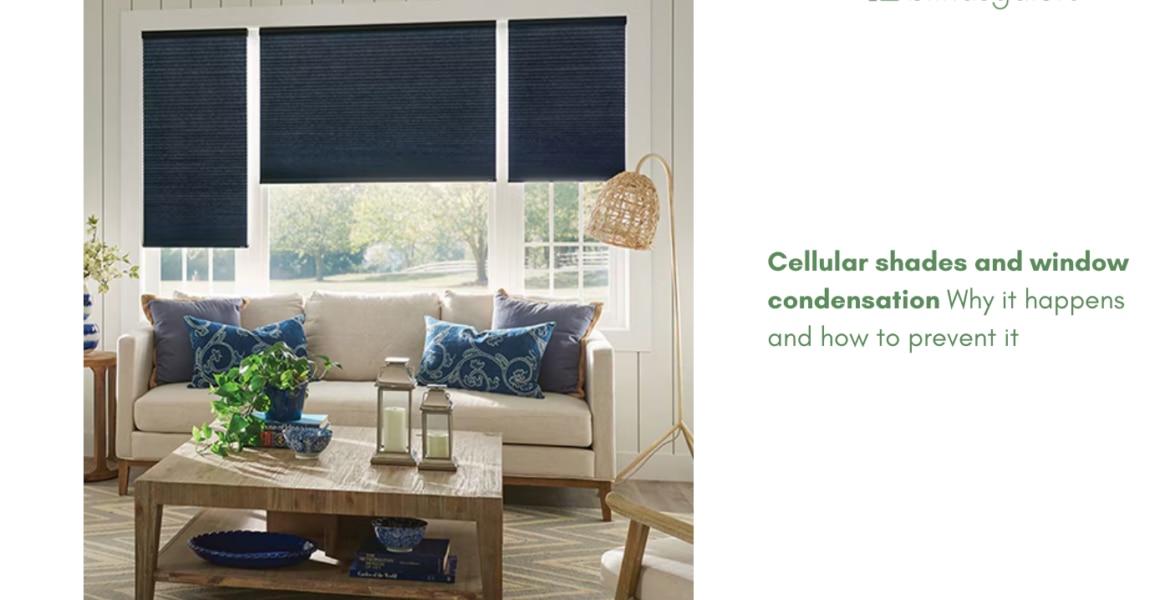
Condensation behind cellular shades is an occasional issue, not an everyday one, and when it does appear, it comes from the glass, not the shade. Moisture only forms when a cold day outside meets humid air inside. Because cellular shades insulate so well, they keep warm room air away from the window, so the glass gets colder and moisture in the air can condense on it. The fix is simple: Open your shades during the day, leave a small gap at the bottom on cold nights, keep indoor humidity in check, and wipe the glass and sill dry when you see water.
If you ever spot a little moisture on the glass, there’s no need to worry. Condensation is easy to manage, and it’s actually a sign your shades are doing their job of keeping warm air in the room.
Why do windows develop condensation?
Condensation forms when a surface gets colder than the dew point of the air touching it. Warm indoor air holds moisture. When it meets cold glass, it cools down and drops that moisture as water droplets, the same way a cold drink sweats on a summer day.
A few things make it more likely:
- Cold outdoor temperatures, which chill the glass.
- High indoor humidity from showers, cooking, laundry, houseplants, and even breathing.
- Lower-performing windows, especially single-pane and older double-pane windows, which let the glass get colder.
- Poor air circulation near the window.
Most window condensation happens in the heating season, but humid summers with strong air conditioning can cause it too, sometimes on the outside of the glass.
How does condensation affect cellular and honeycomb shades?
The honeycomb design that makes cellular shades so energy-efficient keeps warm room air off the glass, which can occasionally let condensation form when conditions are just right. Researchers at the Pacific Northwest National Laboratory studied exactly this. The researchers found that when a cellular shade fully covers a window in winter, less warm indoor air reaches the glass, which lowers the glass temperature and raises the potential for condensation on the inside surface.
The same testing turned up a few reassuring findings:
- Condensation isn’t unique to cellular shades. Other coverings that block the window can cause it too, and it can even happen with no window covering on very cold days with poor windows and high humidity.
- Condensation only shows up when conditions allow, meaning cold enough outside and humid enough inside. The rest of the time, your shades simply insulate.
- Small changes in how you use the shade reduce condensation while keeping most of the insulating benefit.
Most cellular shades are made from spunlace, nonwoven polyester, which holds its pleat shape well. The bigger risk isn’t the fabric itself but water sitting against the bottom of the shade, on the sill, or in the folds for long stretches, which can lead to stains and mildew over time.
What should you check for if you see condensation?
Condensation that dries quickly is harmless. If moisture sits for long stretches, though, it’s worth a quick look at the bottom few inches of your shades and the windowsill, since that’s where water collects. Watch for:
- Water spots or tide-line stains along the bottom of the fabric.
- Dark specks or fuzzy spots, which can signal mildew.
- A musty smell when you raise or lower the shade.
- Cells that look flattened, wrinkled, or misshapen near the bottom rail.
- Peeling paint, dark staining, or soft spots on the sill or frame.
- Frost or ice on the inside of the glass on very cold mornings.
A few simple habits keep moisture from ever getting that far.
How can you prevent condensation buildup?
Prevention is mostly about airflow, humidity, and timing. Here’s what we recommend:
- Open your shades during the day. Raising cellular shades in daylight lets any overnight condensation dry and lets the sun warm the glass. The PNNL researchers recommend this for the heating season, and it also lines up with using shades for energy savings.
- Leave a small gap on cold nights. If you need your shades down, raising the bottom rail about 1/2 inch off the sill lets the air behind the shade circulate. PNNL found this reduced condensation while keeping most of the shade’s insulating value and your privacy.
- Vent from the top. A top-down/bottom-up cellular shade lets you lower the top slightly for extra airflow without giving up privacy at eye level.
- Lower indoor humidity. Run bathroom and kitchen exhaust fans, vent your dryer outdoors, and use a dehumidifier in damp rooms.
- Wipe the glass and sill. Dry any water you see with a soft towel. PNNL suggests wiping away sill condensation that doesn’t evaporate at least every few days.
- Look at the window itself. If heavy condensation shows up even with the shades open, the window may be the main cause. Better windows or an interior insulating panel can make a big difference.
A good fit helps too. A shade sized to your exact opening hangs evenly and makes it easy to set a consistent gap at the sill. Our measuring guide walks you through it.
If you’re also curious about the energy side, our article on whether cellular shades save on energy bills explains why the shades insulate so well in the first place.
How do you clean and dry cellular shades safely?
Gentle and dry is the rule. Never submerge cellular shades in water, and avoid soaking the fabric, especially on blackout shades.
If your shade gets damp from condensation:
- Blot the wet area with a clean, dry cloth. Don’t rub, which can crush the cells.
- Wipe the glass and sill dry so the shade isn’t sitting against more water.
- Leave the shade lowered with a gap at the bottom, or raise it partway, so air can reach the fabric. A room fan helps it dry faster.
- Wait until the fabric is completely dry before you raise the shade fully. Stacking damp fabric traps moisture in the folds.
For routine cleaning and light spots:
- Dust regularly with a feather duster, or vacuum gently with the upholstery attachment.
- Spot clean with a soft cloth or sponge, warm water, and a mild detergent. Blot gently, then let it dry completely.
- Skip strong detergents, spot removers, dry cleaning, and ultrasonic cleaning.
Our cleaning guide covers care for every product type. If mildew has spread across the fabric or into the cells, call our team. We’ll help you decide whether spot cleaning is worth trying or a replacement shade makes more sense.
Thinking about cellular shades for a new room, or replacing a damaged one? Order up to 10 free samples and compare fabrics and cell sizes in your own windows.
Frequently asked questions
Cellular shades insulate the window, which keeps warm indoor air from reaching the glass. The glass gets colder, and moisture in the air condenses on it. High indoor humidity and cold weather make it more likely, and older windows make it worse.
Occasional condensation that dries quickly won’t harm most cellular shades. Water that sits against the fabric or sill for long periods can cause stains, misshapen cells, and mildew, so dry the glass and sill when you see moisture and let the shade air out.
No. Open your shades during the day, leave about a 1/2-inch gap at the sill on cold nights, and lower indoor humidity. Those steps reduce condensation while keeping most of the insulating benefit.
Cellular shades don’t cause mold on their own. Mold and mildew need ongoing moisture, which usually comes from condensation that isn’t allowed to dry. Managing humidity and airflow at the window keeps both the shade and the sill dry.
Blot it with a dry cloth, wipe the glass and sill dry, and leave the shade lowered with a gap or partly raised so air can reach it. A fan speeds things up. Never submerge or soak the shade.
Not necessarily. Some condensation is normal in cold weather with humid indoor air. Heavy condensation with the shades open, or moisture trapped between the panes of a double-pane window, can point to a window problem worth looking into.