
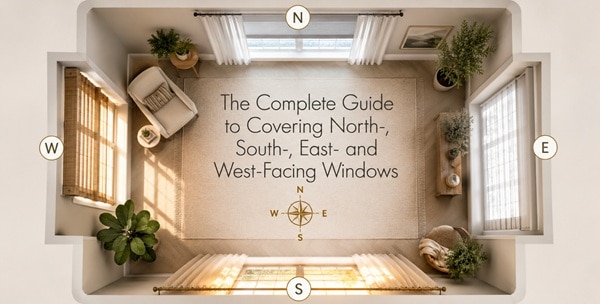
Not all sunlight is created equal. An east-facing bedroom can glow like a spotlight at sunrise. A west-facing living room may stay comfortable all morning, then turn into a toaster at 4PM. North-facing rooms tend to receive softer, more consistent light, while south-facing windows may see sunshine for much of the day.
That means the right window treatment for one side of your home may (technically) be a poor fit for another. Window direction affects when direct sunlight enters, how intense the glare feels, and how much solar heat reaches the room.
Before choosing a window treatment, orient yourself in your home. Check your surroundings. Then consider each room’s purpose, your climate, nearby trees and buildings, the challenges each room faces and how you use the space.
Shop Custom Window Blinds and Shades
A Quick Guide to Window Treatments by Direction
North-facing windows: Preserve soft light and add warmth.
South-facing windows: Manage long periods of changing sunlight.
East-facing windows: Control bright morning light.
West-facing windows: Reduce intense afternoon heat and glare.
North-Facing Windows
North-facing windows generally receive less direct sunlight than windows facing other directions. Their light tends to be softer, cooler, and more consistent.
That can be a gift because north-facing light is less likely to create harsh glare. However, it may also leave a room feeling dim, especially during winter or when trees and nearby buildings block part of the sky.
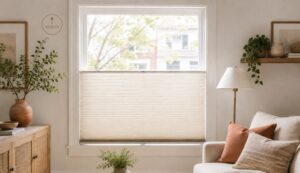
Obviously, you’ll probably want all of the window treatments in your room to match. That might be priority #1. However, it’s okay to play with light. If we had to choose, North-facing windows should get light-filtering shades. They will diffuse daylight while adding privacy and insulation. A top-down/bottom-up lift also works especially well for any street-facing windows because it allows light to enter from above while keeping the lower part of the window covered. Something to think about! Many of our shades can be made with a light filtering or top-down/bottom-up lift variation.
South-Facing Windows
South-facing windows generally receive the longest periods of natural sunlight in the Northern Hemisphere, although the angle and intensity change throughout the year. Lower winter sunlight can reach deep into a room, while the higher summer sun may be partly blocked by roof overhangs. Because these windows change with the seasons, flexibility is key. You may welcome the sunshine in January and want much less of it in July.
Our niche pick? Something that can disappear completely like a roller shade or a cellular shade. Bonus points for cellular shades being one of the strongest year-round choices for south-facing windows because they provide both light control and insulation. Choose light-filtering fabric when you want to soften the sun without darkening the room. Again, top-down/bottom-up operation provides flexible privacy.

East-Facing Windows
East-facing windows receive their strongest sunlight in the morning. That can feel wonderful in a breakfast room and slightly less charming when sunrise arrives before your alarm. Later in the day, east-facing rooms usually settle into softer, indirect light. The right window treatment will depend on your room.
Blackout cellular shades combine strong room darkening with insulating construction. For better light control, consider an outside mount that extends beyond the window opening. Even with blackout fabric, small amounts of light may still enter around the edges of the shade. They’re an excellent option for bedrooms, nurseries, guest rooms, and anyone who sleeps during daylight hours.
For flexible light, dual sheer shades, sometimes called zebra shades, use alternating sheer and opaque bands. You can shift the bands to let in filtered light or align them for more coverage. They generally won’t create complete darkness, so they’re better suited to kitchens, breakfast areas, and offices where flexibility matters more than total room darkening. Morning sunlight often feels warm and energizing. Lean into it in kitchens and breakfast nooks with warm wood finishes, soft yellows, or natural greens.
For east-facing bathrooms, consider moisture-resistant materials and top-down/bottom-up operation for a helpful balance of sunlight and privacy. Blackout roller shades can also provide clean, compact coverage. Once the morning sun has moved, the shade rolls neatly out of the way so you can enjoy softer afternoon light.
West-Facing Windows
West-facing windows receive their strongest sunlight during the afternoon and early evening. This is often the most challenging direction for summer comfort. The sun sits lower in the sky and can shine deep into the room. The heat also arrives later in the day, when the rest of the home may already feel warm. We’re going to have to go room-by-room again.
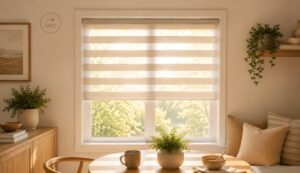
Solar shades are often the first choice that come to mind for west-facing windows in common spaces. They reduce glare, UV exposure, and solar heat while preserving daytime visibility. Choose a tighter weave when heat and glare reduction matter more than having the clearest possible view. For the best results, close the shades before direct sunlight reaches the window.
In bedrooms, offices, or media rooms, cellular shades help slow heat transfer while providing privacy and light control. Choose light-filtering fabric to soften afternoon sunlight. Blackout fabric will help more with heat and glare, so you can stay focused when the sun hits.
Tips and Tricks for Directional Windows
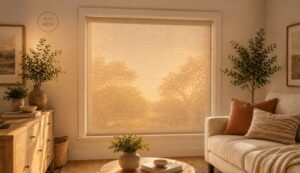
Where the architecture allows, an exterior shade can intercept sunlight before it reaches the glass. This can be especially helpful for patios, porches, and windows exposed to intense afternoon sun. A little bonus tip, if you have the setup for it.
Strong western sunlight can make warm colors appear even warmer. Cool blues, greens, and balanced neutrals may help the room feel calmer. Layering shades with drapery can also add another level of coverage and evening comfort. Choose up to 10 free samples to see your choices at home before ordering.
Window direction is only the starting point. Climate also matters. A south-facing window in Minnesota won’t have the same needs as a south-facing window in Arizona. Trees, neighboring homes, rooflines, awnings, and window glass can all affect how much sunlight and heat enter the room.
Room use may ultimately be the deciding factor. A home office needs glare control. A bedroom may need darkness. A kitchen may need moisture-resistant materials that are easy to clean. Don’t choose a window treatment by compass direction alone. Choose based on direction plus real-life application.
Windows Between Two Directions
Many homes aren’t perfectly aligned with the four main compass directions. In that case, consider which direction has the greatest effect during the time you use the room.
Northeast-facing windows receive some morning sun followed by softer light. Light-filtering cellular shades, roman shades, and sheer shades all work well.
Southeast-facing windows get bright morning light and may stay sunny longer. Cellular shades and adjustable shutters are strong choices.
Southwest-facing windows may receive intense sunlight from midday through the afternoon. Solar shades, cellular shades, and blackout roller shades can help manage glare and heat.
Northwest-facing windows usually have softer morning light and stronger late-day sunlight during summer. Solar shades and light-filtering cellular shades provide a helpful balance.
Should Every Window Treatment in the House Match?
Short answer is yes. However, your window treatments can coordinate without being identical. You might use the same neutral color across several different product categories. You can also choose a light-filtering fabric for one window and a room-darkening fabric for another. Remember all the talk about top-down/bottom-up lifts? That still applies. That’s the benefit of custom window treatments and that’s what we do best. The home can still feel connected, and each room will perform better because its window treatments match its specific needs.
Once you understand what the sun is doing on each side of your home, choosing the right window treatments becomes much easier.
Frequently Asked Questions
Stand near the window and use the compass app on your phone, or locate your home using an online map. The direction you face while looking directly out of the window is generally the direction the window faces.
Cellular shades are a strong year-round option because they provide insulation and light control. Solar shades and shutters also work well when you want to reduce glare while maintaining greater control over the view and natural light.
Solar shades are excellent for reducing afternoon glare and heat while preserving the view. Cellular shades and blackout roller shades provide stronger privacy, insulation, and light control.
Not always. However, blackout shades can be helpful in east-facing bedrooms, nurseries, and other rooms where bright morning sunlight causes sleep problems or glare.
Usually, yes. Matching treatments create the most cohesive look. However, windows with different sun exposure or privacy needs may benefit from different fabrics, liners, or operating styles within the same general product collection.