
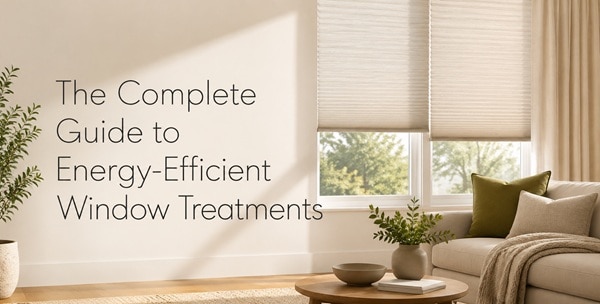
Windows give us natural light, fresh air, and a connection to the outdoors. They’re also one of the first places where heat can creep in (our out) of your home. In winter, indoor heat moves toward colder surfaces. In summer, direct sunlight warms the glass and the room beyond. Drafts and air leakage can add another layer of discomfort. Replacing old windows may help, but it’s not the only option. The right window treatment can improve comfort and help your HVAC system run more efficiently. It’s also much cheaper than replacing an entire window!
Shop Energy-Efficient Window Treatments
How Window Treatments Save Energy
Energy-efficient treatments work a few ways. They can slow heat transfer by creating a barrier between the room and the glass, reduce solar heat gain by blocking or reflecting sunlight, and limit air movement near the glass when installed close to the window.
The best option depends on your climate, seasonality, glass type, and daily habits. A treatment that traps air, fits close to the opening, and limits circulation around the glass will generally insulate better than a loose or highly open one.
From cellular to roller styles, energy efficient blinds are one of the smartest upgrades for any window in your home.
Best Choice Overall: Cellular Shades
Cellular shades, also called honeycomb shades, are generally the strongest interior choice for year-round insulation. Their pleated fabric forms pockets that resemble a honeycomb from the side, trapping air and slowing heat transfer. Single-cell shades have one row of honeycomb pockets. Double-cell shades have two and generally trap more air.
According to the U.S. Department of Energy, tightly installed cellular shades can reduce heat loss through windows by 40% or more during heating season, translating to roughly 10% in heating-energy savings. During cooling season, properly installed and closed cellular shades can cut unwanted solar heat gain by up to 60%. These figures reflect specific conditions, not a guarantee for every utility bill.
Both light-filtering and blackout versions insulate, since both have the same cellular construction. Blackout versions, obviously, block substantially more light, making them useful in bedrooms and media rooms. For insulation, focus on cell construction and fit. For darkness, go with a blackout fabric and consider an outside mount to cover the edges of your window.
A close fit improves performance. Measure carefully, minimize side gaps, and lower the shade completely when you need insulation. Beat the sun to the window. Close it before temperatures become extreme rather than waiting until the room is already uncomfortable.
Runner-Up: Blackout Shades
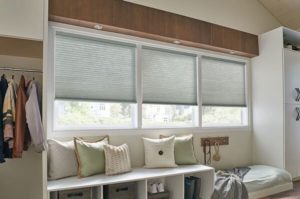
Blackout shades use opaque materials to block nearly all light. They’re available in a variety of styles, including cellular, pleated, panel track, solar, sheer, zebra, and roller shades, as well as roman and woven shades through a customizable liner. “Blackout” mainly describes light control, and it’s not technically a universal rating. A blackout cellular shade and a blackout roller shade both darken a room, but their construction differs. Order free samples to see your favorite choices at home before customizing.
Blackout treatments still support efficiency by blocking direct sunlight and reducing solar heating on floors and furniture. For the best combination of darkness and insulation, blackout cellular shades are usually the first place to look.
Best for Glare and Summer Sun: Solar Shades
Solar shades use performance mesh fabrics to cut glare, UV exposure, and solar heat while preserving the outside view. Their openness factor determines the balance. A smaller percentage means a tighter weave with stronger glare control. A larger percentage preserves more of the view but lets more sunlight through.
Their main strength is managing sunlight, not maximizing winter insulation, so pair them with curtains for stronger year-round performance. Keep in mind they usually offer daytime privacy only. Once the lights are on after dark, they may allow some slight view-through to the outside.

Simplest Option: Roller Shades
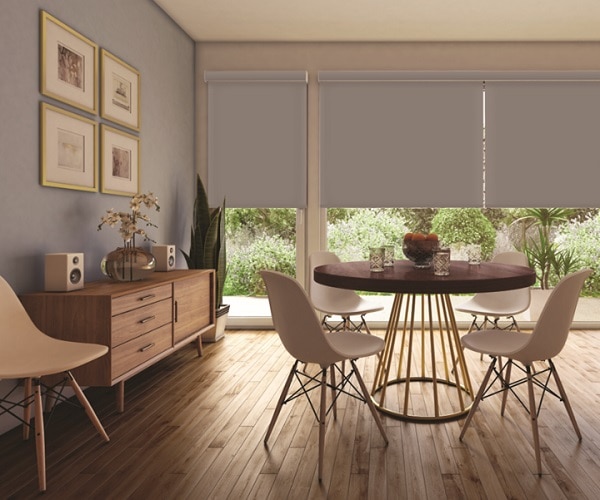
Roller shades don’t have insulating cells, but darker, more opaque fabrics can still reduce direct solar heat gain. They’re a strong option for a minimal look and consistent coverage across several windows.
Choose an opaque fabric or material for sunny rooms. Light-colored surfaces facing the glass may reflect more solar energy than darker ones. Many of our shades are built with a white-street facing liner.
Stylish Option: Roman Shades
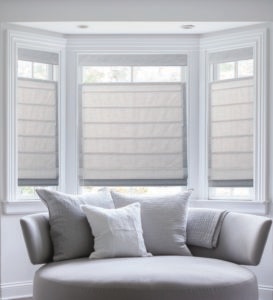
Roman shades offer more fabric and structure than a basic roller shade. A custom liner improves privacy and room-darkening. Choose a blackout liner for bedrooms and strong sun, or a light-filtering liner for softer daylight. While these shades don’t trap air the way cellular shades do, a lined roman shade still adds another thick layer between the room and the glass.
A Note on Drapery and Curtains
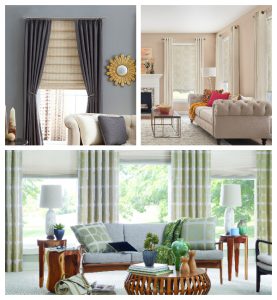
Drapery can add insulation when panels are full, lined, and installed close to the window. The Department of Energy notes conventional draperies can reduce heat loss from a warm room by up to 10% when closed during cold weather.
Performance improves when panels overlap in the center, fit closely at the sides, and reach the floor. Loose decorative side panels won’t perform the same way as fully closing, lined drapery. For stronger results, layer drapery over a cellular or roller shade so the shade forms the first barrier.
Why Motorization Can Help
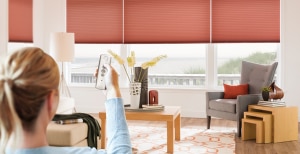
Motorized shades don’t insulate better than manual shades. Their advantage is consistency. They’re easier to operate on tall windows and hard-to-reach openings, and compatible systems support schedules or smart-home controls. The best shade only works when it’s used at the right time. Automation removes some of the remembering.
How Much Can You Save?
There’s no honest universal dollar figure. Savings depend on utility rates, climate, window area, glass type, and daily use. The DOE’s estimate of roughly 10% heating-energy savings from tightly installed cellular shades is a more reliable benchmark than any fixed dollar amount. Research highlighted by the DOE has also found heating-energy savings of up to 24% for cellular shades compared with generic Venetian blinds in evaluated buildings, a study result, not a promise for every home.
Putting It All Together
Pay attention to drafty or uncomfortable windows. They usually point to where better coverage helps most. Use solar shades where you’d like to preserve your view and layer treatments in rooms with the biggest comfort problems.
If you’re only tackling one room, cellular shades give you the most reliable year-round insulation. If glare and a preserved view matter more than raw R-value, solar shades are the better fit. For darkness paired with solar control, look at blackout cellular, roller, or roman shades, and add drapery for another layer of coverage.
Whatever you choose, the real payoff comes from using it well. A cellular shade left open every cold night can’t insulate the window, while a blackout shade closed before the afternoon sun arrives will make a huge difference. Open your shades when sunlight helps and close it before heat or cold becomes a problem. Well-timed adjustments can do more for comfort than any single product. Motorization will make this easier, as it does for most things.
Shop Energy-Efficient Window Treatments
Frequently Asked Questions
Cellular shades are generally considered the most energy-efficient interior window treatment. Their honeycomb-shaped air pockets help slow heat transfer and provide insulation throughout the year.
They can. Blackout fabrics reduce solar heat by blocking sunlight, but their insulating performance depends on the shade’s construction. Blackout cellular shades typically provide more insulation than blackout roller shades because they also trap air.
Open shades on sunny windows during the day when natural warmth is helpful. Close them once the sunlight moves away and keep insulating shades lowered overnight to help reduce heat loss.
Solar shades can improve summer comfort by reducing glare, UV rays, and solar heat gain. However, they don’t provide as much winter insulation as cellular shades.
The motor itself doesn’t improve insulation. Motorized shades may support energy efficiency by making it easier to open and close treatments at the most effective times each day.