
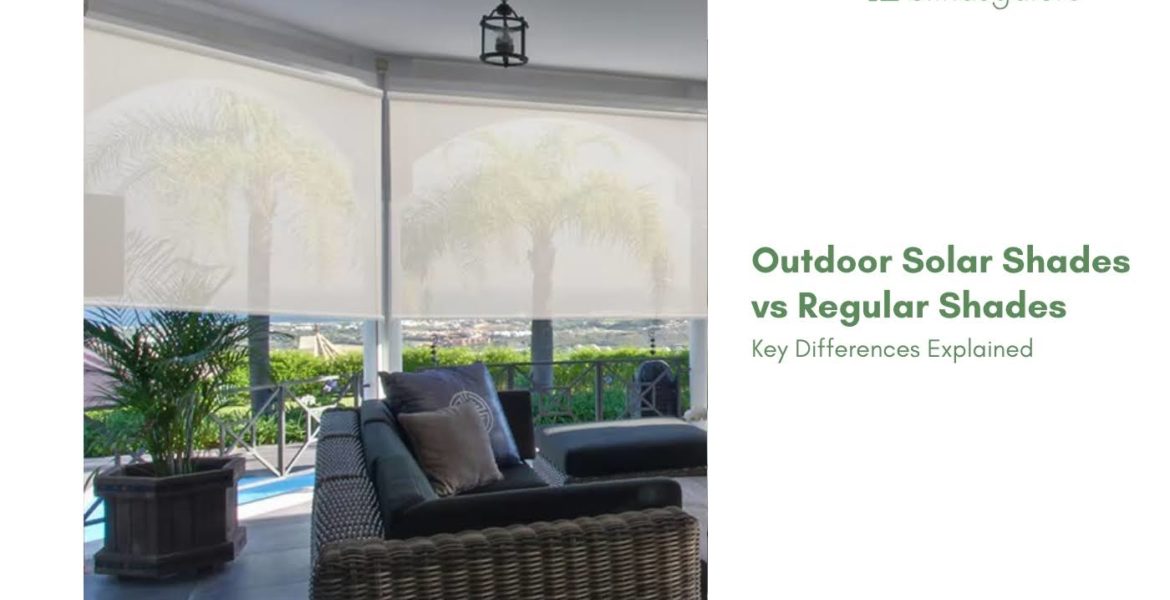
Outdoor solar shades and regular indoor shades look similar and use the same roller mechanism, but the materials, placement, and performance could not be more different. One sits outside the window and stops the heat at the source. The other works inside to filter light and add privacy. Knowing which does what, and when each makes sense, is the fastest way to get the right shade on the right window.
What Makes Outdoor Solar Shades Different
Outdoor solar shades (also called exterior solar screens) mount on the outside of a home and are built specifically to handle sun, rain, wind, and temperature swings. Products like the Blindsgalore Outdoor Solar Screen use PVC-coated fiberglass that resists moisture, mildew, and UV degradation season after season. A bungee tiedown accessory secures the bottom rail during gusty conditions, keeping the shade stable and in place.
The biggest functional difference is where heat gets blocked. Because outdoor solar screens sit in front of the glass, sunlight never reaches the window surface. That means less heat transfers into the room. According to the U.S. Department of Energy, exterior shutters and shades are the most effective window treatment option for reducing solar heat gain, significantly outperforming any interior covering.
Coolaroo Outdoor Sun Shades offer another excellent option for patios, decks, and sun-facing windows. Made from knitted HDPE fabric, Coolaroo shades block up to 90-95% of UV rays while still allowing airflow. Coolaroo accommodates widths up to 120″ and heights up to 144″, making them a solid choice for larger outdoor spaces.
How Regular Indoor Solar Shades Work
Regular solar shades are designed for interior use and filter light after it has already passed through the glass. The fabric is a screen-like material with a specific “openness factor” that determines how much light, heat, and visibility passes through. A 1% openness blocks 99% of UV rays and offers the most privacy. A 10% openness lets in more light and preserves a clearer outward view.
The Blindsgalore Envision Solar Shades are crafted with Phifer SheerWeave fabrics, one of the world’s leading solar screen materials. Available in six openness levels from 1% to 10%, Envision shades offer precise light control along with expanded lift options and smart home integration through the Connector Smart Hub. Compatible with Alexa, Google Home, Samsung SmartThings, Control4, IFTTT, and Siri Shortcuts, motorized Envision shades can be raised or lowered on a schedule or with voice commands.
For a more budget-friendly indoor option, Blindsgalore Solar Shades feature durable, commercial-style screen fabrics designed to stand up to strong, direct sun. Multiple openness levels and control options, including motorized, let homeowners choose the right balance between outside view and interior sun protection.
Indoor solar shades also offer a wider range of fabric colors and textures compared to outdoor options. Regular dusting or gentle vacuuming keeps them looking fresh for years. One critical note: indoor solar shade fabrics should never be used outdoors. Indoor materials are not engineered for moisture, wind, or sustained UV exposure and will deteriorate quickly.
Heat Control: Where the Real Gap Shows Up
The performance gap between outdoor and indoor solar shades comes down to physics. Outdoor shades intercept solar radiation before it reaches the glass, so heat never enters the home. Indoor shades can only filter or absorb heat that has already passed through the window. Even with excellent UV-blocking fabric, some of that absorbed heat radiates into the room.
For south- and west-facing windows that take direct afternoon sun, exterior solar screens deliver noticeably better cooling performance. Rooms that previously felt like saunas during peak sun hours often become comfortable without cranking the air conditioning.
Indoor solar shades still reduce heat and glare meaningfully, especially in rooms with moderate sun exposure. Pairing an indoor solar shade with energy-efficient windows creates a solid layer of thermal control.
Installation and Maintenance
Indoor solar shades are one of the easiest window treatments to install. Most homeowners complete the job with basic tools and Blindsgalore’s measuring guides and installation resources. For renters or anyone who prefers zero holes in the wall, no-drill shades snap into the window frame with a tension headrail. No tools, no hardware, no damage.
Outdoor shades require a bit more planning since the mounting needs to handle weather and wind load. Proper bracket placement and use of the bungee tiedown system are essential for long-term durability. Outdoor shades also need more frequent cleaning since pollen, dust, and debris accumulate on exterior surfaces.
Never submerge any shade, indoor or outdoor, in water. A soft brush or gentle wipe-down with a damp cloth is the safest cleaning approach for all fabric shades.
When to Choose Outdoor Solar Shades
Outdoor solar shades are the stronger choice for covered patios and decks, large west- or south-facing windows in hot climates, sunrooms where heat buildup is constant, and any window that gets relentless direct sun. For more on sunroom setups, check out What to Consider When Choosing Sunroom Blinds.
When Regular Indoor Shades Are the Better Fit
Indoor solar shades work beautifully for bedrooms, living rooms, and home offices where glare reduction and UV protection matter, but full exterior-grade construction is not necessary. Indoor shades also offer more design flexibility with a broader range of colors, textures, and openness levels. For nighttime privacy, pairing solar shades with custom drapery or blackout roller shades covers the gap, since solar shades of any type become see-through when interior lights are on after dark.
For a broader look at how different window treatments compare, Shades Vs. Blinds: What’s The Diff? breaks down the key distinctions.
FAQs
No. Indoor solar shade fabrics are not built for moisture, wind, or constant UV exposure. Using them outside leads to rapid deterioration. Always choose shades specifically engineered for exterior use, like the Blindsgalore Outdoor Solar Screen or Coolaroo Outdoor Sun Shades.
Solar shades, both indoor and outdoor, are designed for daytime use. When interior lights are on at night, the fabric becomes see-through from the outside. For nighttime privacy, pair solar shades with blackout roller shades or drapery.
Yes. Motorized operation is available for both indoor and outdoor solar shades. Motorized shades are cordless, which is safer for homes with children and pets. Indoor motorized options like the Blindsgalore Envision Solar Shades also integrate with smart home systems, including Alexa, Google Home, and Siri Shortcuts.
With proper care, outdoor solar shades typically last 7 to 10 years. Indoor solar shades, protected from the elements, often last longer. Retracting outdoor shades during severe weather extends the lifespan of both fabric and hardware.
A 1% openness offers maximum UV protection and the most privacy, but limits the outward view. A 5% to 10% openness balances glare reduction with a clearer view. Darker fabric colors preserve the view better, while lighter colors reflect more heat.