
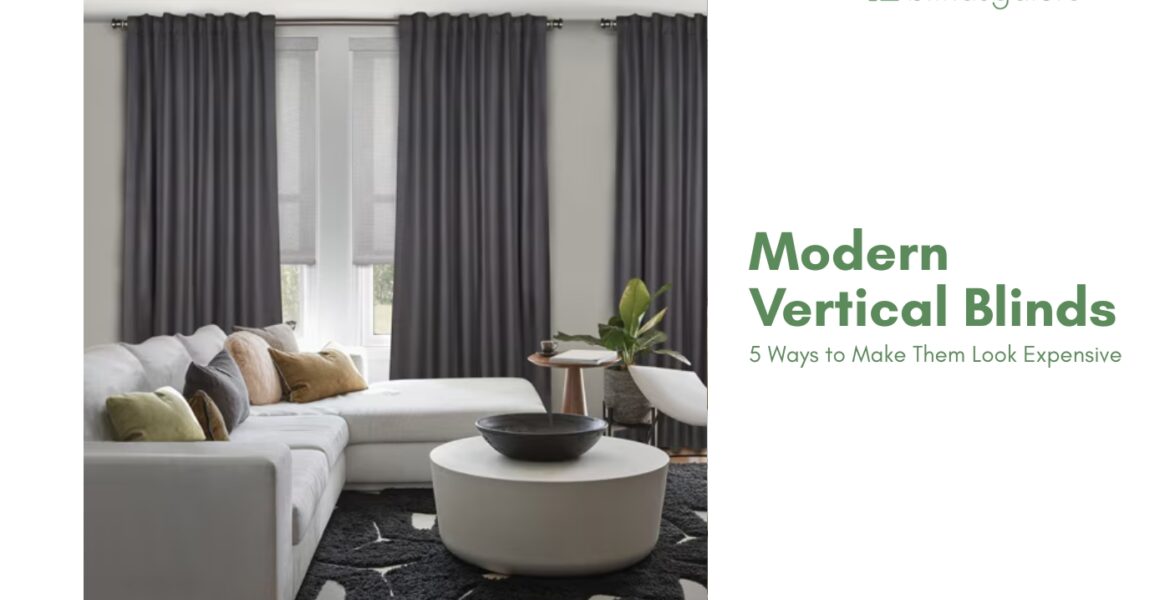
Vertical blinds have a reputation problem. The cheap white vinyl verticals from a 1990s apartment are still what most people picture, and that picture is hard to shake. Modern vertical blinds look almost nothing like that. The right material, color, fit, and finishing touches turn vertical blinds into a tailored, intentional treatment that holds its own next to drapery and shutters.
The five upgrades below are the difference between a window that looks rented and a window that looks finished. Each one is small on its own. Stacked together, they change how the whole room reads.
5 ways to make vertical blinds look expensive
The trick is treating verticals as a real design choice, not a default. Here are the five upgrades that move the needle most.
1. Skip vinyl. Choose faux wood or fabric vanes.
Vinyl vanes are what give vertical blinds their dated reputation. The plastic catches light unevenly, the surface looks flat, and the seam where two vanes meet shows every imperfection.
Faux wood and fabric vanes solve this. Faux wood vanes have an embossed grain that mimics real wood, hold their color over years of sunlight, and add a hint of architecture to large windows and patio doors. The faux wood vertical blinds collection is the go-to for living rooms and dining rooms with sliding glass doors.
Fabric vanes give a softer, more drapery-adjacent feel. The texture absorbs light instead of reflecting it, which reads as warm and finished. Use fabric verticals where the room already leans soft, like a bedroom or a media room with upholstered furniture.
2. Pick a sophisticated, neutral color palette.
Color is the second biggest tell. Bright white, cream, and “almond” verticals from the big-box era all read as builder-grade.
Stick to richer, more intentional neutrals. Greige (gray plus beige), soft taupe, warm white, deep charcoal, and natural wood tones all read as expensive. The vane should pull a tone from the room, like the wall paint, the rug, or the trim, rather than fighting against it.
A simple test: pick three colors already in the room and choose a vane that lands inside that family. If you cannot point to where the color “lives” in the rest of the room, it is the wrong color.
3. Layer drapery panels alongside.
The single biggest upgrade is also the easiest. Hang stationary drapery panels on either side of the vertical blinds, mounted to the wall a few inches above the headrail and extending past the window frame.
The drapery does three things at once. The fabric softens the hard vertical lines of the vanes. The wider mount makes the window look bigger. And the layered look is the visual signal of a finished, designer-styled room.
Use solid linen or linen-blend panels in a neutral that complements the vanes. Browse our drapery collection for fabrics designed to layer alongside blinds and shades.
4. Order custom for an exact fit.
A vertical blind that is half an inch too narrow, hung an inch too low, or mounted on stock brackets that hang slightly crooked is the giveaway that the room was furnished in a hurry.
Custom-made vertical blinds are sized to your exact opening, fit cleanly inside the frame or against the trim, and use brackets sized to the headrail. The fit is the difference between a blind that disappears into the architecture and one that calls attention to its hardware.
A custom-fit blind reads as intentional even before the drapery and color choices land. Measure the window twice and order custom, and self-installers get it right 99% of the time.
5. Add a valance to hide the headrail.
The plastic headrail across the top of a vertical blind is the loudest “this is a vertical blind” signal in the room. A valance covers it.
Two valance options work well. A wood or faux wood cornice gives a tailored, architectural finish, especially on a sliding glass door. A fabric valance, sized to match the drapery panels in tactic 3, ties the whole window into the room’s soft-furnishing palette.
A valance is also a place to add a quiet flourish, like a contrast band along the bottom edge or a piped trim, without overdoing the rest of the window.
Vertical blinds to consider
Two vertical blind lines cover the upgrades above. Both are custom-made to your exact opening.
Blindsgalore Faux Wood Vertical Blinds
The Blindsgalore Faux Wood Vertical Blinds are the architectural choice. Embossed wood grain, a strong neutral and stained color range, and a finish that holds up to direct sunlight. Best for living rooms, dining rooms, and patio doors where you want the verticals to read as a design feature.
Blindsgalore Fabric Vertical Blinds
The Blindsgalore Fabric Vertical Blinds are the soft, drapery-adjacent choice. Textile vanes in neutral tones absorb light, layer beautifully with curtain panels, and give bedrooms and media rooms a more upholstered feel.
Bring the look into your own home
Modern vertical blinds work hardest when the upgrades land together: a real material, a thoughtful color, drapery alongside, an exact fit, and a clean valance on top. Order up to 10 free swatches so you can hold vane colors against your wall and trim before placing the order. For a second opinion, our in-house experts answer at (877) 702-5463.
Love your view, finished from headrail to floor.
Frequently asked questions
Modern vertical blinds look fully current when ordered in faux wood or fabric vanes, in neutral colors, and layered with drapery. The dated look comes from white vinyl vanes in pre-made sizes, not from vertical blinds as a category.
Faux wood vertical blinds and fabric vertical blinds both read as more expensive than vinyl. Faux wood mimics architectural wood vanes with embossed grain. Fabric vanes have a soft, drapery-like texture that absorbs light.
Greige, soft taupe, warm white, deep charcoal, and natural wood tones read as the most expensive. Bright stark white, builder-grade cream, and “almond” tones tend to read as dated. The vane should pull from a color already present in the room.
Yes. Layering stationary drapery panels on either side of vertical blinds is the single biggest visual upgrade. The drapery softens the hard vertical lines, makes the window look bigger, and signals a finished, styled room.
Vertical blinds, sliding door shutters, panel track blinds, vertical cellular shades, and drapery on a wide rod all work for sliding patio doors. Standard horizontal blinds, like wood, faux wood, or mini blinds, do not work for these openings because the door has to slide past the treatment.
Blindsgalore brand vertical blinds carry a 3-year limited warranty with a free upgrade to a 5-year warranty. Coverage applies to defects in materials and workmanship when the product is properly installed and operated. Fading is not covered.