
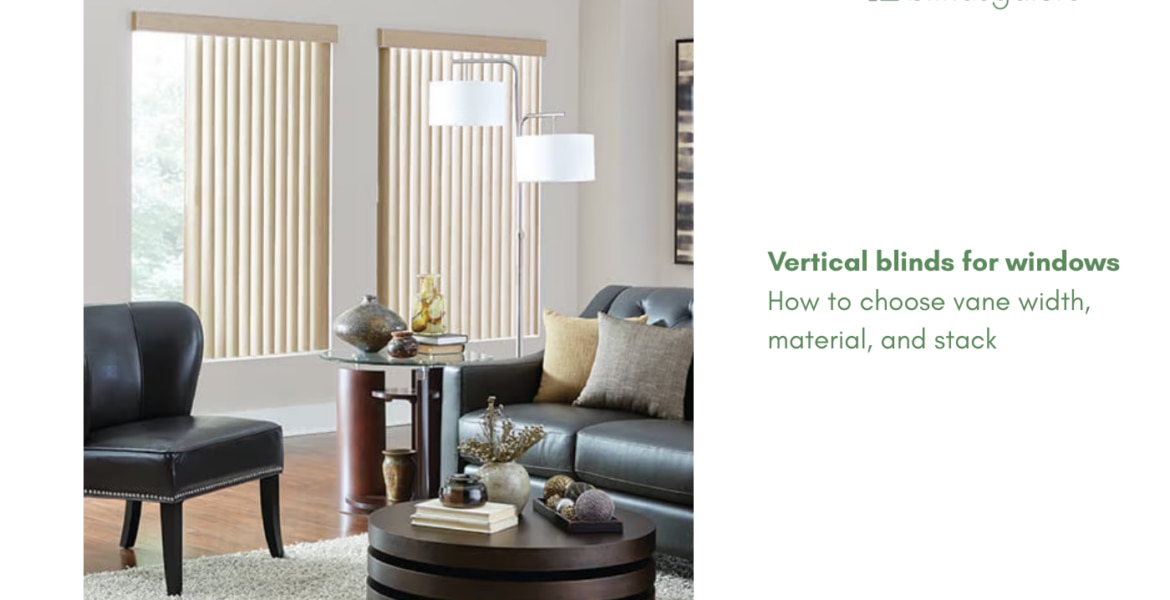
For most windows and sliding doors, a 3 1/2-inch vane is the right width, and it’s the standard size on every vertical blind we carry. The bigger decisions are material and stack. Choose vinyl for durability and easy cleaning, fabric for a softer look, and faux wood for a warm, opaque finish. Then pick a single stack or a split stack based on how the window or door opens.
Vertical blinds are one of the most practical ways to cover a wide opening. Getting the specs right before you order makes the difference between a blind that glides and one that fights you.
What vane width is best for large windows?
A 3 1/2-inch vane works for nearly every residential window and door, from a standard window to a wide patio slider. That’s why all of our vertical blinds use 3 1/2-inch vanes, across vinyl, fabric, faux wood, and S-shape styles.
On a large window, the vane width stays the same. What changes is everything around it:
- Number of vanes. A wider window simply gets more vanes, which means a larger stack when the blind is open.
- Weight. More vanes add weight to the headrail and the stack.
- Maximum size. Each product has a width limit for a single headrail.
| Product | Vane | Width range |
|---|---|---|
| Blindsgalore Vinyl Vertical Blinds | 3 1/2-inch curved vinyl | 6 to 192 inches |
| Blindsgalore Fabric Vertical Blinds | 3 1/2-inch free-hanging or fabric-inserted | 6 to 192 inches |
| Blindsgalore Faux Wood Vertical Blinds | 3 1/2-inch faux wood | 6 to 120 inches |
If your opening is wider than the product you love allows, call our team and we’ll help you plan the best layout.
Vinyl vs. fabric vs. faux wood vanes: Which should you choose?
Each material has a clear job. Here’s how they compare.
| Features | Vinyl | Fabric | Faux wood |
|---|---|---|---|
| Look | Clean and practical | Soft, drapery-like | Warm, wood-look |
| Light control | Room-darkening curved vanes | Light-filtering (freehanging) or more blocking (fabric-inserted) | Fully opaque |
| Cleaning | Wipes clean with a damp cloth | Dust and vacuum gently | Dust and spot clean |
| Moisture | Moisture-resistant | Better suited to living spaces | Withstands humidity |
| Best for | Busy patio doors, kitchens, rentals | Living rooms, bedrooms | Rooms with wood furniture or trim |
A few details worth knowing:
- Vinyl. Our vinyl vanes are curved and room-darkening, with a clean, uniform look from outside. Levolor vinyl vanes are UV-stabilized and colored through, which helps them resist yellowing on sunny doors.
- Fabric. Freehanging fabric vanes come with sewn-in bottom weights and filter light softly. Fabric-inserted vanes slide fabric into a vinyl backer for more structure, more light blocking, and a uniform street-side look.
- Faux wood. Faux wood vanes are completely opaque, so no light passes through the material. Ours come in two finishes: Textured, with a tactile surface, and Woodgrain, with the look of grain on a smooth finish.
Flat vs. S-shape vanes: What’s the difference?
Flat or gently curved vanes are the classic profile, tilting cleanly and keeping the look simple.
S-shaped vanes curve in a gentle ripple so each one overlaps the next when closed. Levolor S-Shaped Vertical Blinds are designed to interlock for better light control and privacy, and the rippled shape reads more like drapery than a standard vertical.
Choose S-shaped vanes when:
- Privacy matters, such as a street-facing patio door or a bedroom.
- You want the softness of drapery with the durability of vinyl.
- Light peeking between closed vanes bothers you.
How do you match vane material to light and moisture needs?
Start with the room, then think about light.
For moisture-prone rooms:
- Kitchens, laundry rooms, and doors to a pool or hot tub: Vinyl or faux wood vanes. Both stand up to humidity, and vinyl wipes clean in seconds.
- Busy family doors with kids and pets: Vinyl. Individual vanes hang on their own, so a damaged vane can be replaced without replacing the whole blind.
For light control:
- Soft daylight: Free-hanging fabric vanes.
- Dimmer rooms and more privacy: Room-darkening vinyl, fabric-inserted vanes, or S-shape vanes.
- No light through the vane itself: Faux wood.
Keep in mind that light can still come through between vanes and around the edges of any vertical blind. S-shaped vanes and an outside mount that overlaps the frame both help.
When should you choose a split stack for an extra-wide window?
The stack is where the vanes gather when the blind is open. Our vertical blinds offer three choices:
- Single stack left: All vanes gather on the left.
- Single stack right: All vanes gather on the right.
- Split stack: Vanes part in the center and gather on both sides.
Choose a single stack on a sliding door, placing the stack opposite the panel that opens so the walkway stays clear. Choose a split stack for center-opening doors, wide windows you want framed evenly like a pair of drapes, or extra-wide openings where one large stack would cover too much of the view.
On an outside mount, extend the headrail past the frame on the stack side so the gathered vanes clear the glass. Our measuring guide walks you through outside mounts step by step. For more door-specific advice, see our guide to window treatments for sliding glass doors.
Still choosing between materials? Order up to 10 free samples and compare vinyl, fabric, and faux wood vanes in your own light. Love your view.
Frequently asked questions
A 3 1/2-inch vane works for most large windows and sliding doors, and it’s the standard width on all of our vertical blinds. On larger openings, focus on the material, the product’s maximum width, and the stack option.
Vinyl is the most durable and easiest to clean. Fabric gives a softer, drapery-like look. Faux wood adds a warm, fully opaque finish. Choose vinyl or faux wood for humid rooms and fabric for living spaces and bedrooms.
Our vinyl and fabric vertical blinds can be made up to 192 inches wide, and our faux wood vertical blinds up to 120 inches wide.
Yes. S-shape vanes overlap and interlock when closed, which blocks more light than flat vanes and improves privacy.
Stack them opposite the side that opens on a sliding door. Choose a split stack for center-opening doors or wide windows you want framed evenly on both sides.
Yes. Vertical blind vanes hang independently, so a damaged vane can be replaced without replacing the whole blind. Call our team at (877) 702-5463 for help ordering a replacement.