
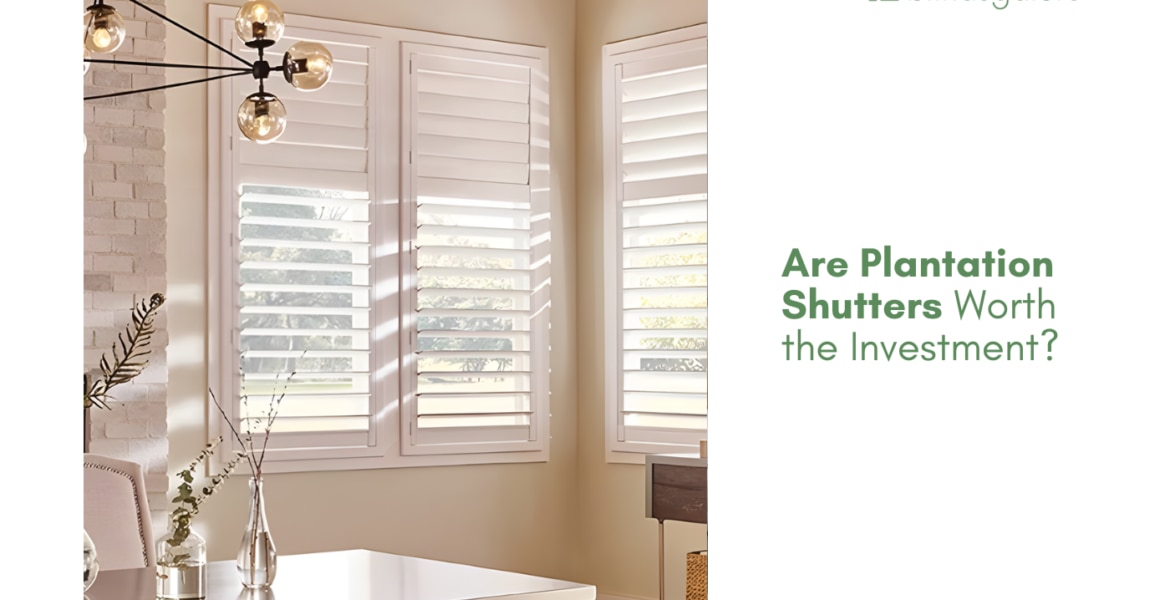
Plantation shutters are one of the few window treatments that function as a permanent home upgrade rather than a temporary accessory. Custom-fitted and mounted directly into the window frame, shutters are treated as a fixture of the home, much like built-in cabinetry or hardwood flooring.
The upfront cost is higher than blinds or shades, but the return comes in durability, energy savings, resale value, and decades of daily use without replacement.
Do Plantation Shutters Increase Home Value?
Yes. Plantation shutters are one of the only window treatments that appraisers can factor into a home’s assessed value. Because they are permanently installed and custom-fitted, shutters are classified as real property rather than personal property. Curtains, blinds, and shades typically leave with the seller. Shutters stay with the house.
Real estate professionals consistently note that homes with plantation shutters show better, sell faster, and create a move-in-ready impression that buyers respond to. The uniform look from the street also boosts curb appeal, which matters in competitive markets. For more ideas on dressing windows for style and function, see 4 Living Room Window Treatment Ideas.
How Long Do Plantation Shutters Last?
Quality faux wood plantation shutters commonly last 20 to 25 years or more with basic care. Faux wood composite materials resist warping, cracking, fading, and moisture damage far better than natural wood in most residential environments.
Compare that to other window treatments: standard blinds typically last 5 to 8 years, fabric shades around 7 to 10 years, and curtains may need replacing within a decade due to fading, staining, or wear. Shutters outlast all of them, often by a factor of three or four.
The Blindsgalore Faux Wood Shutters: 3 1/2″ Louvers are built from durable composite material designed to handle daily use, direct sunlight, and humidity without deteriorating. Wider louvers also allow more light and a clearer view when open, making them a popular choice for living rooms and bedrooms.
What Makes Shutters a Better Long-Term Value Than Blinds?
The math favors shutters over time. Replacing a set of blinds every 5 to 8 years across a full house adds up. Shutters eliminate that cycle.
Beyond replacement costs, shutters offer benefits that blinds and shades do not:
Permanent installation
Shutters are built into the window, not hung from brackets that can loosen or fail.
Structural light control
Adjustable louvers tilt to direct sunlight precisely, reducing glare without closing off the room. Blinds offer similar tilt control, but the thinner slats leave more light gaps around edges and cord routes.
Minimal maintenance
A quick wipe with a dry or lightly damp cloth is all shutters need. No laundering, no cord tangles, no slat replacements. For comparison on cleaning other treatments, see Easy Cleaning Hacks for Window Blinds.
Safety
Shutters have no cords, chains, or dangling hardware. The solid panel design makes them one of the safest window treatments for homes with children and pets. For more on pet-friendly window treatments, see Cat-Proof Blinds.
How Shutters Improve Energy Efficiency
The solid construction of plantation shutters creates a physical barrier between the window glass and the room. According to the U.S. Department of Energy, about 76% of sunlight hitting standard double-pane windows enters as heat. Shutters reduce that heat gain significantly when the louvers are closed or angled to deflect direct sun.
In winter, closed shutters add an insulating layer that helps retain indoor warmth. In summer, angling the louvers blocks solar heat before the room heats up. Over years of use, the reduction in heating and cooling load translates into real utility savings.
What Are the Downsides of Plantation Shutters?
No window treatment is perfect for every situation, and shutters have a few trade-offs worth knowing about.
- Higher upfront cost. Shutters cost more per window than blinds, shades, or curtains. The investment pays back over time through durability and home value, but the initial outlay is larger.
- Permanent commitment. Once installed, shutters become part of the home. Homeowners who enjoy changing decor frequently may find the permanence limiting. For renters or short-term living situations, blinds or shades offer more flexibility. For a comparison of those options, see Shades vs. Blinds: What’s the Diff?.
- Panel clearance. Shutter panels swing open on hinges, requiring clearance space inside the window frame or in front of it. Windows with furniture, fixtures, or tight spacing directly beneath them may not accommodate the swing comfortably.
- View obstruction. Even when louvers are fully open, the frame and divider rails remain visible. For homeowners prioritizing an unobstructed view, roller shades or solar shades that disappear when raised may be a better fit.
Best Rooms for Plantation Shutters
Living rooms and dining rooms: The architectural presence of shutters elevates formal and casual gathering spaces alike. The Blindsgalore Faux Wood Shutters: 2 1/2″ Louvers offer a classic, refined louver size that suits traditional and transitional interiors.
Bedrooms: Closed louvers block light effectively for sleep, and the solid construction adds sound dampening that helps quiet street-facing rooms.
Kitchens and bathrooms: Faux wood composite resists moisture and humidity, making shutters a strong choice for rooms where steam and splashes are common. For more bathroom-specific ideas, see Bathroom Window Treatment Ideas.
Street-facing windows: The uniform white or neutral exterior appearance of shutters creates a clean, consistent look from the curb that satisfies HOA requirements and enhances first impressions.
When Shutters Are Not the Right Choice
Shutters aren’t ideal for every window or every homeowner. Rental properties, temporary living situations, and frequently redecorated spaces are better served by blinds or shades that can be swapped out easily.
Homeowners sometimes consider plantation shutters for sliding glass doors, but standard shutter panels are not a practical fit for wide door openings. The hinged panel design requires significant clearance to swing open, which conflicts with the sliding mechanism and high-traffic function of most glass doors.
Very large sliding glass doors may also work better with panel track systems or vertical blind alternatives that slide along a track. For help with those setups, see How to Install Blinds on a Sliding Glass Door.
For a full overview of every window treatment type, see The Ultimate Guide to Window Treatments.
FAQs
Yes. Plantation shutters are classified as a permanent fixture and can be factored into a home’s appraised value. Buyers perceive them as a high-end, move-in-ready feature.
Quality faux wood plantation shutters commonly last 20 to 25 years or longer with basic care. Faux wood composites resist warping, fading, and moisture better than natural wood in most home environments.
Cost and permanence are the main reasons. Homeowners who prefer to update window treatments frequently or who are on a tighter budget may choose blinds or shades for the flexibility and lower upfront expense. Shutters remain a top choice for long-term homeowners focused on durability and value.
The higher upfront cost is the most commonly cited drawback. Shutter panels also require clearance space to swing open, which can be a limitation on windows with furniture or fixtures directly below.