
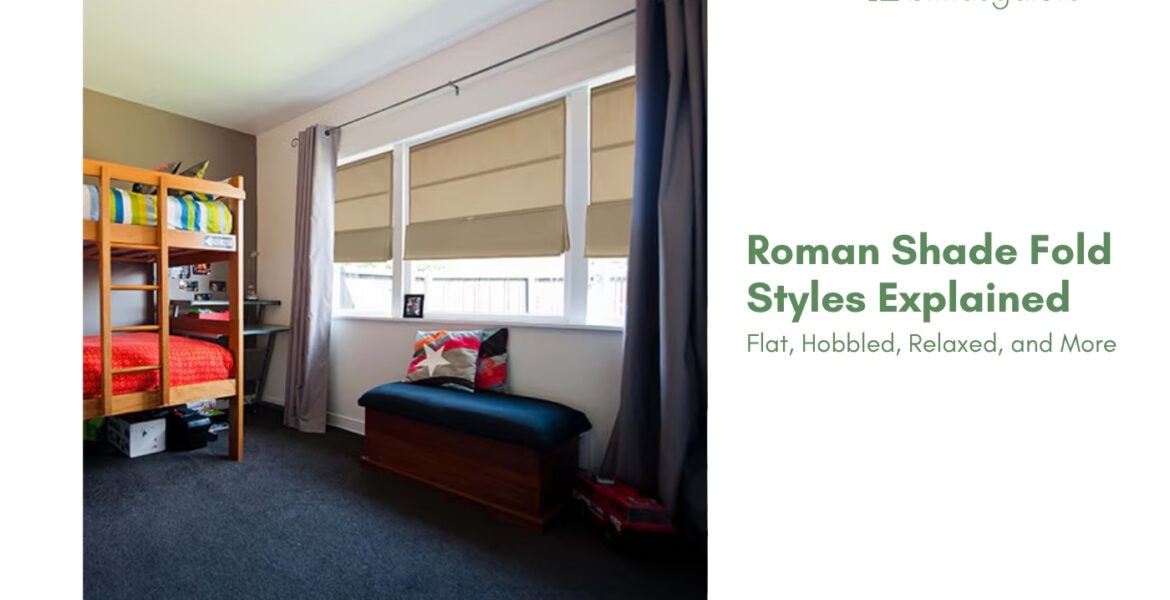
Roman shades combine the softness of fabric with the clean function of a shade, and the fold style is what sets the overall look. A flat fold reads modern and tailored. A hobbled fold adds volume and elegance. A relaxed fold feels casual and inviting. Each style changes the personality of the window, even when using the same fabric.
Here’s a straightforward breakdown of the most popular Roman shade fold styles and where each one works best.
Flat Fold Roman Shades
A flat fold Roman shade hangs as a smooth, uninterrupted panel of fabric when lowered. When raised, the fabric stacks into neat, even horizontal folds at the top of the window.
Best for: Modern, minimalist, and transitional interiors. Flat folds let bold patterns and printed fabrics shine because no seams or pleats interrupt the design. The Blindsgalore Designer Roman Shades with Patterns are a strong choice here, since the flat surface showcases the full pattern without disruption.
Room fit: Living rooms, home offices, kitchens, and any space where a clean, streamlined look matters. The slim profile also works well on French doors and shallow windows where bulkier styles would feel out of place. For more on treating doors, see French Door Blinds: Comprehensive Guide.
Good to know: When fully lowered, a flat fold shade can look plain if the fabric is simple. Choosing a textured or patterned fabric adds visual interest even when the shade is down.
Hobbled Fold Roman Shades
A hobbled fold (also called a soft fold, waterfall, or cascade fold) features loops of extra fabric that create flowing, overlapping folds even when the shade is fully lowered. The cascading effect adds dimension, texture, and a sense of luxury to the window.
Best for: Traditional, formal, and transitional interiors. Hobbled folds bring richness and visual weight, making them a popular choice for dining rooms, primary bedrooms, and formal living spaces. The Blindsgalore Designer Roman Shades with Solids in a heavier fabric create a polished, upholstered look that suits these spaces beautifully.
Room fit: Dining rooms, primary bedrooms, and sitting areas where elegance is the priority. Hobbled folds also provide slightly better insulation and light diffusion than flat folds because the extra layers of fabric create additional barriers.
Good to know: Hobbled folds use more fabric than flat folds, which affects pricing. The thicker fabric stack, when raised, is also worth considering for windows where a compact stack matters. For broader window treatment options in living spaces, see 4 Living Room Window Treatment Ideas.
Relaxed Fold Roman Shades
A relaxed fold (sometimes called a European fold) hangs with a gentle, swooping curve at the bottom when lowered. Rather than crisp horizontal pleats, the fabric drapes softly, creating an inviting, informal look.
Best for: Coastal, farmhouse, bohemian, and casual interiors. The relaxed curve introduces a laid-back feel that stiff, structured folds cannot achieve. Lightweight linens and cotton fabrics look particularly natural in this style.
Room fit: Bedrooms, reading nooks, bathrooms, and casual living areas. The soft shape works well on smaller windows where a more structured shade might feel overdone.
Good to know: Relaxed fold shades require a bit of hand-dressing each time the shade is raised to get the curve looking right. For that reason, they work best on windows where the shade stays lowered most of the time. Motorization is generally not compatible with relaxed folds due to the manual shaping needed.
Pleated Fold Roman Shades
A pleated fold creates crisp, uniform horizontal pleats sewn at regular intervals. The structured pleats look tailored and tidy, sitting between the simplicity of a flat fold and the volume of a hobbled fold.
Best for: Traditional and formal interiors where structure and order matter. Pleated folds work well in dining rooms, home offices, and rooms where a polished look is the goal.
Room fit: Dining rooms, formal living rooms, and offices. Pleated folds pair nicely with solid-colored fabrics that highlight the even, architectural lines.
Good to know: Pleated folds raise and lower smoothly, making them practical for windows that get adjusted frequently. For a deeper look at how Roman shades compare to other shade types, see Roman Blinds vs. Roman Shades.
How to Choose the Right Fold
Start with the room’s style: Modern and minimalist rooms call for flat folds. Traditional and formal spaces suit hobbled or pleated folds. Casual and coastal rooms look best with relaxed folds.
Consider the fabric: Bold patterns and prints look best on flat folds where the design stays uninterrupted. Solid colors and subtle textures shine in hobbled and pleated folds where the fabric’s movement becomes the visual feature.
Think about daily use: Flat and pleated folds raise and lower smoothly for everyday operation. Hobbled folds operate well but create a thicker stack when raised. Relaxed folds need occasional hand-adjusting to maintain the curved shape.
Factor in window size: Flat folds suit smaller or shallower windows where a slim profile matters. Hobbled folds look best on medium to large windows where the extra fabric has room to cascade without overwhelming the frame. For help with sizing, see Blinds & Shades for Common Window Sizes: Measuring Tips.
Decide on mounting. Inside mounts create a clean, built-in look for any fold style. Outside mounts add visual weight and work especially well with hobbled and relaxed folds. For more on outside mounting specifically, see Outside Mount Roman Shades.
Care Tips for All Roman Shade Styles
All Roman shades benefit from regular light dusting with a feather duster or a soft vacuum brush attachment on low suction. Never submerge any shade in water, regardless of fabric type. Spot clean with a lightly damp cloth when needed and allow the shade to air dry fully before raising. Avoid harsh chemicals that can damage fabric fibers or fade colors.
For a complete overview of every window treatment type, see The Ultimate Guide to Window Treatments.
FAQs
Flat Roman shades hang as a smooth, single panel of fabric when lowered. Hobbled Roman shades have extra fabric that creates flowing, cascading folds even when fully down. Flat folds suit modern spaces, while hobbled folds suit traditional and formal rooms.
The number of folds depends on the shade’s height. Most Roman shades have folds spaced every 6 to 10 inches. A taller window naturally produces more folds. The spacing is typically determined during manufacturing based on the shade’s measurements.
Flat fold and hobbled fold are the two most popular styles. Flat fold appeals to modern and transitional tastes, while hobbled fold remains a favorite for traditional and elegant interiors. Both offer excellent light control and privacy.
Yes. Flat and pleated fold styles work best with motorization because they raise and lower evenly. Relaxed folds are less suited for motorization due to the manual shaping they require.