
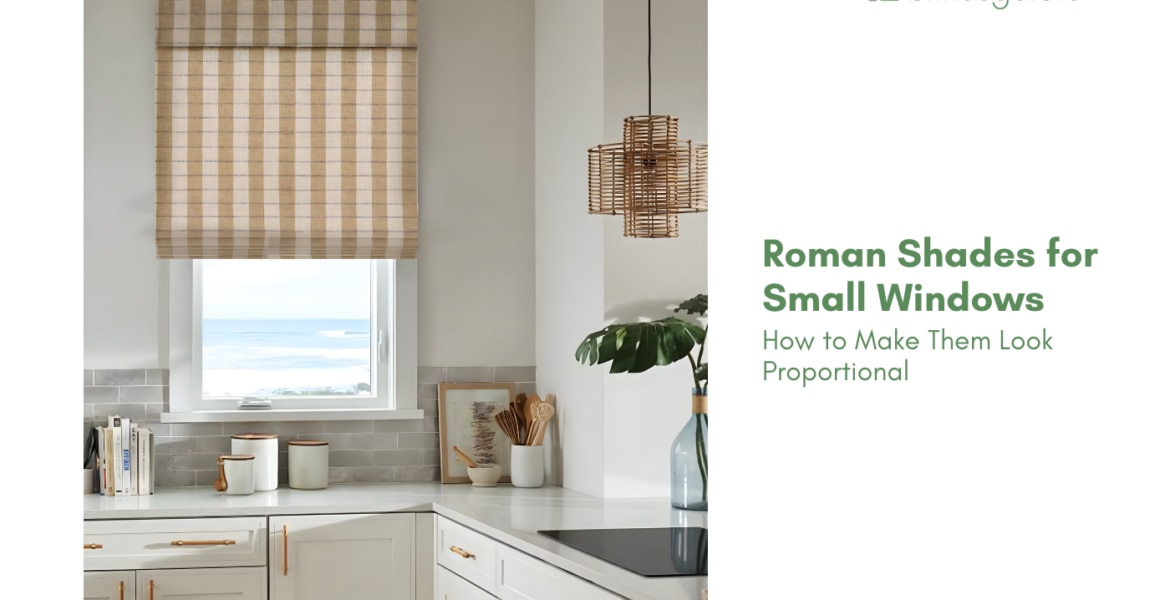
Small windows present a real design challenge. Standard window treatments can overwhelm the space, making the window look even smaller. Oversized hardware and bulky fabric stacks block what little light comes through. Roman shades are one of the best solutions for small windows when sized and mounted correctly.
Here’s how to make Roman shades look proportional on smaller openings.
Why Roman Shades Work for Small Windows
Roman shades have several advantages over other treatments in compact spaces.
Compact raised profile. When raised, Roman shades fold into a neat stack at the top of the window. The stack takes up less visual space than gathered curtains or bulky blinds.
Clean lines. The flat or softly folded fabric doesn’t add visual clutter. Small windows benefit from simplicity.
No side stacking needed. Unlike curtains that need room to gather on each side, Roman shades operate vertically and don’t encroach on adjacent wall space.
Custom sizing. Custom Roman shades are made to exact window measurements, ensuring the treatment fits the opening precisely without excess fabric. For more on how shades and blinds compare, see Shades vs. Blinds: What’s the Diff?.
Choosing the Right Fold Style
For small windows, flat Roman shades typically work best. The flat construction creates the most compact stack when raised, maximizing the amount of glass exposed and light allowed in. The Blindsgalore Designer Roman Shades with Solids offer flat-fold styling that keeps the look clean and modern on smaller windows.
Hobbled (cascading) Roman shades create a larger stack because of the permanent folds. On a small window, that extra bulk can block a significant percentage of the glass even when the shade is fully raised.
Relaxed Roman shades with a curved hemline can work on small windows, but the swooping shape may look disproportionate if the window is very narrow. For a full breakdown of all fold types, see Roman Blinds vs. Roman Shades.
Inside Mount vs. Outside Mount
Inside mount: Mounting the Roman shade inside the window frame creates a clean, built-in appearance. The shade sits recessed in the opening, allowing trim and molding to show. Inside mounts work well when the window frame is attractive, and the goal is a minimal, tailored look.
Outside mount: Mounting the shade on the wall above and beyond the window frame makes the window appear larger. Extending the shade a few inches on each side and several inches above the frame creates the illusion of a bigger opening.
For very small windows, outside mounts are often the better choice. The expanded coverage tricks the eye into seeing a larger window while still allowing the shade to operate normally. For more on this approach, see Outside Mount Roman Shades.
Fabric Selection Tips
Light colors: Light-colored fabrics reflect more light and make small windows feel brighter and more open. White, cream, soft gray, and pale neutrals all work well.
Minimal patterns. Large, bold patterns can overwhelm a small window. Solid colors or subtle textures create visual balance without competing for attention. The Blindsgalore Designer Roman Shades with Patterns offer options for those who want patterns, with scale choices that can work on smaller openings when selected carefully.
Lighter-weight fabrics. Heavyweight fabrics create bulkier stacks. Lighter materials fold more compactly, leaving more glass exposed when the shade is raised.
Match or coordinate with the wall. A shade that closely matches the surrounding wall color minimizes the visual boundary between window and wall, making the opening feel less defined and therefore less noticeably small.
5 Tricks to Make Small Windows Look Bigger
Mount high. Installing the shade well above the window frame draws the eye upward and creates the impression of height. Even 3 to 4 inches above the top of the trim makes a noticeable difference.
Extend wide. Mounting the shade several inches beyond each side of the frame suggests a wider opening. The fabric covers the wall on either side, and the eye assumes a larger window behind it.
Keep hardware minimal. Look for low-profile headrails that don’t add unnecessary bulk. Color-coordinated hardware that matches the fabric blends in rather than standing out.
Skip the valance. Decorative top treatments add bulk and visual weight that small windows simply don’t need. A clean headrail with no valance keeps things streamlined.
Use vertical patterns sparingly. A subtle vertical stripe or vine pattern can guide the eye upward, making the window appear taller. Just keep the scale proportional to the window size.
For additional sizing guidance, see Blinds and Shades for Common Window Sizes: Measuring Tips.
Avoiding Common Mistakes
- Too much fabric. Excess fabric width creates bunching on the sides. Custom Roman shades made to exact measurements eliminate this problem.
- Bulky stack. Raising the shade shouldn’t block half the window. Flat fold styles and lighter fabrics minimize stack height.
- Heavy patterns. Bold prints fight for attention on small windows. Simpler is usually better.
- Dark colors in dark rooms. Dark fabrics absorb light and make small windows feel smaller. Save the dramatic colors for larger openings with plenty of natural light.
- Mismatched scale. The shade should feel proportional to both the window and the room. An oversized outside mount on a tiny window looks just as wrong as an undersized inside mount.
Room-by-Room Applications
Bathrooms: Small bathroom windows benefit from Roman shades that provide privacy without overwhelming the space. For more bathroom-specific ideas, see Bathroom Window Treatment Ideas.
Kitchens: Small windows above sinks or counters suit compact Roman shades that stay clear of cooking and water.
Hallways: Narrow hallway windows need streamlined treatments. Flat Roman shades keep the space feeling open.
Bedrooms: Small bedroom windows can use Roman shades with blackout lining for privacy and light control without taking over the wall.
For a complete overview of all window treatment types, see The Ultimate Guide to Window Treatments.
FAQs
For inside mounts, the shade should match the window opening precisely. For outside mounts, adding 2 to 4 inches on each side and 3 to 6 inches above the frame creates better coverage and makes the window appear larger.
Yes. Roman shades are among the best options for small windows because of the compact stack, clean lines, and custom sizing. Flat fold styles maximize exposed glass and light.
Both work, but outside mounts typically look better on very small windows because the expanded coverage creates the illusion of a larger opening. Inside mounts suit windows with attractive trim, where size is less of a concern.
Mounting the shade above and beyond the window frame, choosing light colors, keeping the design simple, and using flat fold construction all help small windows appear larger than they actually are.