
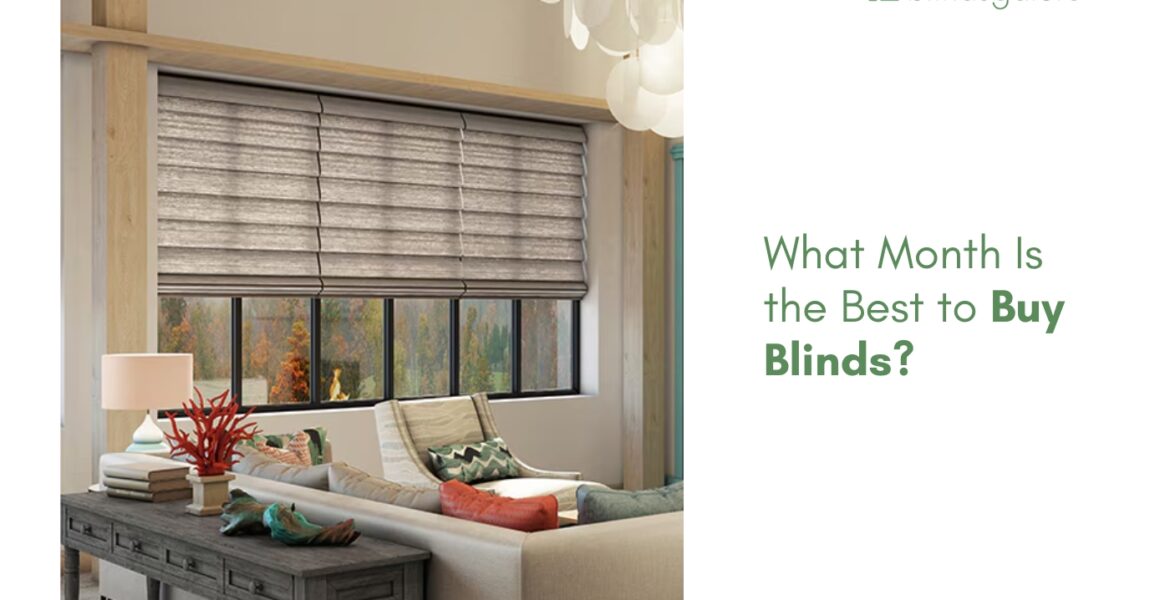
Any month is a good month to buy blinds. Custom window treatments are made to order, so there is no warehouse of last season’s stock waiting to be cleared at a markdown, and no off-season when quality dips. The right time to buy is the moment a window stops working for the room.
What the calendar does change is smaller. Promotional pricing clusters around a handful of holidays, each season flatters a different material, and the reason behind the purchase usually carries more weight than the date itself. Below is a designer’s read on timing a blind purchase around what the room actually needs.
Shop Custom Window Blinds and Shades
When is the best time to buy blinds?
The best time to buy blinds is when a window needs covering. Custom blinds are cut to order, so timing shapes sale pricing and seasonal fit far more than availability. There is no off-season penalty and no peak-season shortage to plan around.
Three factors still come into play: major holiday weekends bring promotional pricing across the industry, certain materials suit certain seasons, and a personal deadline like a move-in or finished renovation sets the real timeline.
Ordering free samples early matters more than the month on the calendar. Holding the actual fabric against the wall, in the room’s own light, is the step most people skip and later wish they had not.
Buying blinds by season
Every season has a material and a mood that suit it. Here is how the year breaks down and what tends to make sense when.
Spring: Refresh and natural texture
Spring sends most people back to their windows after a long winter, and the season rewards light, organic textures that open a room up. A set of woven wood shades brings natural reeds, grasses, and bamboo into the room for warm, dappled light and a tactile finish, while light-filtering roller shades soften the sun without darkening the space. Spring is peak season for home projects, so ordering early beats the late-spring rush.
Summer: Heat and light control
Summer is about keeping rooms cool and cutting the glare that turns a west-facing room into an oven by four o’clock. The right fabric makes a measurable difference in comfort and in what the air conditioner has to do. Solar shades and blackout fabrics earn their place here. A solar shade filters UV and tames glare while preserving the view straight through the weave, and a blackout fabric keeps bedrooms dark for sleep through long, bright evenings. Summer is also the natural moment to consider motorization. Shades scheduled to lower during the hottest part of the day manage heat on their own, and motorized lines pair with smart hubs like Bali Gateway, Levolor InMotion, and MotionBlinds, plus voice control through Alexa, Google Home, and Siri Shortcuts.
Fall: Warmth and a finished look
Fall calls for warmth and polish, the run-up to a season of hosting. Rooms see heavier use as the weather turns, and softer, more tailored treatments make a space feel finished. Roman shades and shutters suit the autumn mood. A Roman shade folds into soft horizontal pleats for fabric richness and a layered, dressed look, while interior shutters bring architectural permanence and a classic, built-in finish. Fall is also the smart time to plan for the insulation that winter will demand.
Winter: Insulation and energy savings
Winter is when window treatments do their hardest insulating work. Drafty glass pulls heat out of a room all night, and the right shade slows that loss.
Cellular shades are the winter standout. Air trapped inside the honeycomb pockets buffers the cold glass from the warm room, which is why cellular shades are the most energy-efficient shade on the market. Layered drapery adds a second insulating layer and a cozier look for the darkest months.
Buying at the sale events
Sales events follow the retail calendar, and window treatments move with it. The biggest promotional windows tend to land around:
- Memorial Day in late May
- Independence Day in early July
- Labor Day in early September
- Black Friday and Cyber Monday in late November
- Year-end and New Year clearance in December and January
Quieter stretches like January, February, and late summer bring smaller promotions as demand dips. The principle is simple: if a sale lines up with the timeline, use it. If not, custom pricing does not punish a purchase made in an ordinary month.
When the project sets the timeline
Sometimes the best month has nothing to do with sales or seasons. The project decides.
A move-in is the most common trigger. New homeowners and renters want privacy and light control from the first night. Renters in particular benefit from the no-drill install line, custom shades that snap into place in minutes with no tools, no hardware, and no damage to the frame, then remove just as cleanly at move-out.
A renovation is the second trigger. Fresh paint and new flooring make old blinds look dated overnight, so the window becomes the natural finishing touch. A specific problem is the third: a room that overheats every afternoon, a nursery that needs to go dark for naps, or a street-facing window with no privacy, all of which justify buying now rather than waiting for a date on the calendar.
Plan your windows, whatever the month
The best month to buy blinds is the one that fits the home, not a date a retailer chose. Whether the goal is to catch a sale, match the season, or finish a project, the smart first move stays the same. Ordering up to 10 free swatches lets the color and texture prove themselves against the wall before the order is placed, and the in-house experts at (877) 702-5463 can help narrow a roomful of options down to the right one.
Love your view, in every season.
Frequently Asked Questions
Major holiday weekends like Memorial Day, Independence Day, Labor Day, and Black Friday tend to bring the deepest promotional pricing across the industry. Quieter months like January, February, and late summer can also bring smaller sales as demand drops.
Blinds and shades commonly go on sale around major holiday weekends and year-end clearance periods. Because custom blinds are made to order, sale timing affects price more than availability, so there is no risk of shortage when buying during a promotion.
Both seasons work well, and the better one depends on the goal. Winter favors cellular shades for insulation and energy savings. Summer favors solar shades and blackout fabrics for heat and glare control. Custom pricing does not change with the season.
Waiting for a sale makes sense only when pricing is the main concern and the timeline is flexible. For a move, a renovation, or a specific comfort problem, buying now is usually worth more than the savings from holding out for the next promotional weekend.
Winter is when energy-efficient blinds matter most, because insulating shades slow heat loss through cold glass. Cellular shades trap air in their honeycomb pockets and are the most energy-efficient option. Ordering in the fall gets them installed before the cold arrives.
Blindsgalore offers free shipping across the contiguous United States and Canada year-round, along with up to 10 free samples per customer. Custom shades typically ship in as little as 5 to 7 business days, no matter the season.