
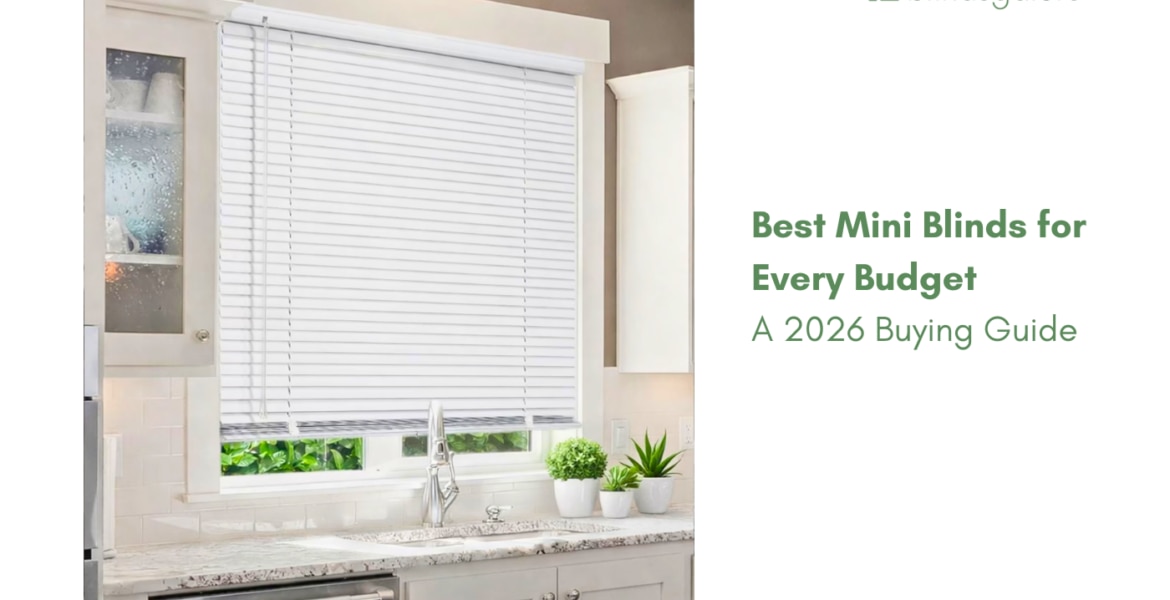
Two mini blinds can look identical in a product photo and behave nothing alike after three years on a window. The variables that separate them are not color or slat width. Slat gauge, headrail construction, and lift mechanism decide it, and none of the three photograph well.
That is why mini blinds are the most misjudged category in window coverings. The spread in quality inside the category is wider than the gap between mini blinds and the category above it. Buying well here means knowing which of three upgrades earns its keep in your specific room, and which one you can skip without regret.
What separates a cheap mini blind from an expensive one?
Three things, in order of impact on how long the blind lasts and how it looks on day one thousand.
- Slat gauge. The thickness of the aluminum. Thin slats crease permanently when bumped and never straighten.
- Headrail construction. A stamped rail with a visible valance versus a steel rail with hidden brackets changes both durability and the finished look.
- Lift mechanism. A gear-driven clutch operates smoothly for years. A basic cord lock wears at whatever height you stop it most often.
Slat width, color, and finish are real choices, but they are style decisions. The three above are engineering decisions, and they are what you are actually paying for when one mini blind costs more than another.
What does slat gauge mean on aluminum mini blinds?
Gauge is the thickness of the aluminum slat, expressed in thousandths of an inch. An 8-gauge slat measures .008 inches. A 6-gauge slat measures .006 inches.
That sounds like a rounding error. In practice, it is a third more metal in every slat, and gauge is the single best predictor of whether a mini blind still looks straight after a few years of daily use.
When 6-gauge is enough
- Guest rooms, formal dining rooms, and low-traffic windows
- Windows above furniture, where nothing brushes the slats
- Second-floor rooms with no pets and no small children
When 8-gauge is worth it
- Kitchens, hallways, mudrooms, and any window near a door
- Homes with cats, dogs, or children under ten
- Rental units and any window that gets operated by someone other than you
The Luxera 1″ aluminum blinds let you pick between 6-gauge and 8-gauge on the same product, in over 30 finishes. For a window that takes daily contact, 8-gauge is the upgrade that prevents the bent-slat look that makes an otherwise fine blind read as cheap.
Should you choose aluminum or vinyl mini blinds?
Both resist moisture, so both work in kitchens and bathrooms. The decision comes down to how the blind will be handled and how you want the room to feel.
Aluminum holds a crisp edge, comes in more finishes, and reflects solar heat rather than absorbing it. Vinyl has a softer, less industrial look and does not dent the way thin aluminum can when something knocks into it.
- Choose aluminum for finish range, heat reflection, and a sharper visual line
- Choose vinyl for a warmer look and for rooms where bumps are routine
Neither material has a maintenance advantage worth mentioning. Both wipe clean with a damp cloth.
Are 1-inch or 2-inch slats better?
Slat width is the one variable where the answer is genuinely about the window rather than about quality.
One-inch slats need less than an inch of mounting depth, which makes them the only option on shallow frames, casement windows, and door glass. Two-inch slats use fewer slats to cover the same opening, which means a cleaner sightline when open and less surface area collecting dust.
- Shallow frames, door lights, and small windows: 1-inch
- Wider windows where you want a more substantial look: 2-inch aluminum
- Rooms where the blind should recede visually: 1-inch in a color matched to the trim
Do mini blinds still come with cords?
Not the way they used to, and this is the part of the category most buyers are working from outdated information on.
In November 2022, the Consumer Product Safety Commission issued a final rule on operating cords for custom window coverings, determining that accessible operating cords longer than eight inches present an unreasonable strangulation risk to children eight and younger. The rule brought custom products in line with the requirements already applied to stock window coverings. The accompanying industry standard revision eliminated continuous cord loops and bead chains on horizontal slatted custom products, which is precisely what a mini blind is.
The practical consequence for anyone budgeting a mini blind purchase: cordless is the baseline on custom horizontal blinds, not a premium line item. CPSC continues to advise that cordless window coverings are the only option that eliminates the strangulation hazard in homes with young children. Blindsgalore publishes its own child safety resource covering the same ground.
What is still an upgrade is motorization. A motorized wand or a remote-operated lift is worth the spend on out-of-reach windows, stairwell landings, and rooms where you would otherwise leave the blind in one position all year.
Which mini blind fits which room?
Match the specification to how the room is used rather than to a price tier.
Kitchens and bathrooms
Moisture and cooking residue are the constants. Aluminum in 8-gauge, in a mid-tone color that hides grease film between cleanings. Skip valances that trap steam.
Rentals and multi-unit properties
Durability per window matters more than finish range because you are replacing on a tenant cycle, not a design cycle. The best blinds for Airbnb and vacation rentals guide covers the full-property math, and there is a dedicated guide to budget-friendly mini blinds for apartments for renters working around landlord restrictions.
Home offices and rooms where the blind should look deliberate
Headrail design earns its money here. The 1″ aluminum blinds use 8-gauge slats as standard, a steel headrail with hidden brackets, and no valance, so the blind reads as an architectural detail rather than a builder default. The headrail carries a light-blocking lip that closes the gap most mini blinds leave at the top.
Bedrooms
Mini blinds are a light-control product, not a darkness product. Slat routing and edge gaps mean daylight gets through even when closed. For a bedroom that needs true darkness, pair the blind with drapery or move to a blackout shade instead of expecting the blind to do it alone.
Do mini blinds help with energy costs?
Mini blinds help with summer heat gain specifically, and the mechanism is reflection rather than insulation.
Federal Energy Saver guidance, republished by state energy offices, recommends installing white window shades, drapes, or blinds to reflect heat away from the house and closing coverings on south- and west-facing windows during the day. Research from Lawrence Berkeley National Laboratory on residential window attachments found that louvered blinds deliver cooling-season savings that scale with how reflective the material is, with the largest effect in cooling-dominated climates.
What that means in practice:
- Light-colored aluminum outperforms dark or vinyl slats for summer heat rejection
- The benefit is largest on west- and south-facing glass
- Closing the slats during peak afternoon sun is what produces the effect, not simply owning the blind
- Winter heat retention is not a mini blind strength, since the gaps between slats let warmth escape
For rooms where glare is the actual complaint rather than heat, the Hello Sunshine, Goodbye Glare guide covers the wider set of options.
How should you choose your mini blinds?
Work backward from the room. A hallway window near a door needs 8-gauge aluminum and nothing else. A home office where the window sits in your eyeline justifies the hidden-bracket headrail. A guest room used twice a year does not need either. The reason mini blinds carry such a wide quality range is that most buyers pay for the wrong variable, usually color, and skip the one that determines whether the blind still looks right in year five.
Every Blindsgalore mini blind is made to order in the exact dimensions of your window, and over 99% of our customers measure and install their own. Order up to 10 free samples to compare gauge and finish against your trim in daylight, or call the in-house team at (877) 702-5463 to talk through a specific window. Every Blindsgalore product carries a 3-year limited warranty with the option to extend to five years, and shipping is free across the contiguous United States and Canada.
See the full mini blind collection or order free samples to start.
Love your view.
Frequently asked questions
Eight-gauge (.008 inch) aluminum is the durable choice for kitchens, hallways, rentals, and homes with pets or young children. Six-gauge suits low-traffic windows where nothing regularly contacts the slats.
Aluminum offers more finishes, a crisper edge, and better summer heat reflection. Vinyl has a softer look and resists denting. Both handle moisture, so either works in a kitchen or bathroom.
Custom horizontal blinds are now cordless by default. A 2022 CPSC final rule brought custom window coverings under the same operating-cord requirements as stock products, and the industry standard eliminated continuous cord loops on horizontal slatted custom blinds.
No. Slat routing and edge gaps let daylight through even when closed. A bedroom that needs real darkness calls for a blackout shade, or a mini blind layered with drapery.
One-inch slats fit shallow frames and door glass, needing under an inch of depth. Two-inch slats cover the same window with fewer slats, giving a cleaner view when open and less dust-collecting surface.
Blindsgalore mini blinds are made to order and typically ship within four to seven business days depending on the product. For lifespan expectations once installed, see the guide on how long custom blinds last.