
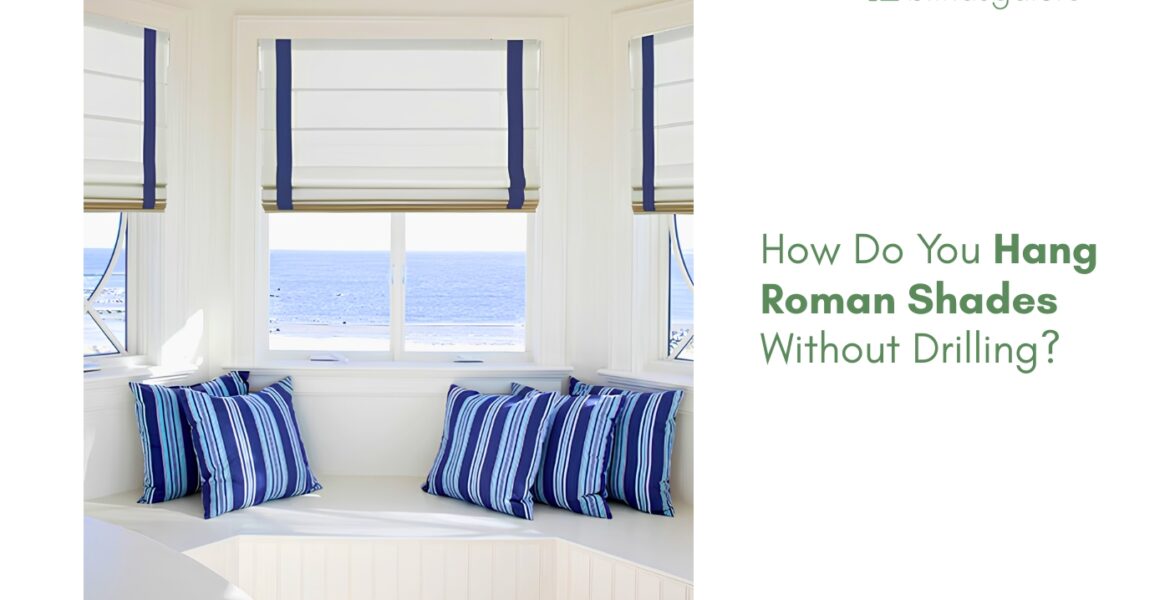
The short answer is that most roman shades require brackets and screws, which means drilling into the wall or window frame. A few brands offer tension-mount or adhesive alternatives for roman shades, but the options are limited, and the hold can be unreliable on wider or heavier shades.
The more practical answer, and the one that actually solves the no-drill problem well, is to look at the no-drill window shades that deliver a similar softness and function without the limitations.
Can you really hang Roman shades without drilling?
You can, but with real trade-offs. The two most common methods for hanging roman shades without drilling are tension rods and adhesive brackets, and both come with conditions.
Tension rods
A tension rod presses against the inside of the window frame to hold the shade in place without screws. The method works on shallow, lightweight roman shades in narrow window frames where the rod has enough friction to stay put. On wider windows, heavier fabrics, or frames that are not perfectly square, the rod can slip, especially when the shade is raised and lowered repeatedly. Tension mounting works best as a temporary or light-duty approach, and the shade should be tested several times before relying on the hold for daily use. For windows wider than about three feet, tension rods are generally not recommended for roman shades.
Adhesive brackets
Adhesive-mounted brackets stick to the wall or window frame and hold the headrail in place. The hold depends on the surface being clean, dry, and smooth. Humidity, heat, and textured walls weaken the adhesive over time, which is why this method is common on lightweight door shades but less reliable on full-sized roman shades used daily. The guide on Hello Sunshine, Goodbye Glare covers how different treatments handle light, which helps when weighing roman shades against lighter alternatives.
The honest limitation
roman shades are among the heavier window treatments because of the folded fabric, the stiffening rods, and the lift mechanism inside the headrail. That weight is exactly why most manufacturers design them for bracket-and-screw installation. No-drill methods can hold a lightweight roman shade on a small window, but they struggle with the daily wear of a full-sized shade in a primary room.
Blindsgalore does not currently offer a no-drill roman shade, and that is an honest product note worth knowing upfront. The brand does carry a full range of traditional-mount roman shades in a wide selection of fabrics and styles for homes where bracket installation is an option. For everyone else, the no-drill alternatives below solve the same problem more reliably.
What no-drill window shades work better?
The search for no-drill roman shades usually comes from renters, dorm residents, or homeowners who do not want holes in the wall. The need is real, and the right no-drill shade solves it cleanly without compromising on light control, privacy, or style.
Blindsgalore’s no-drill install line uses a snap-in headrail system that clips into the window frame without screws, brackets, or adhesive. No tools, no hardware, no wall damage, and the shades come back down cleanly when the time comes to move. The system works on standard window frames with adequate depth, and over 99% of customers handle the install themselves.
Four no-drill options cover the same rooms and light-control needs that roman shades typically serve.
No-drill roller shades
No-drill roller shades deliver the clean, minimal look that pairs well with modern and transitional rooms. The single fabric panel rolls up into a slim tube at the top of the window, giving a streamlined finish with no folds or pleats. For renters outfitting multiple windows at once, roller shades are the fastest and most versatile no-drill option. The guide on the Best Blinds for Airbnb and Vacation Rentals shows how no-drill options fit into rental settings.
No-drill light-filtering cellular shades
No-drill light-filtering cellular shades bring the soft, diffused glow that many people love about roman shades, with the added benefit of honeycomb insulation that helps regulate the room’s temperature. The fabric has a warm, textured finish that softens the window without the weight or maintenance of a folded roman panel. For rooms that want light without heat, this is the no-drill shade that most closely replaces the feel of a roman shade. The guide on Window Treatments for New Construction shows how to plan shades for a whole home, including which rooms suit no-drill versus traditional install.
No-drill blackout cellular shades
For bedrooms that need total darkness without drilling, no-drill blackout cellular shades clip in the same way and block close to 100% of the light through the panel. The insulating honeycomb pockets work double duty, blocking light and slowing heat transfer across the glass. For shift workers, light-sensitive sleepers, and nurseries, this is the no-drill shade that handles the job a blackout roman shade would, without the holes in the wall.
No-drill solar shades
No-drill solar shades are the no-drill answer for rooms with a view. The open-weave fabric reduces glare and UV exposure while preserving the sightline through the window, which is something a roman shade cannot do when lowered. For south- and west-facing rooms where heat and glare are the main problems, solar shades handle both without blocking the view entirely. The snap-in install makes them especially practical for sunrooms, home offices, and any rented space with large, sun-heavy windows.
For a broader look at how all these treatments fit together across a whole home, the Ultimate Guide to Window Treatments covers every category and helps match the right shade to each room.
The right no-drill shade for your window
Roman shades without holes in the wall are possible but limited by weight, width, and the reliability of tension or adhesive mounts. The no-drill alternatives at Blindsgalore solve the same problem more reliably, with a snap-in system that needs no tools, leaves no damage, and holds securely for daily use. Over 99% of Blindsgalore customers install their own window coverings, and the no-drill line makes that even simpler. For a closer look at how long custom shades last across materials and styles, the guide on How Long Do Custom Blinds Last covers what to expect.
All no-drill shades are custom-built to the exact window measurements and backed by a 3-year limited warranty upgradeable to five years. Order free samples to see the fabric and finish before committing, and call the in-house experts at (877) 702-5463 to find the right no-drill shade for each room.
Frequently asked questions
Technically yes, using tension rods or adhesive brackets, but both methods have limitations on heavier or wider roman shades. No-drill roller shades and cellular shades use a more reliable snap-in system that holds securely without holes.
No-drill cellular shades are the most versatile option, offering light filtering, blackout, and insulation in one treatment. No-drill roller shades are the simplest for a clean, modern look. Both use a snap-in headrail that needs no tools.
Yes, when the window frame is suitable, and the shade is properly sized. The snap-in headrail system clips securely into the frame without adhesive, so it withstands daily use and removes cleanly when needed.
No. The snap-in system presses into the frame without screws or adhesive, leaving no marks and no holes. The shades remove cleanly, which is why they are popular with renters and anyone who wants a damage-free install.
Traditional installation uses brackets and screws drilled into the wall or frame for a permanent mount. No-drill installation uses a tension or snap-in headrail that holds by pressure alone, making it removable and damage-free.
Blindsgalore brand no-drill shades carry a 3-year limited warranty with an upgrade to a 5-year warranty, covering defects in materials and workmanship when properly installed. Boutique products include a 5-year extended warranty. Fading is not covered.