
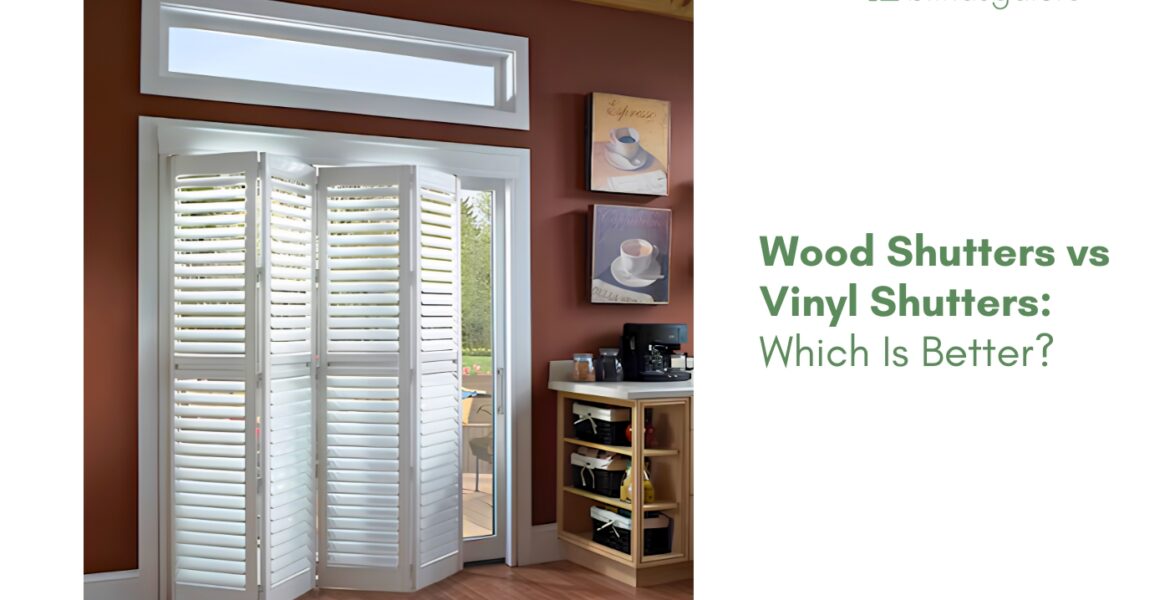
Wood shutters and vinyl shutters solve the same problem from opposite directions. Wood brings natural grain and warmth that comes with real upkeep. Vinyl and faux wood bring moisture resistance, lower cost, and a finish that requires almost no maintenance. The better choice depends on the home, the room, and how much care you are willing to give.
Three questions settle this wood vs vinyl shutters comparison for most homeowners. Answer them honestly, and the right shutter picks itself.
What is the real difference between wood and vinyl shutters?
Both use louvered panels that tilt for light control and swing open for full window access. The material underneath is where they part ways, and the same wood-versus-engineered question shows up across all window treatments. For a similar material comparison on the blinds side, the guide on Bamboo vs Wood Blinds covers the same trade-offs in a different category.
Real wood shutters
Real wood shutters are made from solid hardwood, usually basswood, poplar, or similar species. The natural grain gives each panel a warmth and depth that no synthetic can fully replicate. Wood shutters can be stained in a wide range of tones, from light oak to dark espresso, and they take custom paint colors well. The trade-off is weight, maintenance, and vulnerability to moisture. Wood swells and warps in humid rooms, and it needs periodic refinishing to stay protected from UV and moisture damage.
Vinyl and faux wood shutters
Vinyl shutters, often called faux wood shutters, are made from PVC, composite material, or a polymer blend engineered to mimic the look of wood. The finish is smooth, uniform, and completely moisture-proof, which means no warping, no swelling, and no refinishing. Faux wood shutters come in a more limited range of colors, typically whites, creams, and off-whites, but they suit the most popular interior styles cleanly. The lighter weight also makes them easier to install, which matters when the homeowner is doing the work.
Where will the shutters go?
The room decides the material more than any other factor. Moisture is the dividing line.
Kitchens, bathrooms, laundry rooms, and any space with daily steam or humidity call for vinyl or faux wood shutters. The material is completely moisture-resistant and will not warp, crack, or mildew the way real wood eventually will in those conditions. For rooms with high moisture, faux wood shutters with 2 1/2-inch louvers handle both the humidity and the sightlines beautifully.
Living rooms, formal dining rooms, and primary bedrooms can go either way. Wood shutters make their strongest case in dry rooms where the grain and stain depth become a design feature. Faux wood still works perfectly in those rooms, just with a cleaner, more uniform finish rather than a natural one. Shutters in any material do a beautiful job of managing light and glare across south- and west-facing windows, and the guide on Hello Sunshine, Goodbye Glare digs deeper into controlling harsh sunlight without losing the view. For rooms with larger windows or wide openings, the faux wood shutters with 3 1/2-inch louvers give a wider view between slats and a more open, architectural feel.
Arched windows deserve a quick note. Blindsgalore currently covers perfect arches only, so a true half-round opening can be fitted while irregular or eyebrow arches cannot. Confirming the shape before ordering avoids a surprise later.
Sliding doors and patio openings are a separate category. Standard hinged shutters do not work here, but sliding door shutters glide along a track and handle the span cleanly. For a broader look at how shutters fit into a whole-home plan alongside blinds, shades, and drapery, the Ultimate Guide to Window Treatments covers the full picture.
What is your budget timeline?
The wood vs vinyl shutters comparison shifts depending on whether you are thinking about the next five years or the next twenty.
Vinyl and faux wood shutters cost less per window upfront, which makes a real difference when you are covering multiple rooms or a whole home at once. For homeowners building a new home or outfitting a new space, faux wood keeps the total manageable. The guide on Window Treatments for New Construction walks through how to plan for every room at once.
Real wood shutters cost more upfront but can be refinished, repaired, and repainted rather than replaced, which stretches their life to 20 years or longer with proper care. That long-term math can favor wood if the shutters are in a dry room and the homeowner is committed to the upkeep. For a closer look at how long custom treatments hold up across materials, the guide on How Long Do Custom Blinds Last covers what affects lifespan.
The practical takeaway: faux wood wins when the goal is whole-home coverage at a predictable cost. Wood wins when the goal is a single statement room, and the owner invests in maintenance over time.
How much maintenance are you willing to do?
The care gap between wood shutters vs vinyl shutters is the deal-breaker for most homeowners.
Vinyl and faux wood shutters need almost nothing. A damp cloth clears dust. No refinishing, no painting, no seasonal treatments. The finish resists UV fading, and the material does not attract pests or absorb moisture. For busy homes and anyone who values low upkeep, faux wood is the clear winner.
Wood shutters need periodic attention. The finish should be checked annually for UV wear, and the surface will need repainting or restaining roughly every 10 to 15 years depending on sun exposure. Wood is also vulnerable to termites in certain regions. The reward for that upkeep is a richer, warmer look that deepens with age, but the commitment is real.
If the honest answer to “will we keep up with maintenance?” is “probably not,” faux wood is the right call. A faux wood shutter that stays beautiful for years with no effort beats a wood shutter that fades because it was never refinished.
Are wood shutters better than vinyl for your home?
Wood shutters are better when the room is dry, the budget allows for the premium, and the homeowner will commit to upkeep. For every other situation, and that covers most homes, vinyl and faux wood shutters are the smarter, more practical choice. Partner brands like Bali bring a trusted name to the faux wood category with refined louver options.
Ordering up to 15 free swatches makes the finish real against the wall before any commitment, and the in-house experts at (877) 702-5463 can help match the right material and louver size to each window. At Blindsgalore, every shutter is 100% custom, handcrafted to order, and backed by a 3-year limited warranty upgradeable to five years. Order free samples and feel both finishes in your own light.
Frequently asked questions
Wood shutters offer a richer natural grain and more stain options, but they require regular maintenance and are vulnerable to moisture. Vinyl and faux wood shutters are moisture-proof, low maintenance, and more affordable, which makes them the better choice for most homes.
Modern faux wood shutters come close. The textured finish mimics wood grain convincingly, and most guests cannot tell the difference from across a room. The main visual difference is that faux wood has a more uniform finish, while real wood shows natural variation.
Yes. Real wood absorbs moisture from steam and humidity, which causes the slats to swell and warp over time. Faux wood and vinyl shutters are completely moisture-resistant and are the recommended material for bathrooms, kitchens, and laundry rooms.
Faux wood shutters typically last 15 to 20 years with minimal care. Real wood shutters can last 20 to 30 years, but only with regular refinishing and protection from moisture and UV damage.
Vinyl and faux wood shutters are significantly less expensive than real wood shutters, both in material cost and installation. The gap widens further when you factor in the ongoing maintenance costs of real wood over its lifetime.
Blindsgalore brand shutters carry a 3-year limited warranty with an upgrade to a 5-year warranty, covering defects in materials and workmanship when the product is properly installed and operated. Boutique products include a 5-year extended warranty. Fading is not covered.