
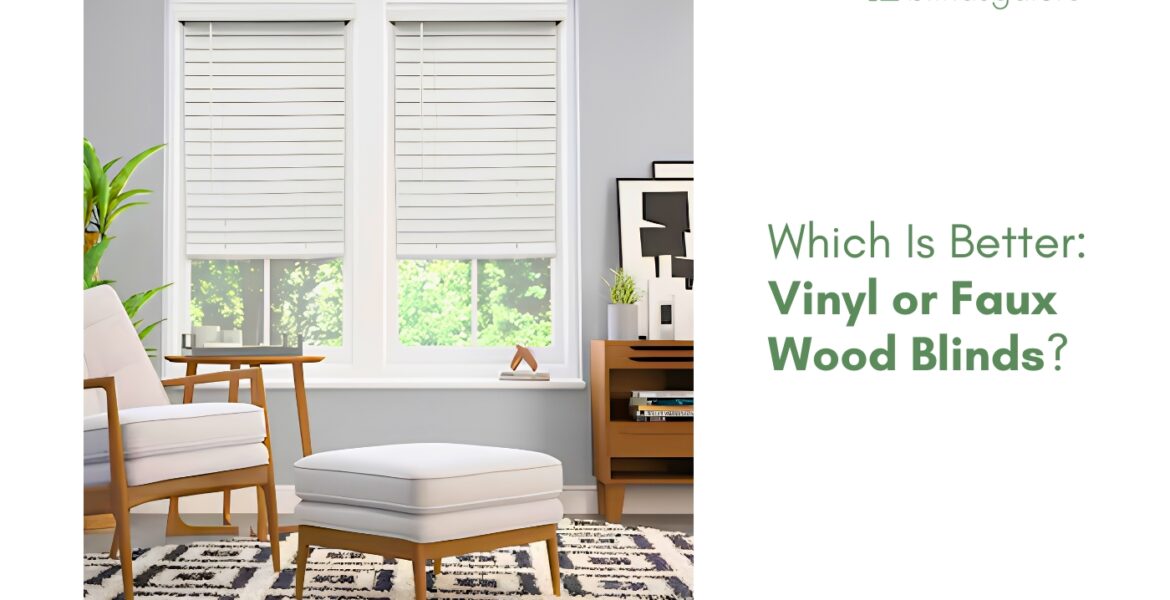
Vinyl and faux wood blinds look similar on the surface. Both are moisture-resistant, both use slatted construction, and both cost less than real wood. The difference shows up in the details, and the room you put them in decides which one wins.
Choosing between vinyl blinds vs faux wood blinds comes down to three things: where the blind is going, how long you want it to last, and how much the finished look matters in that particular room. Most homeowners end up using both in the same home once they see how each material suits a different kind of room. Here is the straightforward vinyl vs faux wood blinds comparison.
What is the real difference between vinyl and faux wood blinds?
Both materials resist moisture better than real wood, but they are built differently, feel different in the hand, and age differently on the window.
How vinyl blinds are made
Vinyl blinds use thin PVC slats, usually about one inch wide. The material is lightweight, flexible, and completely waterproof. Vinyl blinds are the most budget-friendly slatted option on the market, and their slim profile gives a clean, minimal look that works well in compact spaces. The slats tilt for precise light control and close tightly for privacy. The trade-off is a slightly plastic feel and less visual warmth than faux wood, which matters more in some rooms than others.
How faux wood blinds are made
Faux wood blinds use wider slats, typically two inches, made from composite material or PVC wrapped in a textured, wood-grain finish. The result looks and feels remarkably close to real wood without the warping risk. Faux wood blinds carry more visual weight than vinyl, which gives a room a more finished, intentional appearance. The wider slat also means fewer slats per window, so light moves across them more evenly and they collect less dust overall.
Are vinyl or faux wood blinds better for bathrooms?
Bathrooms are the room where this vinyl vs faux wood blinds comparison gets asked most, and for good reason. Moisture, steam, and daily humidity punish the wrong material quickly.
Vinyl blinds vs faux wood for bathroom use is honestly close. Both handle humidity well, since neither absorbs water the way real wood does. The practical difference is that vinyl holds up in high-moisture environments at the lowest cost, while faux wood handles the same humidity and still looks polished enough for a primary bath. For a guest or hall bath, vinyl blinds do the job beautifully. For a primary bathroom where the window treatment is part of the design, faux wood is the better fit. Neither will warp, crack, or mildew the way a real wood blind would.
How does the cost compare?
Faux wood blinds vs vinyl blinds cost is one of the clearest differences between the two. Vinyl sits at the entry end of the price range, and faux wood sits in the middle, still well below real wood.
The gap is real but proportional. Vinyl costs less per window, which makes a meaningful difference when you are covering multiple rooms at once. Faux wood costs more per window, but the wider slats, richer finish, and longer lifespan close that gap over time. For anyone weighing which is better, vinyl or faux wood blinds purely on budget, vinyl wins upfront. For value spread across years of daily use, faux wood often pays back the difference. For a deeper look at how long custom window treatments hold up, the guide on How Long Do Custom Blinds Last walks through what affects lifespan.
Which rooms suit vinyl and which suit faux wood?
The simplest way to decide is to think about how visible the room is and how much the window contributes to the overall feel of the space.
Where vinyl works best
Vinyl blinds are the practical choice for rooms where function matters more than design. Laundry rooms, utility spaces, rental properties, kids’ rooms, and secondary bathrooms all suit vinyl well. The material cleans easily, resists damage from small hands and pets, and costs little to replace if anything happens. For rental owners outfitting multiple units, the guide on the Best Blinds for Airbnb and Vacation Rentals covers how vinyl blinds hold up in tenant settings. For a closer look at how vinyl and other window blinds compare across styles, the full category shows the range available in custom sizes.
Where faux wood shines
Faux wood blinds belong in rooms where the window is part of the decor. Living rooms, dining rooms, primary bedrooms, and home offices all benefit from the warmer texture, wider slats, and more finished appearance. The wider slat handles south- and west-facing light beautifully, tilting to soften glare while still letting warmth into the room. For rooms where sun management matters, the guide on Hello Sunshine, Goodbye Glare digs deeper into controlling light without losing it. The Essential faux wood blinds deliver that rich wood-grain look at a comfortable price, while the Boutique faux wood blinds take the finish to a premium level with a free 5-year extended warranty included.
Mixing both in the same home is a smart move, not a compromise. Faux wood in the spaces people see, vinyl in the rooms they pass through. The result is a curated home that puts the investment where it matters most. A deeper comparison of natural versus manufactured blind materials lives in the guide on Bamboo vs Wood Blinds.
How to choose the right one for your home
The vinyl vs faux wood blinds comparison has a simple answer once you stop looking at it as a single decision and start thinking room by room.
Vinyl earns its place in practical, high-traffic, high-moisture rooms where budget and durability matter most. Faux wood earns its place in the rooms that shape how the home feels, where the richer texture and wider slat make the window look intentional rather than covered. Both are custom-built to your exact measurements, and both handle moisture far better than real wood. For a broader look at how blinds, shades, and shutters work together across a whole home, the Ultimate Guide to Window Treatments covers the full picture.
Ordering up to 15 free swatches makes the material real against the wall before any commitment, and the in-house experts at (877) 702-5463 can walk through each room to find the right match. At Blindsgalore, every blind is 100% custom, handcrafted to order, and backed by a 3-year limited warranty upgradeable to five years. Order free samples and see both materials side by side in your own light.
Frequently asked questions
Faux wood blinds are the better choice for rooms where appearance matters, thanks to wider slats and a natural wood-grain finish. Vinyl blinds are the better choice for budget-focused rooms where function and moisture resistance come first.
Yes. Vinyl blinds are fully waterproof and handle bathroom humidity without warping or peeling. For a primary bathroom where the look matters as much as the function, faux wood blinds handle the same moisture while looking more polished.
Modern faux wood blinds look remarkably close to real wood, with textured grain finishes that are difficult to tell apart unless you touch the slats. The wider two-inch slat also mimics the proportions of real wood blinds.
Not exactly. Both are PVC-based and moisture-resistant, but vinyl blinds use thinner one-inch slats with a smooth finish, while faux wood blinds use wider two-inch slats with a textured wood-grain coating that gives a warmer, more natural look.
Vinyl blinds typically last three to five years in daily use before showing wear. Faux wood blinds generally last longer, often five to eight years or more, because the composite construction resists bending, fading, and UV damage better over time.
For rooms where the window is a design element, yes. The richer finish, longer lifespan, and wider slat make faux wood a better long-term value in living spaces. For utility rooms and rentals, vinyl delivers everything needed at a lower price.