
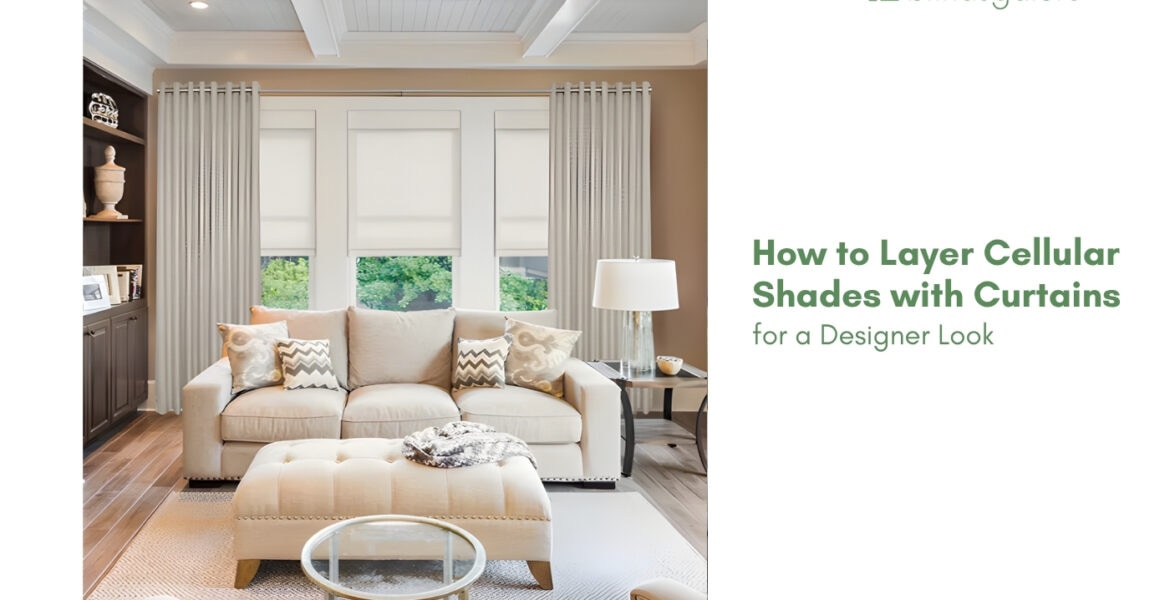
Layered window treatments create depth, texture, and flexibility that a single treatment simply cannot match. Pairing cellular shades with curtains gives any room the polished, intentional feel of a professionally designed space, while adding real benefits like improved insulation and better light control.
Why Layering Works
Cellular shades handle the functional heavy lifting. The honeycomb construction traps air between the window and the room, insulating against heat and cold, softening incoming light, and providing daytime privacy. Curtains bring the finishing touch. Fabric panels frame the window, soften hard edges, and introduce color, pattern, or texture into the space.
Together, the two layers give complete control over a room’s atmosphere. Open the curtains wide and raise the shades for full sunlight. Lower the shades while keeping the curtains open for diffused light and privacy. Close everything at night for near-blackout conditions and maximum energy efficiency.
Choosing the Right Cellular Shade
For layering, a clean, neutral honeycomb shade works best as the base layer. The shade sits closest to the glass and does the heavy lifting on light control and insulation. Ornate patterns or bold colors can clash with certain fabrics, so simpler is usually the smarter move.
Light-filtering cellular shades soften harsh sunlight without blocking the view entirely, making them a strong fit for living rooms and dining areas. For more on styling those spaces, check out 4 Living Room Window Treatment Ideas.
Bedrooms and media rooms call for something darker. Blackout cellular shades block nearly all light penetration, creating ideal sleep and screen-viewing conditions. Paired with curtains, the light-blocking capability gets even stronger.
Budget-friendly layering projects do well with cordless light-filtering cellular shades, which deliver double-cell insulation at an entry-level price point. Cordless operation also keeps the window neat and child-safe, an important consideration since corded window coverings were banned for sale in the U.S. as of June 1, 2024.
Choosing the Right Curtains
Curtain style sets the room’s personality. Heavier fabrics like velvet or lined linen add formality and an extra layer of thermal protection. Lighter fabrics like cotton or sheer linen keep things relaxed and airy.
Grommet curtain panels glide smoothly on decorative rods using metal grommet rings available in Black, Brass, Pewter, or Silver. All panels except sheers come standard with light-filtering liners, and a blackout liner upgrade is available. The white street-facing backing maintains exterior uniformity for homes with HOA requirements.
For a more tailored look, pinch pleat curtain panels offer classic elegance with structured folds at the top.
Want something more modern? Back tab curtain panels hide the curtain rod completely for a streamlined appearance. A loop of fabric sewn to the back conceals the hardware while creating a relaxed, flowing drape.
For a broader look at curtain options, see Modern Window Curtains for Your Living Room.
Step-by-Step Layering Guide
Step 1: Measure Carefully
Accurate measurements keep both layers looking sharp. For the cellular shade, measure the window opening for an inside mount or the total area you want covered for an outside mount. For curtains, measure from the rod placement down to the desired length. Curtains should either kiss the floor or puddle just slightly for that designer effect. For detailed measurement guidance, visit our measuring guide.
Step 2: Install the Cellular Shade First
Mount the cellular shade inside the window frame or just outside it, depending on preference and window depth. Inside mounts create a clean, built-in look. Outside mounts cover more of the frame and reduce light gaps around the edges.
Step 3: Position the Curtain Rod
Install the curtain rod at least 4 inches above the window frame and extend it at least 4 inches beyond each side. Mounting higher makes the window appear taller. Extending wider allows curtains to stack off the glass when open, maximizing light and the view.
Step 4: Hang the Curtain Panels
Hang one panel on each side of the window. For a fuller look, choose panels wider than the window opening to create soft, generous folds when closed. Single-width panels work well for a tailored, minimal appearance.
Color and Fabric Coordination
Matching cellular shades and curtains does not mean matching them exactly. Complementary tones work better than identical ones. A warm white cellular shade pairs naturally with cream, taupe, or soft gray curtains. A cooler white shade works with blue-gray, charcoal, or crisp white panels.
Fabric weight matters too. A light-filtering shade under heavy velvet curtains creates a formal, layered effect. A blackout shade under sheer linen curtains allows the sheers to diffuse light during the day, while the shade blocks light completely at night.
One common mistake to avoid: pairing heavily textured shades with heavily patterned curtains. One layer should be the quiet supporting player while the other carries the visual interest. For more on choosing treatments that complement your space, check out The Ultimate Guide to Window Treatments.
Motorization Makes Layering Easier
Operating two layers of window treatments can feel like a lot of reaching and pulling. Motorized cellular shades solve that completely. Raise or lower the shade with a remote, smartphone app, or voice command through Alexa, Google Home, or Samsung SmartThings via the Connector Smart Hub. Pair motorized shades with automated curtain tracks for a fully hands-free setup.
Room-by-Room Pairing Ideas
- Bedroom: Blackout cellular shades with heavy, lined drapes for near-total darkness and sound absorption. Choose complementary colors rather than exact matches for a more sophisticated look.
- Living room: Light-filtering cellular shades with sheer or semi-sheer curtains for an airy, welcoming feel that keeps the space bright while maintaining daytime privacy.
- Dining room: Neutral cellular shades with patterned or textured curtains to add personality without overwhelming the table and decor.
FAQs
Yes. Any cellular shade works for layering. Neutral colors and simple textures pair most easily with a wide range of curtain fabrics.
Absolutely. Two layers provide significantly more light-blocking capability than one. A blackout cellular shade under blackout-lined curtains creates near-total darkness.
Curtains typically carry the decorative weight. The cellular shade handles insulation and light control, while the curtain fabric introduces color, pattern, and texture.
Layering improves insulation noticeably. The air pockets in cellular shades reduce heat transfer, and curtain fabric adds another barrier against drafts. According to the U.S. Department of Energy, cellular shades can reduce heat loss through windows by up to 40% or more.