
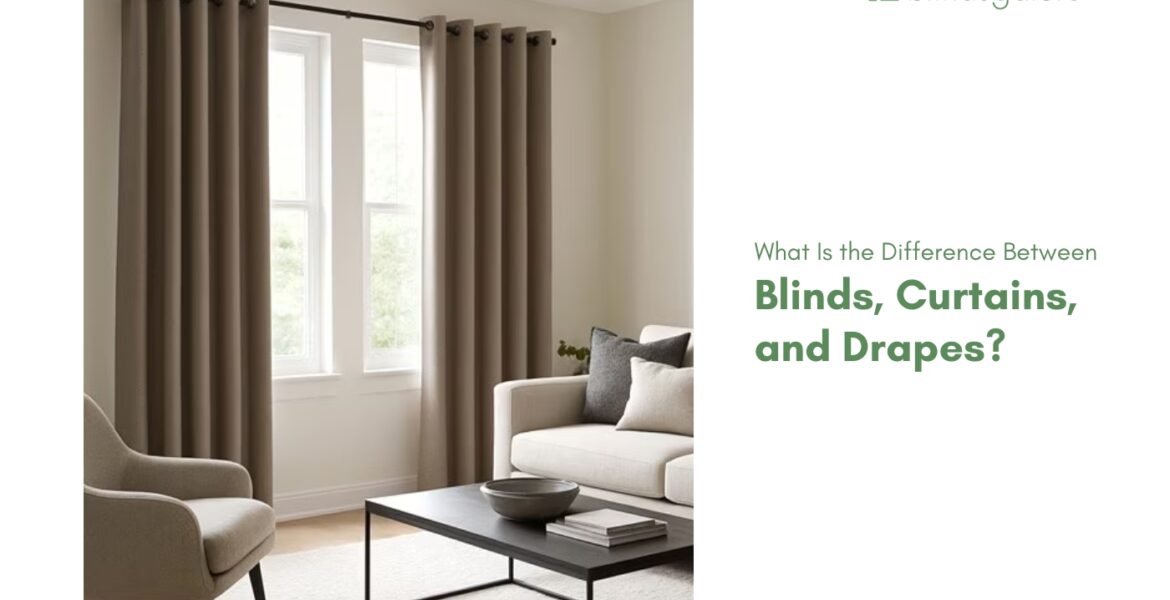
Blinds, curtains, and drapes are three different types of window treatment that get mixed up constantly. The confusion is understandable, since all three cover a window and all three control light and privacy. The difference between blinds, curtains, and drapes comes down to what each one is made of, how each one operates, and which rooms each one suits best.
What are blinds?
Blinds are window treatments made from hard materials like wood, faux wood, aluminum, or vinyl. The defining feature is horizontal or vertical slats that tilt to control light and lift to clear the window entirely. Tilting the slats adjusts how much light enters the room, and closing them fully provides solid privacy. Window blinds come in a range of materials and slat widths, from slim one-inch aluminum to wide two-inch faux wood.
Blinds are the most practical choice for rooms where moisture resistance, easy cleaning, and precise light control matter. Kitchens, bathrooms, home offices, and rental properties all suit blinds well. The hard slats wipe clean with a damp cloth, resist humidity, and hold up to daily use without fading or sagging. The guide on Hello Sunshine, Goodbye Glare covers how the tilt function handles glare through different times of day.
What are curtains?
Curtains are fabric panels that hang from a rod above the window. The fabric is usually lightweight, like cotton, linen, polyester, or a sheer weave, and the panels pull open and closed across the rod. Curtains soften a room visually, add color and texture, and provide privacy when closed. Sheer curtains filter light gently without blocking it, while opaque curtains block more light and offer stronger privacy.
Curtains work best in living rooms, dining rooms, and bedrooms where warmth, softness, and design matter more than precise light control. Lighter fabrics let the room breathe during the day, while heavier lined curtains can darken a bedroom at night. The guide on Dual Sheer Shades explores how sheer fabrics layer with opaque ones for flexible light management.
What are drapes?
Drapes are fabric panels made from heavier, often lined material. The key difference between drapes and curtains is weight, length, and formality. Drapes typically extend from near the ceiling all the way to the floor, creating a full, luxurious frame around the window. The heavier fabric blocks more light, absorbs more sound, and provides better insulation than a lightweight curtain.
Custom drapery suits formal living rooms, dining rooms, primary bedrooms, and any room where the window treatment is a design statement. Drapes layer beautifully over blinds or shades, with the hard treatment handling light control and the drapery adding softness, height, and texture. A valance or cornice can finish the top of the window when drapes are paired with a functional shade underneath.
How do blinds, curtains, and drapes compare?
The three differ across five key areas, and knowing which one wins where makes the choice simpler.
Light control
Blinds offer the most precise light control because the slats tilt to any angle. Drapes block the most light when closed, especially with a blackout lining. Curtains in sheer or light fabric provide the least light control but the softest, most natural glow.
Privacy
Blinds provide strong privacy when the slats are fully closed, though thin slats can show silhouettes at night. Drapes provide the strongest visual privacy because the heavy, lined fabric blocks sightlines completely. Sheer curtains offer partial privacy during the day but are transparent at night when the room is lit.
Maintenance
Blinds are the easiest to maintain, requiring only a quick wipe or dusting. Curtains and drapes require more care, with lighter fabrics needing occasional machine washing and heavier drapes often requiring professional dry cleaning. For more on treatment care, the guide on How Long Do Custom Blinds Last covers what extends the life of each type.
Style and room feel
Blinds give a clean, structured, practical look. Curtains give a soft, casual, airy feel. Drapes give a formal, layered, luxurious finish. Each suits a different room personality.
Moisture resistance
Blinds, especially faux wood and aluminum, handle humidity without damage. Curtains and drapes are fabric, so they absorb moisture and are not recommended for bathrooms or kitchens unless moisture-resistant fabric is used. For the full range of blind materials that handle humid rooms, the window shades collection covers moisture-safe options.
Can you mix blinds, curtains, and drapes?
Absolutely. Layering is one of the strongest design moves in window treatments. Pairing blinds or shades with curtains or drapes gives you the best of both: the precise light control and privacy of a hard treatment with the softness, warmth, and visual impact of fabric.
A faux wood blind behind a sheer curtain gives a living room both function and beauty. A blackout roller shade behind floor-length drapery gives a bedroom both darkness and design. Mixing treatments across different rooms is equally effective, with blinds in the kitchen and drapery in the dining room creating contrast that feels intentional rather than mismatched. The Ultimate Guide to Window Treatments walks through how to layer and mix across a whole home, and the guide on Window Treatments for New Construction covers planning all three from the start.
The right treatment for each room
Blinds, curtains, and drapes each do different things well, and the best homes use all three where each one belongs. All Blindsgalore brand treatments are custom-built to order and backed by a 3-year limited warranty upgradeable to five years.
Order free samples to feel the materials side by side, and call the in-house experts at (877) 702-5463 to plan the right combination for each room.
Frequently asked questions
Blinds are made from hard materials (wood, faux wood, aluminum) with slats that tilt for precise light control. Curtains are fabric panels hung from a rod that pull open and closed. Blinds suit practical rooms, while curtains add softness and design.
Drapes use heavier, often lined fabric and typically extend from ceiling to floor for a formal look. Curtains use lighter fabric and hang at various lengths for a more casual feel. Drapes block more light and insulate better.
Neither is universally better. Blinds are better for moisture resistance, easy cleaning, and precise light control. Curtains are better for softness, color, and creating a warm, layered feel in design-forward rooms.
Yes. Layering curtains or drapes over blinds is one of the most effective design approaches, combining the light control and privacy of blinds with the warmth and visual impact of fabric.
Drapes with a blackout lining or layered drapes over a blackout shade are the strongest bedroom combination, providing total darkness, sound absorption, and a warm, cozy feel.
Blindsgalore brand treatments carry a 3-year limited warranty with an upgrade to a 5-year warranty, covering defects in materials and workmanship when properly installed. Boutique products include a 5-year extended warranty. Fading is not covered.