
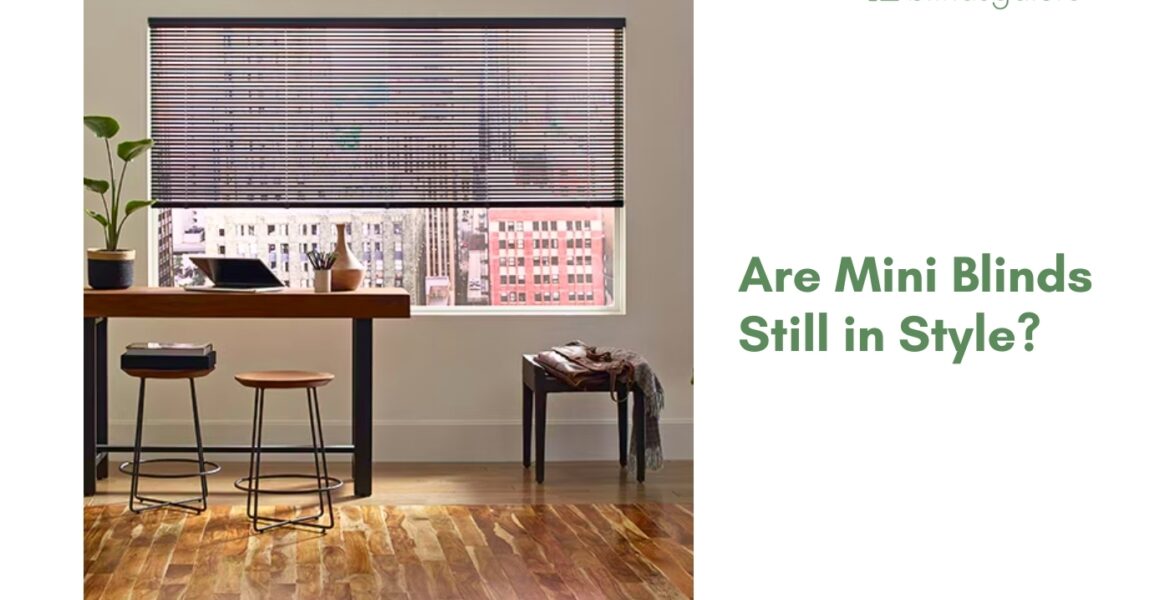
Mini blinds are still in style, but the version most people picture when they ask the question is not. The shiny, corded, generic aluminum blinds that came standard in rental apartments and starter homes for decades do look dated. Modern mini blinds, with cordless lifts, matte and brushed finishes, and routeless slat designs, look completely different and fit cleanly into rooms that value simplicity and function.
What makes modern mini blinds different?
The mini blinds trend in 2026 is driven by three updates that separate modern options from the old versions.
Cordless and routeless designs
Modern mini blinds use cordless lift systems that remove the dangling cords entirely, which is safer for homes with children and pets and visually cleaner than the old cord-and-wand setup. The U.S. Consumer Product Safety Commission recommends cordless window coverings in any home where small children live or visit, and cordless mini blinds meet that standard without adding cost or complexity.
Routeless slats eliminate the visible cord holes punched through each slat, which means tighter closure, better light control, and a smoother look when the blinds are lowered. The combination of cordless and routeless gives the blind a streamlined appearance that reads as intentional rather than builder-grade.
Updated finishes and colors
Old mini blinds came in a handful of whites and silvers. Modern options span matte finishes, brushed metals, warm neutrals, and even bolder tones that work as a design accent. The Luxera aluminum blinds bring a refined metallic finish with a premium feel, while the 2-inch aluminum blinds offer a wider slat that gives a more substantial, contemporary look on larger windows.
Slim profile for minimal rooms
Mini blinds naturally suit minimalist and modern rooms because the slim slats take up almost no visual space. When the blinds are raised, they stack tightly at the top and nearly disappear. When lowered, they provide precise light control through the tilt of the slats. For rooms going for a clean, uncluttered feel, that slim profile is a feature, not a limitation. The guide on Hello Sunshine, Goodbye Glare covers more ways to control light while keeping a room feeling open and bright.
Where are mini blinds still the right choice?
Mini blinds work best in rooms where function, moisture resistance, and budget matter more than decorative warmth.
Kitchens and bathrooms suit mini blinds well because vinyl and aluminum are completely moisture-proof and wipe clean in seconds. Vinyl mini blinds handle daily steam and splashes without warping, which makes them the practical pick for any room with water. The slim slats also allow good airflow near stoves and sinks, which heavier treatments like Roman shades and drapery can complicate.
Home offices and spare bedrooms benefit from the precise light control that tilting slats provide. Angling the slats lets soft daylight in while cutting screen glare, and the slim profile keeps the window looking clean without competing with the rest of the room. For seasonal style ideas that pair mini blinds with layered soft furnishings, the Spring Fling feature shows how simple window treatments anchor a fresh, light-filled room.
Rental properties and multi-window projects are where mini blinds shine on budget, since covering many windows at a low per-window cost adds up quickly. The guide on the Best Blinds for Airbnb and Vacation Rentals shows how mini blinds fit into a practical whole-property plan.
How to make mini blinds look current
A few simple choices separate modern mini blinds from the dated versions that give the category a bad name.
Choose a cordless, routeless model in a matte or brushed finish rather than a shiny silver or basic white. The finish alone changes the entire feel. Match the blind color to the window trim or wall color so the treatment blends into the room rather than standing out as a separate element. On larger windows, consider the wider 2-inch slat over the standard 1-inch, since the wider slat gives the blind a more substantial, contemporary proportion.
Layering also helps. Pairing inside-mounted mini blinds with floor-length sheer curtains adds softness and movement that the blinds alone cannot provide. The blinds handle light control and privacy while the sheers handle warmth and texture. The combination reads as designed rather than default, which is the entire difference between a mini blind that looks current and one that looks like a leftover from a previous tenant.
When should you consider an upgrade?
Mini blinds are not the right fit for every room, and knowing when to step up matters as much as knowing where they work.
Living rooms and primary bedrooms where visual warmth and a designed feel matter are better served by wider-slat options like faux wood blinds, which deliver the same slatted control in a richer, more substantial finish. The wider slat adds visual weight that thin aluminum simply cannot match, and the textured wood-grain finish warms a room in a way that metal does not.
Rooms that need insulation or true blackout are better served by cellular shades or roller shades, which insulate and block light in ways that thin aluminum slats cannot. A mini blind provides adjustable tilt, but it does not trap air or block light at the edges the way a honeycomb pocket or a dense roller fabric does. For a broader look at how mini blinds, faux wood, and other treatments work together across a whole home, the Ultimate Guide to Window Treatments covers every category.
Mixing mini blinds with other treatments in the same home is a practical approach, not a compromise. Mini blinds in the kitchen and bathrooms, faux wood in the living room and primary bedroom, and roller shades in the home office create a curated mix that puts the right treatment where it belongs. The guide on How Long Do Custom Blinds Last covers how each material holds up over time.
Mini blinds in 2026: simple, modern, still relevant
Mini blinds are not outdated when chosen with intention. Cordless, routeless, and finished in current tones, modern mini blinds suit minimal rooms, practical spaces, and budget-conscious projects beautifully. The old rental-grade version is out of style. The modern version is not. The difference between dated and current is the same three things it always is: the finish, the hardware, and the thought behind the choice.
Order free samples to see the finish and feel in your own light, and call the in-house experts at (877) 702-5463 to find the right mini blind for each window. All Blindsgalore brand mini blinds are custom-built to order and backed by a 3-year limited warranty upgradeable to five years.
Old-style corded aluminum mini blinds look dated. Modern mini blinds with cordless lifts, routeless slats, and updated finishes like matte or brushed metal fit cleanly into contemporary and minimalist rooms.
The trend is toward cordless, routeless mini blinds in matte and brushed finishes that blend quietly into the room rather than standing out as a builder-grade default. Wider slats and refined metallic tones are popular updates.
Yes. Vinyl and aluminum mini blinds are completely moisture-proof and wipe clean easily, making them a practical choice for any room with daily steam, splashes, or humidity.
Faux wood blinds offer a similar slatted look with wider, richer slats that add visual warmth. Roller shades provide a clean modern alternative with better insulation and light control. Cellular shades add the best energy efficiency.
Absolutely. Putting mini blinds in practical rooms like kitchens and bathrooms while using faux wood or roller shades in living rooms and bedrooms is a common and effective approach that puts the right treatment where it belongs.
Blindsgalore brand mini blinds carry a 3-year limited warranty with an upgrade to a 5-year warranty, covering defects in materials and workmanship when properly installed. Boutique products include a 5-year extended warranty. Fading is not covered.