
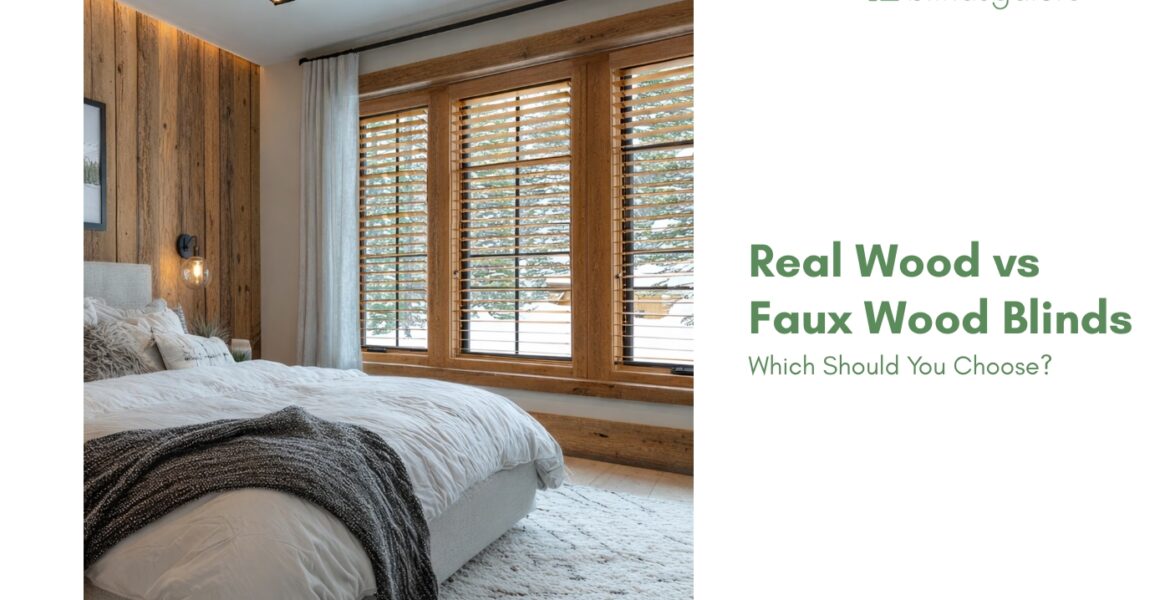
Real wood blinds and faux wood blinds share the same slatted design, the same tilt-and-lift operation, and at first glance, a remarkably similar look. The difference is the material underneath, and that material shapes everything from where the blind can go to how long it lasts and what it costs. Real wood brings natural grain, warmth, and a luxury feel that no composite can fully replicate. Faux wood brings moisture resistance, lower cost, and a durability that real wood cannot match in certain rooms.
Choosing between real wood vs faux wood blinds comes down to the room, the climate inside that room, and how much the natural character of hardwood matters to the owner. Here is the honest comparison.
What is the difference between real wood and faux wood blinds?
Both types use horizontal slats, typically two inches or wider, mounted on a headrail with a tilt mechanism for light control and a lift system for raising and lowering. The material is where they split.
Real wood blinds
Real wood blinds are made from solid hardwood, usually basswood or a similar lightweight species. The natural grain gives each slat a warmth and depth that varies slightly from one blind to the next, which is part of the appeal. The Signature wood blinds showcase that natural character in a range of stains, while the Premium wood blinds add a refined grain and a broader palette. Real wood blinds are lighter in weight than faux wood, which makes them easier to raise and lower on larger windows.
The trade-offs are real:
- Swells and warps in humid conditions
- Sensitive to prolonged UV exposure
- Requires more careful cleaning than composite materials. For a closer look at how natural materials compare across blind types, the guide on Bamboo vs Wood Blinds covers the same trade-offs in a different category.
Faux wood blinds
Faux wood blinds are made from composite material, PVC, or a polymer blend engineered to mimic the look and feel of wood. The finish is smooth, uniform, and completely moisture-proof. The Cordless faux wood blinds deliver that composite durability with a cord-free lift for a clean, safe profile, while the Blindsgalore faux wood blinds cover the widest range of colors and finishes.
Faux wood slats are heavier than real wood, which can make larger blinds harder to raise. The finish is more uniform than natural grain, which some homeowners prefer, and others find less characterful. For a broader look at how faux wood performs against other materials, the Ultimate Guide to Window Treatments covers every category.
Where does each material belong?
The room decides the material more than personal preference does.
Rooms that need faux wood
Kitchens, bathrooms, laundry rooms, and any space with daily steam, humidity, or splashing water should always get faux wood blinds. Real wood will eventually warp, crack, or discolor in these conditions, while faux wood handles moisture indefinitely without damage. For rental properties covering multiple rooms at once, faux wood keeps the cost manageable without sacrificing appearance. The guide on the Best Blinds for Airbnb and Vacation Rentals covers how faux wood fits multi-property planning.
Rooms where real wood shines
Living rooms, dining rooms, home offices, and primary bedrooms in dry climates are where real wood earns its premium. The natural grain adds warmth and character that faux wood comes close to but cannot fully match, and the lighter weight makes daily operation smoother on larger windows. Rooms with existing hardwood furniture, wood floors, or natural stone pair beautifully with real wood blinds because the materials speak the same design language.
Mixing both in the same home
Using real wood in the rooms that shape how the home feels and faux wood in the rooms that take the most environmental wear is the most practical and common approach. A real wood blind in the living room and a faux wood blind in the kitchen next door is not a compromise. The look is close enough that guests will not notice the difference, and each room gets the material that suits its conditions.
How do they compare on durability and care?
Real wood blinds last for many years in dry rooms with minimal direct UV exposure. Periodic dusting and occasional cleaning with a dry or slightly damp cloth keep the finish looking sharp. Avoid water, especially standing moisture, which can stain or warp the wood. For more on treatment longevity, the guide on How Long Do Custom Blinds Last covers what affects lifespan.
Faux wood blinds require almost no maintenance. A damp cloth and a quick wipe will remove most dust and grime, and the composite finish resists UV fading, moisture, and scratching. Faux wood holds its shape and appearance for years even in rooms with daily humidity exposure, which is why it outsells real wood in the overall blinds market.
The honest verdict
Real wood blinds are the better choice when natural grain, warmth, and the character of real hardwood matter, and when the room is dry and climate-controlled. Faux wood blinds are the better choice for every humid room, for budget-conscious multi-room projects, and for any room where low maintenance is the priority. Neither is universally better, and the smartest approach is often to use both where each one belongs.
All Blindsgalore brand blinds are 100% custom, handcrafted to order, and backed by a 3-year limited warranty upgradeable to five years. The guide on Hello Sunshine, Goodbye Glare covers how both materials handle light and sun exposure. Order free samples to feel both materials side by side in your own light, and call the in-house experts at (877) 702-5463 for help matching the right material to each room.
Frequently asked questions
Real wood blinds are made from solid hardwood with natural grain variation. Faux wood blinds are made from composite or PVC material engineered to mimic wood. Faux wood resists moisture and costs less, while real wood offers natural warmth and lighter weight.
For humid rooms, budgets, and low maintenance, faux wood is the practical choice. For dry rooms where natural grain and warmth matter, real wood delivers a character that faux wood cannot fully replicate. The best approach is often to use both in the same home.
Real wood blinds are not recommended for bathrooms because humidity and steam cause the wood to swell, warp, and discolor over time. Faux wood blinds are fully moisture-resistant and are the right choice for any high-humidity room.
Modern faux wood finishes mimic wood grain convincingly, and most people cannot tell the difference from across a room. The main visual difference is that faux wood has a more uniform finish, while real wood shows natural grain variation.
No, the opposite. Real wood blinds are lighter than faux wood because solid hardwood weighs less than composite material. The lighter weight makes real wood easier to raise and lower on larger windows.
Blindsgalore brand blinds carry a 3-year limited warranty with a free upgrade to a 5-year warranty, covering defects in materials and workmanship when properly installed. Boutique products include a free 5-year extended warranty. Fading is not covered.