
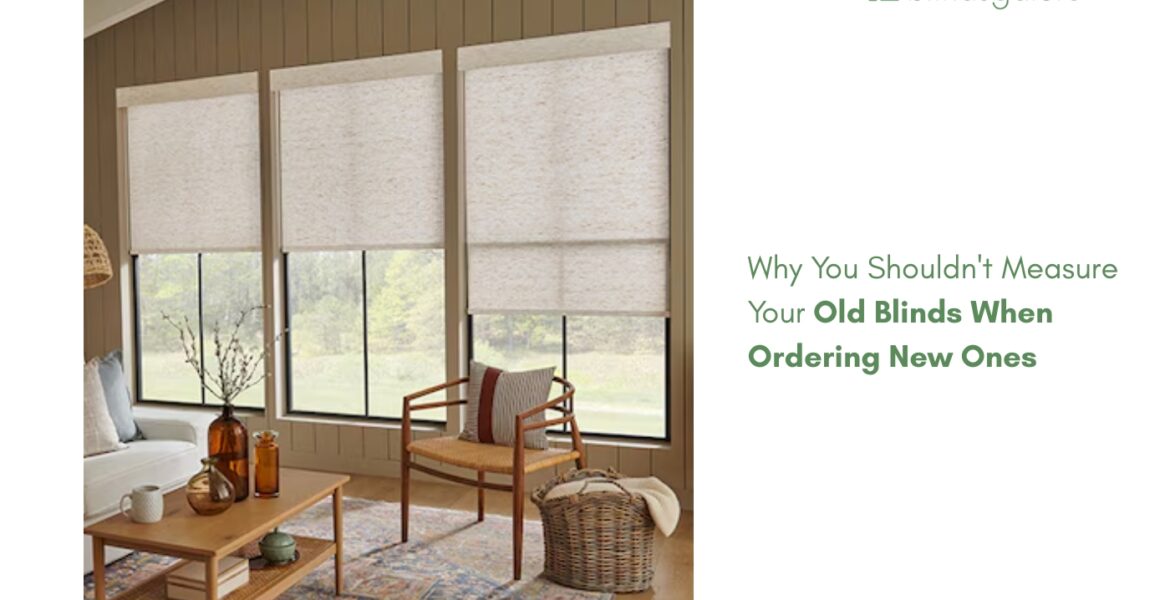
When replacing blinds, the temptation to measure the old ones instead of the window is completely understandable. The old blind is right there, already sized to the opening. Measuring it feels faster and more reliable than climbing a ladder with a tape measure.
The problem is that every custom blind manufacturer may apply factory deductions to the ordered measurements, and those deductions vary by product, mounting hardware, and brand. Measuring your old blinds gives you a number that has already been altered once, and ordering from that number compounds the error.
What are factory deductions and why do they matter?
When you order a custom blind and submit the window’s exact measurements, the factory may make a small width deduction to ensure the blind fits properly within your window frame. A small amount, usually a fraction of an inch, is subtracted from the width to ensure the blind fits inside the window frame without scraping the sides. The deduction amount depends on the mounting hardware type, the product style, and the manufacturer.
The issue is that different products use different deductions. A faux wood blind from one brand might subtract 3/8 of an inch, while a roller shade from another subtracts 1/4. If you measure your old blind and order a new product using that already-deducted number, the factory applies its own deduction on top, and the new blind arrives narrower than it should be. The result is visible light gaps on both sides that the old blind never had.
Measuring the window itself, not the old blind, gives the factory the raw number it needs to apply the correct deduction for the specific product you are ordering. For step-by-step guidance, the measuring guide walks through every window type.
What other problems come from measuring old blinds?
Factory deductions are the most common reason, but they are not the only one. Three other issues make old blind measurements unreliable.
The old blind may never have fit correctly
Not every blind was measured properly when it was first installed. Builder-grade blinds in new homes are often cut from standard sizes rather than custom-measured, which means the old blind may have been slightly too narrow or too wide from the start. Measuring a blind that never fit correctly passes that original error forward. The guide on Window Treatments for New Construction covers how to plan measurements properly for a new or recently built home.
Windows change shape over time
Houses settle. Window frames shift, swell, and shrink with seasonal temperature and humidity changes. A window that measured 36 inches wide five years ago may measure 35 7/8 today. The difference is small but real, and it is enough to affect the fit of a custom blind. Measuring the window now gives you the dimensions as they are today, not as they were when the old blind was installed.
You may be switching product types
Replacing a faux wood blind with a roller shade, or a mini blind with a cellular shade, changes everything about how the treatment mounts and how much clearance it needs. Each product type has its own headrail depth, bracket style, and minimum mounting requirements. A faux wood blind mounts differently than a roller shade, which mounts differently than a cellular shade. The old blind’s dimensions only apply to the old blind’s specific product. Ordering a different type from those measurements is a mismatch by design.
How to measure your windows correctly
Measuring a window for custom blinds takes about five minutes per window and requires only a steel tape measure, a pencil, and a notepad. The process is simple but the precision matters.
Inside mount
An inside-mounted blind sits inside the window frame. Measure the width at three points: top, middle, and bottom of the opening. Record the narrowest measurement to the nearest 1/8 inch. Measure the height at three points: left, center, and right. Record the tallest measurement. Submit the exact measurements you recorded without rounding up or down, and without taking any deductions yourself. The factory handles the deductions based on the specific product ordered.
Outside mount
An outside-mounted blind sits on the wall above and around the window frame. Measure the area you want the blind to cover, including the overlap past the frame on each side (typically 1.5 to 2 inches on each side for light coverage, more for full blackout). Submit the exact measurements of the total area you want covered. The factory builds the blind to those exact dimensions with no deductions.
Three rules that prevent mistakes
- Measure every window individually, even if they look identical. Variations of fractions of an inch show up once the blind is installed.
- Use a steel tape measure, not a cloth or flexible tape. Flexible tapes stretch and introduce error.
- Never round to the nearest half inch. Record the exact measurement to the nearest 1/8 inch. For a broader overview of how different blind types are measured, the Ultimate Guide to Window Treatments covers sizing considerations across every category.
What if you are not confident measuring yourself?
Over 99% of Blindsgalore customers measure and install their own window treatments, and the measuring guide makes the process straightforward even for first-timers. For tricky windows, unusual shapes, or anyone who wants a second opinion before ordering, the in-house experts at (877) 702-5463 can walk through the measurement over the phone and confirm the numbers before the order goes in. The Ask the Expert page connects you with guidance specific to the product and the window. For how long a properly fitted custom blind lasts once installed, the guide on How Long Do Custom Blinds Last covers what to expect.
Measure the window, not the blind
The shortcut of measuring old blinds costs more time and money than it saves. Factory deductions, settling frames, and product-type changes all mean the old number is the wrong number for the new order. Measuring the window itself takes five minutes, and it is the only way to get a custom blind that fits the way it should.
All Blindsgalore brand treatments are 100% custom, handcrafted to order, and backed by a 3-year limited warranty upgradeable to five years. Order free samples to see the fabric and finish before committing, and call (877) 702-5463 with any measuring questions.
Frequently asked questions
No. Old blind measurements include factory deductions specific to that product. Ordering a new blind from an already-deducted number results in a shade that is too narrow, with visible light gaps on both sides.
Factory deductions are small width reductions applied by the manufacturer to ensure the blind fits inside the window frame without scraping. The deduction amount varies by product type, hardware, and brand.
Measure the window opening itself at three points for width and three for height. Record the narrowest width and tallest height to the nearest 1/8 inch. Submit exact measurements without rounding or taking your own deductions.
Yes. Even windows that look identical can differ by fractions of an inch. Measuring each window individually ensures every blind fits precisely.
Always use a steel tape measure. Cloth and flexible tapes stretch over distance and introduce measurement error that can result in a poorly fitting blind.
Blindsgalore brand blinds carry a 3-year limited warranty with a free upgrade to a 5-year warranty, covering defects in materials and workmanship when properly installed. Boutique products include a free 5-year extended warranty. Fading is not covered.