
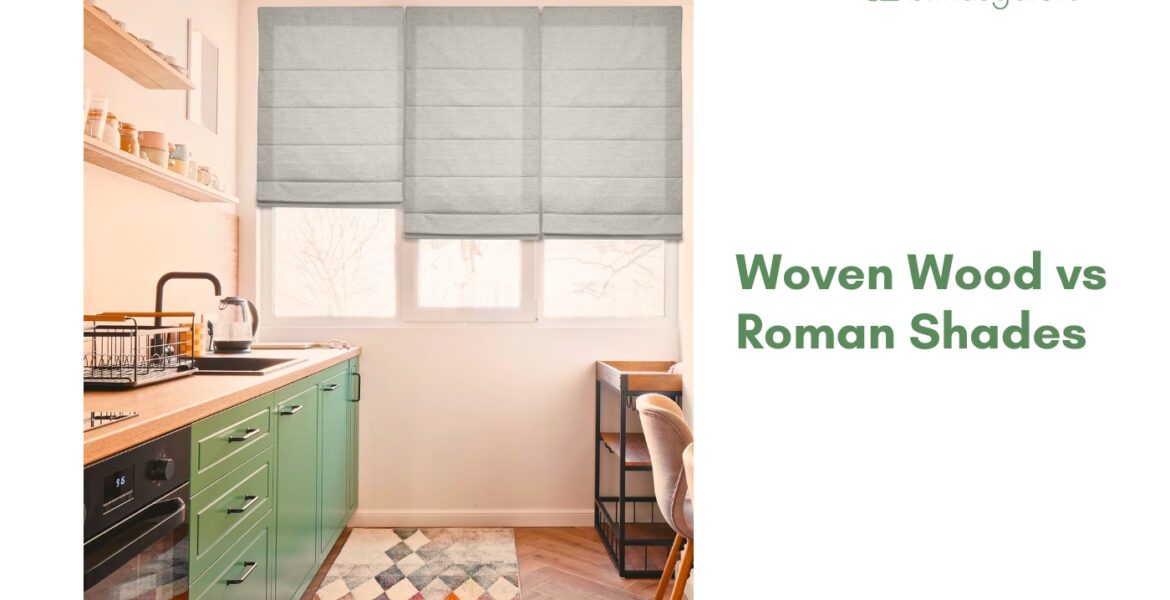
Woven wood shades and Roman shades both cover the same window and both raise and lower the same way. The difference is the feeling each one brings into the room. Woven wood shades bring organic texture, dappled light, and a relaxed, natural warmth.
shades bring tailored fabric, a polished finish, and precise light control. Choosing between woven wood shades vs roman shades is less about which is objectively better and more about which one matches how you want the room to feel.
What is the difference between woven wood and roman shades?
Both are soft window treatments that fold or roll up when raised. The material and the finish are where they split.
Woven wood shades
Woven wood shades are made from natural fibers like bamboo, jute, reeds, and grasses, woven into panels that bring raw, handcrafted texture to the window. The weave lets light filter through in a warm, dappled glow rather than blocking it outright. The Classi natural woven shades showcase that organic character in earthy tones, while the Luxera natural woven shades add a refined weave and premium finish. The look suits coastal, bohemian, farmhouse, and modern-organic rooms beautifully.
Because the materials are natural, no two panels look identical, and slight variation in tone and weave is part of the appeal. The texture adds depth to a room in a way that smooth fabric simply cannot, which is why woven wood shades pair so well with minimalist and neutral spaces that need warmth without adding color. For a closer comparison of natural materials across blinds, the guide on Bamboo vs Wood Blinds explores how different natural fibers perform. For seasonal design inspiration that shows woven textures in action, the Spring Fling feature captures the look beautifully.
Roman shades
Roman shades are made from fabric, usually cotton, linen, polyester, or a blend, and they fold into clean horizontal pleats when raised. The result is a polished, tailored look that sits closer to drapery than to a natural shade. Flat-fold, relaxed, and hobbled styles each give the pleats a different character, so even within the category there is room for personality. The Classic Roman shades deliver that smooth fabric finish across a wide color range, while the Luxera Roman shades elevate the fabric quality and construction for a premium feel. Roman shades suit traditional, transitional, and design-forward rooms where the window treatment should look intentional and refined.
Fabric means more options for liners. A privacy liner adds opacity, and a blackout liner turns any Roman shade into a true blackout treatment, which is something woven wood cannot match without modification.
How does light control compare?
Light control is one of the biggest differences between natural woven shades vs fabric roman shades, and it shapes which rooms each one suits.
Woven wood shades filter light through the natural weave, creating a soft, sun-warmed glow. The effect is beautiful in living rooms, dining rooms, and kitchens where you want daylight without glare. Unlined, they do not block light fully, and small gaps in the weave mean privacy is partial, not complete. Adding a privacy or blackout liner solves both, but the point of woven wood is usually the filtered light itself.
Roman shades, by contrast, control light based entirely on the fabric and liner chosen. A sheer fabric softens light gently. A room-darkening fabric dims it. A blackout liner eliminates it. For bedrooms, nurseries, and media rooms where darkness matters, Roman shades deliver more precise control. The guide on Hello Sunshine, Goodbye Glare covers how to manage light across different room types.
Which rooms suit each shade?
The room’s purpose and mood guide this choice more than anything else.
Woven wood shades work best in rooms that want a relaxed, natural atmosphere. Living rooms with neutral palettes, dining rooms with wood furniture, sunrooms, and entryways all benefit from the organic warmth and texture. The woven wood shades collection covers a range of weaves and tones to match different wood and stone finishes. One caution: natural fibers are affected by moisture and high humidity, so kitchens, bathrooms, and laundry rooms are not ideal placements for unlined woven wood.
Roman shades work best in rooms that want a polished, composed feel. Bedrooms, home offices, formal living rooms, and guest rooms all suit the tailored fabric finish. With a liner, Roman shades handle privacy and blackout demands that woven wood cannot match alone. For rooms that need both style and function at the highest level, Roman shades are the more versatile choice. The Ultimate Guide to Window Treatments shows how both fit into a layered, whole-home approach.
Can you use both in the same home?
Absolutely. Mixing woven wood and Roman shades across different rooms is one of the most common and effective approaches. Woven wood in the living room and dining room for warmth and texture, Roman in the bedrooms and home office for tailored control, and a coordinated tone between the two that ties the home together. The two complement each other rather than competing, because they serve different moods in different spaces. A home that uses the same treatment on every window can feel one-note, while mixing natural and fabric shades creates visual rhythm from room to room.
The key is consistency in tone. Choosing a woven wood shade and a Roman shade in the same color family keeps the home feeling connected even when the treatments differ room to room. The guide on How Long Do Custom Blinds Last covers lifespan across materials so you can plan the investment with both types in mind.
The shade that matches how you want to feel
Woven wood shades bring the outdoors in, with organic texture, filtered light, and a handmade warmth that suits relaxed, nature-forward rooms. Roman shades bring tailored fabric, precise light control, and a polished finish that suits composed, design-driven spaces. Neither is better in the abstract. The better shade is the one that matches the room it hangs in and the life that happens around it. Both are custom-built to the exact measurements of the window and backed by a 3-year limited warranty upgradeable to five years.
Order free samples to see the weave and the fabric side by side in your own light, and call the in-house experts at (877) 702-5463 for help matching each room to the right shade.
Love your view.
Woven wood shades suit a living room that wants warmth, texture, and filtered light. Roman shades suit a living room that wants a more tailored, polished look with stronger light control. Both work well, and the choice depends on the room’s design personality.
Unlined woven wood shades filter light rather than blocking it, creating a soft, sun-warmed glow. Adding a privacy or blackout liner provides more coverage, but the natural weave still allows some light at the edges.
Yes, by adding a blackout liner behind the woven panel. The liner blocks light while the woven wood faces the room. For true edge-to-edge blackout, Roman shades with a blackout liner provide a tighter seal.
Woven wood shades are not recommended for bathrooms because natural fibers are affected by moisture and high humidity. Roman shades or cellular shades with moisture-resistant fabrics are better options for humid rooms.
Pricing depends on the size, fabric, and liner chosen, so neither is categorically more expensive. Woven wood shades and Roman shades both range across multiple price tiers, and ordering samples helps compare the feel and finish before committing.
Blindsgalore brand shades carry a 3-year limited warranty with an upgrade to a 5-year warranty, covering defects in materials and workmanship when properly installed. Boutique products include a 5-year extended warranty. Fading is not covered.