
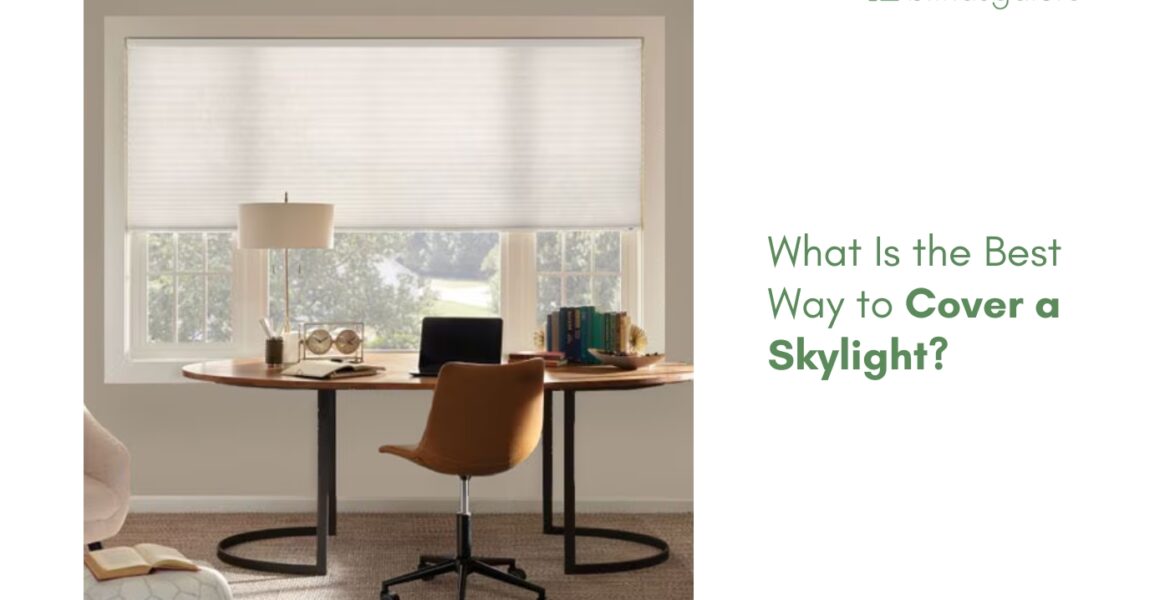
The best way to cover a skylight is with a custom cellular or roller shade built to stay in place on an angled or horizontal window.
Skylights bring beautiful natural light into a room, but without the right covering, that same light brings heat gain in summer, heat loss in winter, glare on screens, and UV damage to furniture and floors. The right skylight shade solves all four without taking away the light itself.
Why do skylights need covering?
Skylights are the largest overhead glass in most homes, and glass is a poor insulator. Three problems drive the need for a covering.
Heat is the biggest one. Summer sun hitting a skylight from directly above heats the room far more aggressively than light through a vertical window. A skylight without a shade can raise the room temperature noticeably, which sends the air conditioning into overtime. The guide on Hello Sunshine, Goodbye Glare covers how different shading strategies manage heat and glare across a home.
Glare is the second. Direct overhead light creates harsh reflections on screens and washes out the room. The third is heat loss in winter, when the same uninsulated glass that overheats in summer leaks warmth back out at night. A well-fitted skylight shade addresses all three while still letting you enjoy the natural light when you want it.
What are the best skylight shade options?
Two shade types handle skylights best. Both use side channels (tracks) that hold the fabric taut against the glass, preventing the sagging that would happen with a standard shade mounted overhead.
Skylight cellular shades
Skylight cellular shades are the top choice for most skylights. The honeycomb air pockets insulate the glass, slowing heat transfer in both directions. In summer, they reduce heat gain and block glare. In winter, they hold warmth inside the room. The cellular construction also absorbs sound, which helps in rooms with hard floors and high ceilings where skylights tend to amplify echo.
Single-cell designs work well for most skylights, while double-cell construction adds stronger insulation for skylights in extreme climates or large openings. Light-filtering fabric softens the daylight into a warm glow, and blackout fabric blocks it entirely for bedrooms and media rooms. For a deeper look at how cellular shades handle insulation and light across all window types, the category page covers the full range.
Skylight roller shades
Skylight roller shades use a single panel of fabric that rolls alongside channels on the skylight frame. The look is slim, clean, and modern, which suits skylights in contemporary spaces where a flat profile matters. Roller skylight shades are available in light-filtering and solar fabrics, with solar fabric specifically designed to reduce heat and glare while preserving some view of the sky.
For skylights where the goal is heat reduction without total darkness, a solar shade fabric on a skylight roller is the ideal match. The open-weave fabric cuts glare and UV exposure while still letting diffused daylight through.
How do you operate a skylight shade?
Skylights are almost always out of arm’s reach, which makes the operating method just as important as the shade itself.
Manual with an extension pole
Manual skylight shades include a handle on the bottom rail. For standard ceiling heights, the handle is reachable by hand. For higher ceilings, a skylight extension pole clips onto the handle and lets you push and pull the shade from the floor. The pole is the most affordable access method and works well for skylights operated once or twice a day.
Motorized for hands-free control
For skylights that are very high, in hard-to-reach locations, or operated frequently, motorized skylight shades are the better investment. A remote control or smartphone app raises and lowers the shade without ladders or poles. Motorized skylight shades can also integrate with smart-home systems including Alexa and Google Home, so the shade can be scheduled to close during peak afternoon sun and open again in the morning. The guide on Motorized Shades and Blinds covers how motorization works across all window types.
How to choose the right skylight covering
The choice between cellular and roller comes down to what matters most in the room.
For insulation and energy efficiency, cellular skylight shades are the stronger option. The honeycomb pockets create a thermal barrier that a flat roller fabric cannot match, which matters most in rooms with extreme heat or cold. For a slim profile and heat reduction with a view of the sky, a roller shade in solar fabric is the lighter, more modern option. For bedrooms and media rooms where total darkness matters, a blackout cellular skylight shade delivers the best combination of darkness and insulation.
The full skylight shades collection covers all fabric and cell options in custom sizes built for angled and horizontal mounting. The guide on How Long Do Custom Blinds Last covers what to expect from the investment over time, and the Ultimate Guide to Window Treatments puts skylight shades in context alongside the rest of the home.
Cover the skylight, keep the light
The best skylight blinds and shades give you control over the light rather than removing it. Custom-fitted cellular and roller shades stay secure on the glass, manage heat in both seasons, and let you enjoy the natural light when you want it. All Blindsgalore brand skylight shades are custom-built to order and backed by a 3-year limited warranty upgradeable to five years.
Order free samples to see the fabric against your ceiling, and call the in-house experts at (877) 702-5463 to match the right skylight shade to each opening.
Love your view, even looking up.
Frequently asked questions
Custom cellular skylight shades are the best overall option, offering insulation, light control, and UV protection with side channels that hold the shade in place on angled or horizontal glass.
Yes. Cellular skylight shades reduce heat gain in summer and heat loss in winter by trapping air in honeycomb pockets. Solar fabric on a skylight roller shade also reduces heat while preserving a filtered view of the sky.
Yes. Motorized skylight shades operate by remote control or smartphone app, which is ideal for high or hard-to-reach skylights. Smart-home integration allows scheduling the shade to open and close automatically.
Blackout cellular skylight shades block close to 100% of the light through the fabric. Some light may still enter at the edges, but side channels significantly reduce edge glow compared to standard shades.
Skylight shades use side channels (tracks) to hold the fabric taut against angled or horizontal glass. Regular shades hang vertically by gravity and would sag or fall if mounted on an overhead skylight.
Blindsgalore brand skylight shades carry a 3-year limited warranty with an upgrade to a 5-year warranty, covering defects in materials and workmanship when properly installed. Boutique products include a 5-year extended warranty. Fading is not covered.